Would Europe Be Drawn into a Hypothetical U.S.-Israel-Iran Nuclear War? NATO Rules Explained

A guide to NATO Articles 4 and 5, UN self-defense rules, and why consultation does not mean automatic European entry into war.
After a long period of attracting attention from the community, Mistral AI, the French startup behind the major language models Mistral, has finally joined the ranks of cross-platform AI chatbot services like OpenAI and DeepSeek with the release of its own mobile app. The app is called Le Chat, and it is similar to ChatGPT in terms of operation. Users can download Le Chat on the Play Store and App Store and experience this new AI service right on their phones.
Le Chat can provide answers with the latest data thanks to its internet access, and it also allows you to upload PDFs and images for analysis. It also supports canvas, code interpreter, and image creation. Initial reviews from beta users suggest that the app is easy to use, but not as polished as ChatGPT.

Basically, each feature component of Le Chat, such as web access, seems to have its own limit. After only a few searches, Le Chat's bot will give a message that it cannot retrieve updated information because the web search limit has been reached. This is a minus point that affects the user experience and Mistral AI needs to fix it soon or give a specific explanation.
Le Chat currently offers Free, Pro, Team, and Student plans. The Pro plan is the most popular option, priced at $14.99 per month, which is competitive with ChatGPT and Gemini. With the Pro plan, users get unlimited messaging, unlimited web searches (subject to usage policies), and expanded access to features like image creation and file uploading.
One controversial aspect of Le Chat is that free users cannot opt out of having their data used to train the model. Instead, users must upgrade to the Pro plan to be able to turn this feature off, or in other words, protect their own personal data.
A guide to NATO Articles 4 and 5, UN self-defense rules, and why consultation does not mean automatic European entry into war.
Assess claims about Iran in six steps, distinguishing uranium enrichment, weapons development and verified possession.
Understand nuclear decision authority in six steps, including US civilian control and the limits of public information about Israel.
A guide to official 2026 evidence on Hormuz shipping disruption, Iran-related claims, confirmed incidents, and what remains uncertain.
A source-based guide to nuclear escalation risks, UN Charter rules and NATO Article 5 in a strictly hypothetical Iran scenario.
Use five steps to prepare for an outage; nuclear and EMP scenarios are hypothetical, and official shelter instructions come first.
Use 5 defensive steps to verify a cyber disruption, protect household accounts, and avoid mistaking an outage for war.
Use these 5 steps to assess climate effects from a hypothetical Iran strike, compare model assumptions, and avoid unsupported predictions.
Explore six steps for reading research on climate, food and ecosystem recovery after a hypothetical nuclear conflict.
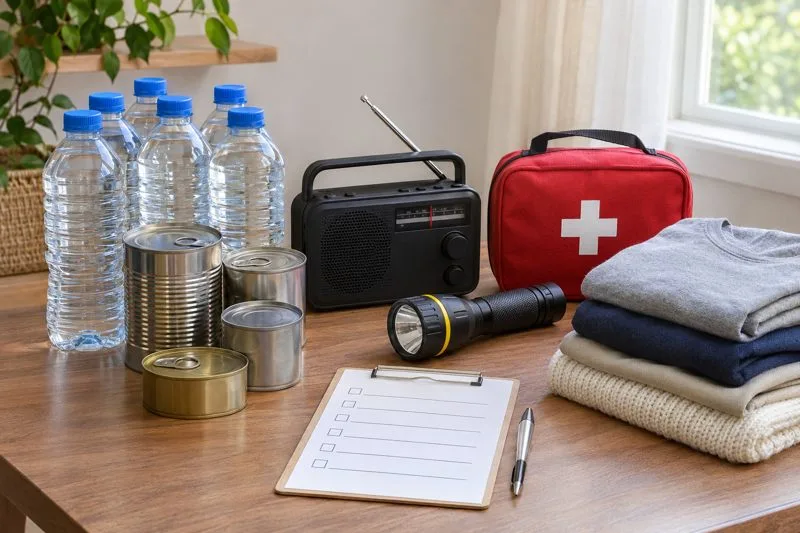
Build a practical fallout preparedness kit in six steps, with sealed food and water, a radio, medical supplies and shelter guidance.