When to Start Decorating for Halloween in 2026

Use a simple 2026 Halloween decorating timeline for indoor décor, outdoor displays, and fresh pumpkins, with practical adjustments for weather and events.
Adobe Photoshop 's AI features help speed up long workflows - but Photoshop Actions have been doing it for decades. Hidden away in the app, Photoshop Actions is a beloved feature of the popular photo editor that speeds up workflows without the need for AI.
What are Photoshop Actions?
Photoshop Actions have been a feature of Photoshop since 1996, but they're often overlooked as a useful tool. Long before AI came to Photoshop, Actions offered ways to quickly process your editing work with just one click.
Simply put, Photoshop Actions are saved recordings of editing processes. With each process, you can press Play and the process — or Action — will start and apply itself to any open projects in your Photoshop window. Using Actions is a huge time saver, especially for repetitive or batch editing tasks.
Where are Photoshop Actions located?
Photoshop Actions are available in the Actions panel. You can find it by selecting Window > Actions and the panel will appear on the toolbar along the right side of your workspace. Its icon is a triangular Play button.
The Actions panel includes default actions listed, such as Vignette; Custom RGB to Grayscale; Gradient Map, or Save as Photoshop PSD. Whether you find the default actions useful or not, you can easily record, edit, and add your own actions for use from within the Actions panel.
Record actions to apply to next project
Creating your own Photoshop Actions is easy, but you can also download or purchase Action packs from third parties if you don't want to spend time creating your own.
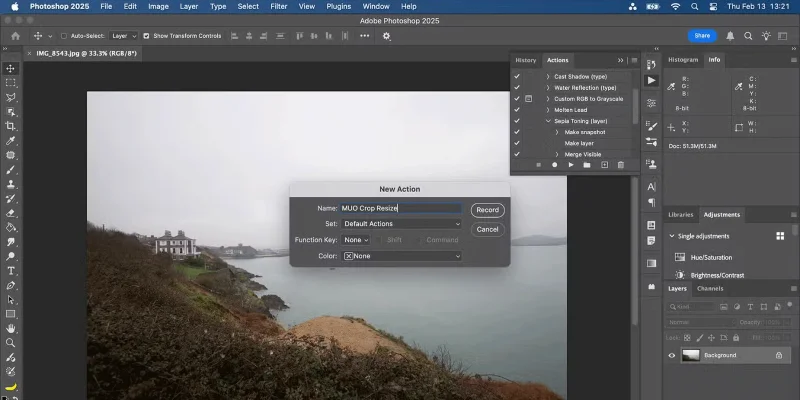
To create your own Photoshop Actions, click the Create New Action icon from the Actions panel , name the action whatever you want (you can change it later), and select Record .
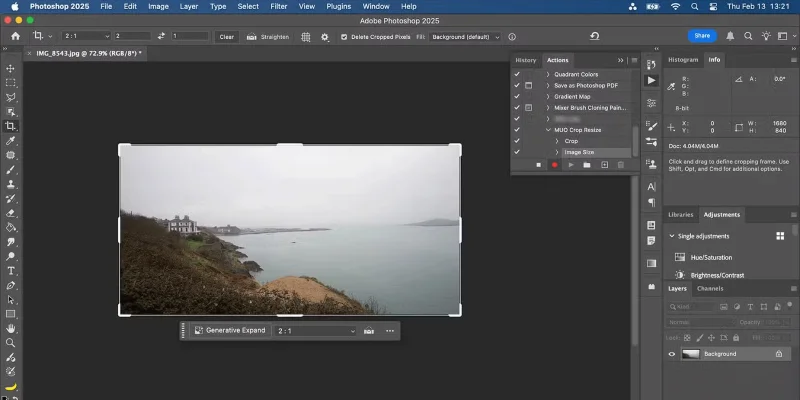
This window will instantly record every step you take in the Photoshop window. Apply any edits you want to your current Photoshop project until it's complete. Select the Stop icon when you're done; this will save your process as an action.
Tip : Every action is recorded, including opening menus, tapping Undo, and going back. You can delete recorded incorrect steps to ensure your new action only includes the steps necessary to complete the process.
To use Photoshop Actions later, open your image. Then, select your chosen action from the Actions panel and press Play . Once finished, the recorded editing process has been applied to your Photoshop project in less than a few seconds.
AI tools aren’t always better than traditional Photoshop features, but you don’t have to choose one over the other. AI tools in Photoshop have their uses. Older features like Photoshop Actions shouldn’t be dismissed as anything new or exciting. On the contrary, they save a lot of time and allow you to quickly perform boring, repetitive tasks.
Use a simple 2026 Halloween decorating timeline for indoor décor, outdoor displays, and fresh pumpkins, with practical adjustments for weather and events.
Mix five vivid, approachable Halloween cocktails with measured recipes, simple prep tips, and an alcohol-free option for your party guests.
Find 15 office-friendly Halloween costume ideas for 2026, with practical checks for dress codes, respectful themes, comfort, and workplace safety.
Plan a fun elementary school Halloween party with easy crafts, games, inclusive treats, costume tips, and a sample 75-minute classroom schedule.
Compare realistic side hustles for 2026 by startup cost, fees, flexibility, and income control, with current tax and scam guidance from official sources.
Upgrade your home office ergonomics with current OSHA and NIOSH guidance on chair fit, monitor height, laptop setup, lighting, and movement.
Learn why emotional intelligence matters in leadership, where it helps most, how to strengthen it, and how to tell whether your approach is working.
A practical roadmap for moving into tech without a degree: choose an accessible role, build job-ready skills, prove them with projects, and use hiring feedback to improve.
Build a credible LinkedIn personal brand in 2026 with current profile, content, newsletter, analytics, verification, and visibility guidance from LinkedIn.
Quiet quitting and quiet firing are catchy labels, not diagnoses. Learn what is verified, what depends on context, and what employees and managers can do next.








