Reasons not to connect Smart TV to the Internet

Almost everyone has a Smart TV these days , but not everyone is happy about it. And now, news that Smart TVs are taking pictures and tracking everything you watch down to the millisecond is sure to add to that discontent and give you another reason to ditch your Smart TV.

Smart TVs are capturing everything you do

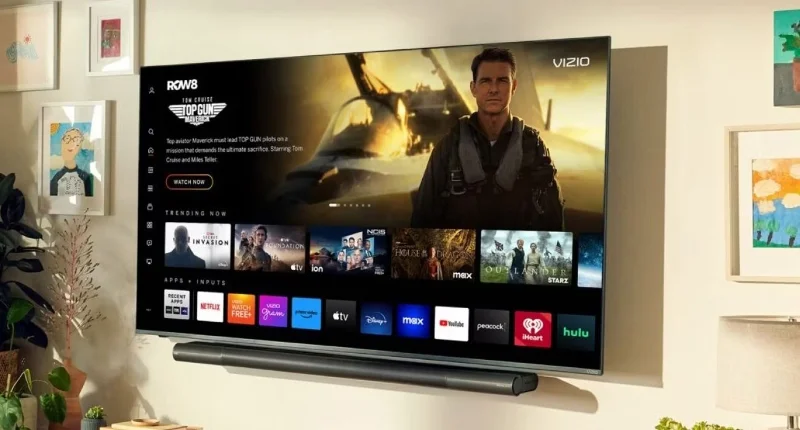
Privacy concerns are one of the main reasons why you might not want to buy a Smart TV. Now, a 2024 study has found that some of the top Smart TV brands, such as Samsung and LG, are using something called Automatic Content Recognition (ACR) to periodically capture what's on screen.

Reasons not to connect Smart TV to the Internet

Once captured, the information is sent back to the company’s servers, where it is analyzed and used to serve targeted ads. Over time, the system builds a unique fingerprint of the content you want to see, delivering increasingly targeted ads to your home.

At a high level, ACR works by periodically capturing the content displayed on the TV screen and comparing it to a content library to detect what is being viewed on the TV. It's essentially Shazam-like technology for audio/video content on Smart TVs.

The study found that Samsung Smart TVs running the Tizen OS can take screenshots every half a second, while LG WebOS TVs can take screenshots every 10 milliseconds. However, Samsung and LG aren't the only ones using ACR technology; the study notes that "ACR is deployed by all major Smart TV manufacturers," but there hasn't been much scrutiny of how this privacy-invasive technology is used.

What’s more, these Smart TVs track on-screen content even when using external devices, with the TV in “brick” mode via HDMI. So when you boot up your console in the evening to play games, ACR technology still tracks your activity and adds it to your user profile.

How to Stop Your Smart TV from Recording Everything You Do

Unfortunately, as you might expect, these companies don’t make it easy to opt out of having everything you do recorded. However, each Smart TV will have a range of options you can change to limit the amount of activity recorded and the data uploaded; research shows that it doesn’t stop the process entirely.

For example, Samsung Smart TVs should reject or change the following settings:

  • Turn off "I consent to viewing information services on this device"
  • Turn off "I consent to interest-based advertisements"
  • Turn off Customization Service
  • Turn on Do not track
  • Turn off Improve personalized ads
  • Turn off Get news and special offers

While LG Smart TV owners should:

  • Enable Limit ad tracking
  • Turn off TV membership agreement for marketing comms
  • Turn on Do not sell my personal information
  • Edit the User Agreement in Privacy and Terms as follows:
    • Turn off:
      • Viewing information agreement
      • Voice information agreement
      • Interest-based & Cross-device advertising agreement
      • Who.Where.What?
  • Turn off Home promotion
  • Turn off Content recommendation
  • Turn off Live plus
  • Turn off AI recommendation (Who.Where.What, Smart Tips)

There are a lot of settings to keep track of, and even then, Smart TVs will still record some data.

The most effective way to prevent your Smart TV from recording your every move and protect your privacy is to stop using your Smart TV completely and switch back to a regular TV if possible. Disconnect your Smart TV from the Internet and switch to an external streaming device instead.

Leave a Comment

Side Hustles That Actually Pay in 2026: 7 Realistic Options and the Tradeoffs to Know

Side Hustles That Actually Pay in 2026: 7 Realistic Options and the Tradeoffs to Know

Compare realistic side hustles for 2026 by startup cost, fees, flexibility, and income control, with current tax and scam guidance from official sources.

Remote Work Ergonomics in 2026: Upgrade Your Home Office Without Overbuying

Remote Work Ergonomics in 2026: Upgrade Your Home Office Without Overbuying

Upgrade your home office ergonomics with current OSHA and NIOSH guidance on chair fit, monitor height, laptop setup, lighting, and movement.

Why Emotional Intelligence Matters in Leadership—and How to Build It

Why Emotional Intelligence Matters in Leadership—and How to Build It

Learn why emotional intelligence matters in leadership, where it helps most, how to strengthen it, and how to tell whether your approach is working.

How to Transition to a Tech Career Without a Degree: A Results-First Roadmap for 2026

How to Transition to a Tech Career Without a Degree: A Results-First Roadmap for 2026

A practical roadmap for moving into tech without a degree: choose an accessible role, build job-ready skills, prove them with projects, and use hiring feedback to improve.

Building a Personal Brand on LinkedIn in 2026: What Still Works, What Changed, and What to Ignore

Building a Personal Brand on LinkedIn in 2026: What Still Works, What Changed, and What to Ignore

Build a credible LinkedIn personal brand in 2026 with current profile, content, newsletter, analytics, verification, and visibility guidance from LinkedIn.

Quiet Quitting vs. Quiet Firing in 2026: What’s Really Changing at Work

Quiet Quitting vs. Quiet Firing in 2026: What’s Really Changing at Work

Quiet quitting and quiet firing are catchy labels, not diagnoses. Learn what is verified, what depends on context, and what employees and managers can do next.

The Rise of the Fractional Executive: When Part-Time C-Suite Leadership Makes Sense

The Rise of the Fractional Executive: When Part-Time C-Suite Leadership Makes Sense

Fractional executives offer senior leadership without a full-time hire. Learn when the model works, what to ask, and the risks to manage.

How to Negotiate a Raise During Q4 Performance Reviews: A Practical 2026 Decision Guide

How to Negotiate a Raise During Q4 Performance Reviews: A Practical 2026 Decision Guide

Prepare a stronger Q4 raise request with current wage data, timing options, compensation tradeoffs, and scripts for yes, partial, or no outcomes.

6 High-Income Skills You Can Start Learning Before 2026 Ends

6 High-Income Skills You Can Start Learning Before 2026 Ends

Choose a high-income skill you can realistically start before 2026 ends, with current pay data, learning priorities, and a practical self-check.

Mastering the Hybrid Work Schedule: A Practical Framework That Actually Holds Up

Mastering the Hybrid Work Schedule: A Practical Framework That Actually Holds Up

Build a hybrid work schedule around tasks, team overlap, and measurable outcomes. See sample patterns, warning signs, and when to adjust your plan.