Would Europe Be Drawn into a Hypothetical U.S.-Israel-Iran Nuclear War? NATO Rules Explained

A guide to NATO Articles 4 and 5, UN self-defense rules, and why consultation does not mean automatic European entry into war.
Samsung Electronics is reportedly collaborating with OpenAI on an ambitious joint project to develop AI TVs that incorporate industry-leading artificial intelligence technologies. This is a key strategy for the South Korean tech giant to maintain its leadership in the increasingly competitive TV market, where low-cost Chinese TV brands are emerging as a formidable force. The goal is clear: Samsung wants to integrate the power of OpenAI into its TVs and further solidify its dominance as the world's top TV brand, a title it has held for 19 consecutive years.
Notably, Samsung and OpenAI have collaborated in an "open partnership", which includes integrating advanced artificial intelligence features into Samsung products and services, especially TVs. And not only with OpenAI, Samsung is also actively collaborating with a series of other technology giants such as Google and Microsoft to quickly realize the strategy of deeply integrating AI into its ecosystem.
Samsung recently introduced Vision AI, which brings smartphone-like features to TVs, such as Tap to Search (similar to Circle to Search), Live Translation, Shape Wallpaper, etc.
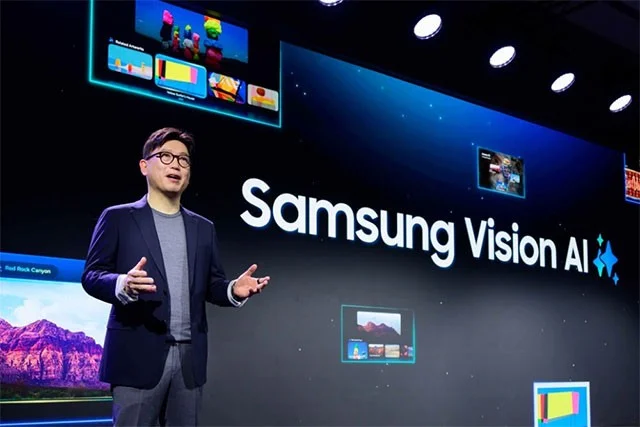
By partnering with OpenAI, Samsung wants to gain access to deep learning capabilities like “ChatGPT” for text generation, “DALL-E” for image generation, “Whisper” for speech recognition, and other OpenAI AI models. Some potential AI TV features could include:
For example, users can ask the TV about the actor or movie they're watching and get recommendations for similar shows. The company recently partnered with Google to introduce "Eclipsa Audio," a 3D audio technology it built to take on Dolby Atmos.
By partnering with major tech companies and introducing new, more in-depth features to its TVs, Samsung wants to increase its global TV market share to 28.8% in the first half of 2025, according to market research firm Omdia.
A guide to NATO Articles 4 and 5, UN self-defense rules, and why consultation does not mean automatic European entry into war.
Assess claims about Iran in six steps, distinguishing uranium enrichment, weapons development and verified possession.
Understand nuclear decision authority in six steps, including US civilian control and the limits of public information about Israel.
A guide to official 2026 evidence on Hormuz shipping disruption, Iran-related claims, confirmed incidents, and what remains uncertain.
A source-based guide to nuclear escalation risks, UN Charter rules and NATO Article 5 in a strictly hypothetical Iran scenario.
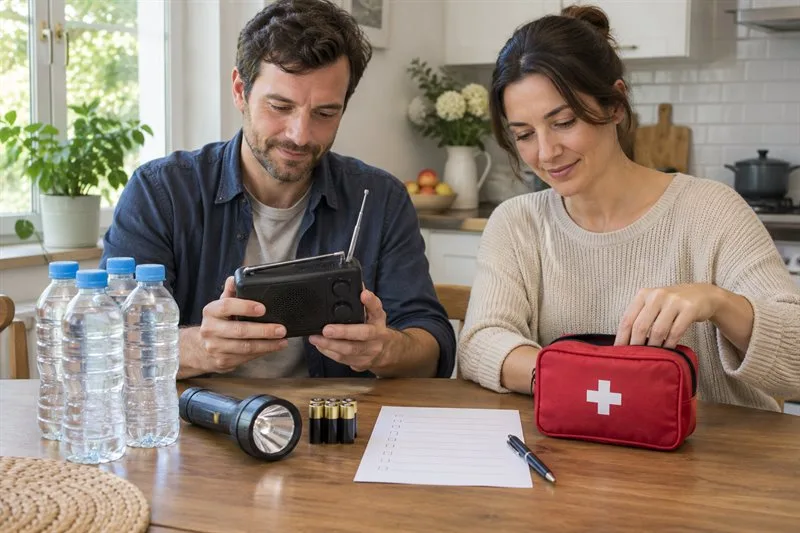
Use five steps to prepare for an outage; nuclear and EMP scenarios are hypothetical, and official shelter instructions come first.
Use 5 defensive steps to verify a cyber disruption, protect household accounts, and avoid mistaking an outage for war.
Use these 5 steps to assess climate effects from a hypothetical Iran strike, compare model assumptions, and avoid unsupported predictions.
Explore six steps for reading research on climate, food and ecosystem recovery after a hypothetical nuclear conflict.
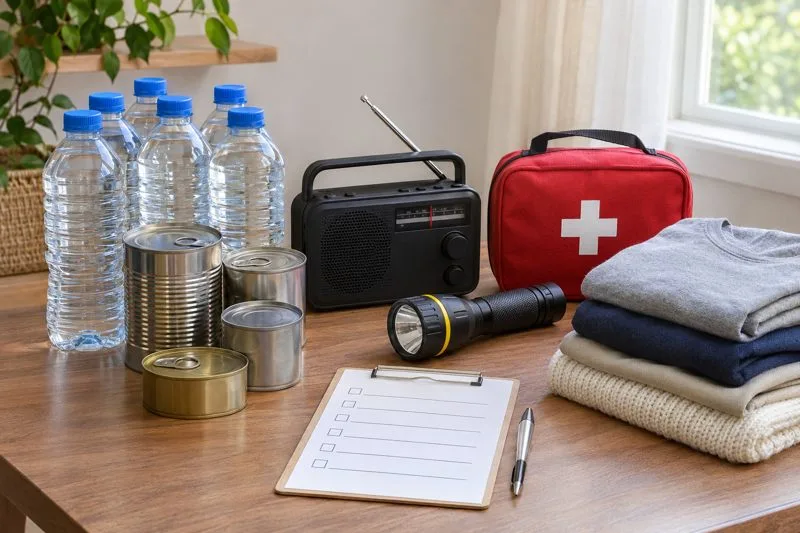
Build a practical fallout preparedness kit in six steps, with sealed food and water, a radio, medical supplies and shelter guidance.