Home
» PC Tips
»
This hidden score tells you how well your Windows computer runs
This hidden score tells you how well your Windows computer runs
If you're wondering how well your Windows PC is performing, run the Windows Experience Index (WEI). This tool evaluates a variety of hardware components and scores them on a scale of 1.0 to 9.9. Here's how to run the tool and what the different scores mean.
How to Check Windows Experience Score Using PowerShell
The Windows Experience Index is a rating system that evaluates computer performance based on various hardware components, such as the CPU , RAM , graphics card, and hard drive. Although WEI is no longer actively used in newer versions of Windows, you can still check your system's performance score using PowerShell . Here's how:
Press Windows + S to open the search menu.
Type PowerShell into the box and select Run as Administrator .
In the console, type the following command and press Enter :
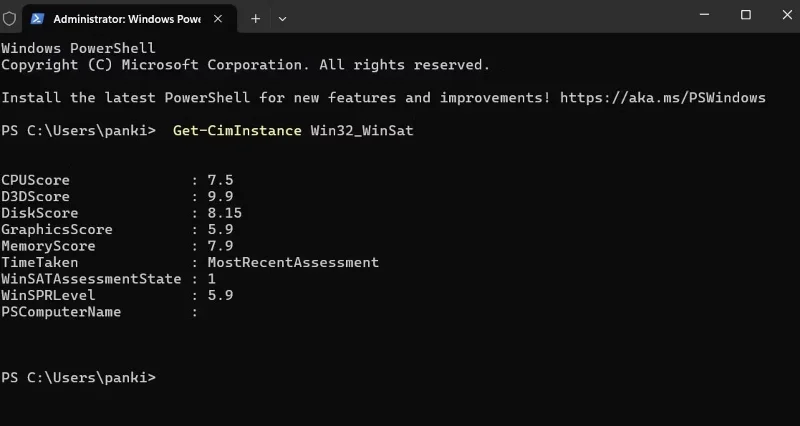
Get-CimInstance Win32_WinSat
Windows Experience Index results in PowerShell window
PowerShell will now display the WEI score and other relevant information.
What Windows Experience scores mean on PC
The Windows Experience Index measures your PC's overall performance using a WinSPRLevel score. This score is based on individual hardware ratings, including the CPU, memory, graphics card, and primary hard drive.
A higher WEI score means your PC is better equipped to handle demanding tasks like gaming, video editing, or running multiple programs at once. For example, a high graphics score means your system will likely deliver smoother visuals in games and other graphics-intensive applications.
It's important to remember, however, that the WEI score is just one factor in assessing overall PC performance. Other aspects, such as software optimization, system maintenance, and even the specific tasks you perform, also play a role.
With WEI, you can get a detailed look at your computer's hardware performance and make sure it meets your needs. However, if you need more advanced performance metrics or diagnostics, you should use third-party system analysis tools or benchmarking software on your Windows PC.