Useful keyboard shortcuts in PowerPoint

For those who often use PowerPoint as presentations, remembering keyboard shortcuts will help you work faster, save a lot of time and effort.

Microsoft PowerPoint 2010

Microsoft PowerPoint for iOS

Microsoft PowerPoint for Android

Therefore, today Download.com.vn will summarize common PowerPoint shortcuts, for you to use more convenient. "Hundred or not by familiar hand" many times you will easily remember these shortcuts only!

Useful keyboard shortcuts in PowerPoint

List of frequently used keyboard shortcuts in PowerPoint

General PowerPoint keyboard shortcuts

  • Ctrl + N: Open a new PowerPoint window.
  • Ctrl + S: Save the slide (Save).
  • Ctrl + O: Open existing presentation.
  • F12 or Alt + F2: Open the Save As dialog box.
  • Ctrl + W or Ctrl + F4: Close the presentation.
  • Ctrl + Q: Save and close the presentation.
  • Ctrl + F2: Print preview mode.
  • F1: Open the Help pane.
  • Alt + Q: Go to the "Tell me what you want to do" box.
  • Alt or F10: Turn on or off keyboard shortcuts for the Ribbon.
  • Ctrl + F1: Display or hide the Ribbon.
  • Alt + F: Open the File tab menu.
  • Alt + H: Go to the Home tab.
  • Alt + N: Open the Insert tab.
  • Alt + G: Open the Design tab.
  • Alt + K: Go to the Transitions tab.
  • Alt + A: Go to the Animations tab.
  • Alt + S: Go to the Slide Show tab.
  • Alt + R: Go to the Review tab.
  • Alt + W: Go to the View tab.
  • Alt + X: Go to the Add-ins tab.
  • Alt + Y: Go to the Help tab.
  • Ctrl + Tab: Switch between open presentations.
  • Ctrl + P: Print Slide (Print).

Editor shortcut:

  • Ctrl + A: Select the entire slide or select the entire content in the slide depending on the current cursor position.
  • Ctrl + M: Add a new slide.
  • Ctrl + B: Bold selected text.
  • Ctrl + I: Italicizes selected text.
  • Ctrl + U: Underline the selected text.
  • Ctrl + "+": subscript (chemistry).
  • Ctrl + Shift + "+": superscript (exponent).
  • Ctrl + T: Open the Font format dialog box.
  • Ctrl + F: Open the search dialog (Find).
  • Ctrl + H: Open the replacement dialog box (Replace).
  • Ctrl + K: Insert link (Hyperlink).
  • Ctrl + C: Copy selected text.
  • Ctrl + V: Paste the selected text.
  • Ctrl + Z: Restore previous action (Undo).
  • Ctrl + Shift +>: Increase the font size.
  • Ctrl + Shift + <: Decrease font size.
  • F4 or Ctrl + Y: Repeat the previous operation.
  • F7: Check for spelling errors.
  • Ctrl + Backspace: Delete one word in front.
  • Ctrl + Delete: Delete a word at the back.
  • Ctrl + D: Duplicate the selected object or slide.
  • Ctrl + J: Justify a paragraph.
  • Ctrl + L: Left align a paragraph.
  • Ctrl + R: Right align a paragraph
  • Ctrl + E: Center a paragraph.
  • Delete: Delete selected text, object or slide.
  • Ctrl + Alt + V: Open the Paste Special dialog box.
  • Ctrl + X: Cut selected text, object or slide.
  • Tab: Select and move to the next object on a slide.
  • Home or Press and hold both left and right mouse buttons for 2 seconds: Go to the first slide or in a text box, go to the beginning of the line.
  • End: Go to the last slide or in a text box that goes to the end of the line.
  • A or = keys: Hide or show the cursor.
  • H key: Go to the hidden slide.

Slideshow shortcut:

  • F5: Start a slideshow from the first slide.
  • Shift + F5: Start a slideshow from the currently selected slide.
  • ESC or - key: Exit the slideshow on the editing interface.
  • N (arrow right or down): Move to the next slide while playing.
  • P (arrow left or up): Moves to the previous slide during a slide show.
  • B or the dot key (.): Change the screen to black during a slideshow, press B again to return to the slideshow.
  • W key or comma key (,): To whiten the screen or return to the projection screen.
  • Ecs or - key: End the slideshow.
  • S or +: To turn on / off the auto show mode.
  • Shift + F9: Turn on / off gridlines in slides.

Hopefully, with the above series of shortcuts will help you create presentations faster than ever!

I wish you successful implementation!

Leave a Comment

Would Europe Be Drawn into a Hypothetical U.S.-Israel-Iran Nuclear War? NATO Rules Explained

Would Europe Be Drawn into a Hypothetical U.S.-Israel-Iran Nuclear War? NATO Rules Explained

A guide to NATO Articles 4 and 5, UN self-defense rules, and why consultation does not mean automatic European entry into war.

Could Iran Already Have Nuclear Weapons? How to Read the Evidence

Could Iran Already Have Nuclear Weapons? How to Read the Evidence

Assess claims about Iran in six steps, distinguishing uranium enrichment, weapons development and verified possession.

US and Israel Nuclear Authority: What Public Sources Actually Explain

US and Israel Nuclear Authority: What Public Sources Actually Explain

Understand nuclear decision authority in six steps, including US civilian control and the limits of public information about Israel.

Strait of Hormuz in 2026: What Official Sources Say About Shipping Disruption

Strait of Hormuz in 2026: What Official Sources Say About Shipping Disruption

A guide to official 2026 evidence on Hormuz shipping disruption, Iran-related claims, confirmed incidents, and what remains uncertain.

Would a Hypothetical U.S.-Israeli Nuclear Strike on Iran Cause World War 3?

Would a Hypothetical U.S.-Israeli Nuclear Strike on Iran Cause World War 3?

A source-based guide to nuclear escalation risks, UN Charter rules and NATO Article 5 in a strictly hypothetical Iran scenario.

How to Prepare for a Hypothetical EMP-Related Power Outage: 5 Civilian Steps

How to Prepare for a Hypothetical EMP-Related Power Outage: 5 Civilian Steps

Use five steps to prepare for an outage; nuclear and EMP scenarios are hypothetical, and official shelter instructions come first.

How to Assess Cyber Disruptions Without Assuming WW3: A 5-Step Guide

How to Assess Cyber Disruptions Without Assuming WW3: A 5-Step Guide

Use 5 defensive steps to verify a cyber disruption, protect household accounts, and avoid mistaking an outage for war.

Nuclear Winter: How to Assess the Global Climate Effects of a Hypothetical Iran Strike

Use these 5 steps to assess climate effects from a hypothetical Iran strike, compare model assumptions, and avoid unsupported predictions.

How Long Could Earth Take to Recover After a Hypothetical Nuclear War?

How Long Could Earth Take to Recover After a Hypothetical Nuclear War?

Explore six steps for reading research on climate, food and ecosystem recovery after a hypothetical nuclear conflict.

Nuclear Fallout Preparedness Checklist: Essential Supplies and Shelter Steps

Nuclear Fallout Preparedness Checklist: Essential Supplies and Shelter Steps

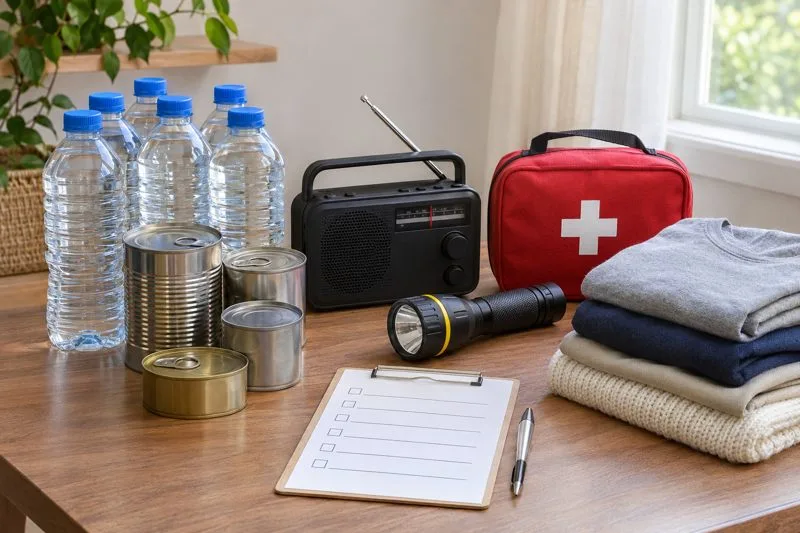
Build a practical fallout preparedness kit in six steps, with sealed food and water, a radio, medical supplies and shelter guidance.