Skype Free Phone Calls

Skype Free Phone Calls let you connect with friends and family worldwide at no cost. Follow this guide to set up and start making free calls quickly and easily.
Dark energy— the dominant form of energy in space—is driving the universe's ever-accelerating expansion, but its nature remains a complete mystery. Here's what you need to know about dark energy .
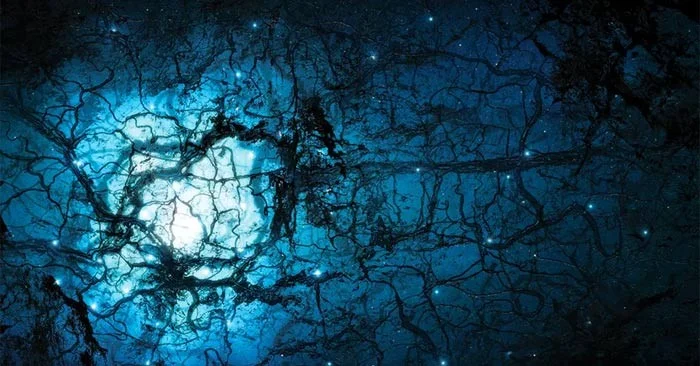
Dark energy is a hypothetical form of energy proposed by physicists to explain why the universe is not only expanding, but expanding at an ever-increasing rate.
Think of dark energy as the “evil counterpart” to gravity—an “anti-gravity” force that creates negative pressure that fills the universe and stretches the very fabric of space-time. In doing so, dark energy pushes cosmic objects apart at ever-increasing speeds instead of pulling them together like gravity does.
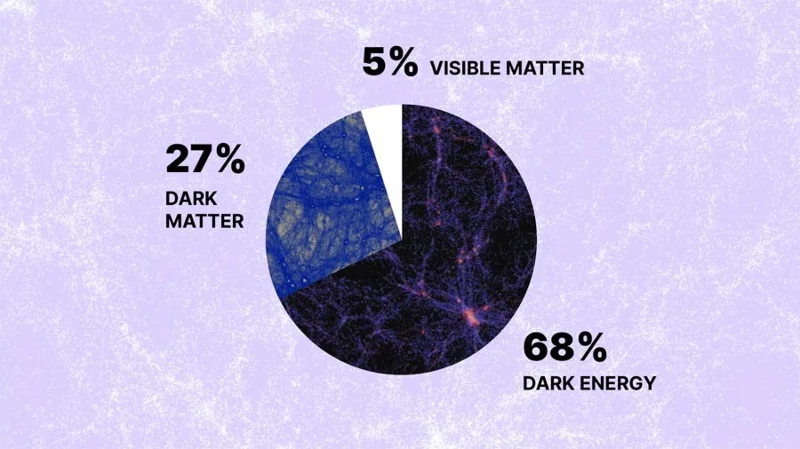
Dark energy is estimated to make up about 68% to 72% of the total energy and matter in the universe—the matter/energy "budget" of the universe—meaning it strongly dominates both dark matter and everyday matter.
The only real answer to the question “what is dark energy?” right now is “we don’t know,” although that may sound unsatisfying. However, scientists aren’t completely in the dark about it. There are a number of leading “contenders” to explain dark energy, including the vacuum energy of space—particles that literally pop in and out of empty space—and a “fifth force” responsible for the negative pressure that could be causing the accelerated expansion of the universe.
Other possibilities are a variety of different "flavors" of fields that could account for dark energy, such as a low-energy field called "quintessence," tachyon fields - hypothetical particles that travel faster than light and thus reverse time...
All of this is still purely hypothetical, meaning the only way we can really “know” what dark energy is right now is through its effects on the universe.
Frequently asked questions about dark energy
Why is dark energy a necessary part of the universe?
About 25 years ago, it was determined that the Universe is expanding and that the expansion is accelerating over time. This has been going on for the past 5,000 million years and is causing galaxies to move away from each other. Although all cosmological observations support this phenomenon, we still do not have an explanation for this expansion trend. However, we do know the properties of the substance that causes this effect: it must be a substance or liquid that overcomes the gravitational attraction, and it must be diluted and diffused throughout space-time.
In 1999, physicist Michael Turner named the hypothetical component of the cosmological budget: dark energy. The latter component is necessary to provide a plausible explanation for the current expansion trend of the Universe. Without it, the expansion would slow down and the Universe would eventually implode, narrowing the gaps between galaxies observed in the large-scale structure.
How do we know that the expansion driven by dark energy is not just related to the Big Bang?
Yes, our cosmological model predicts an expanding universe, and therefore the existence of an event we call the Hot Big Bang. However, the current state of expansion is not constant over time, but is instead accelerating; therefore, this accelerating rate of expansion must be driven by another factor, one that was not primarily active in the early stages of the Universe or when galaxies formed.
Why is dark energy so mysterious?
Because we can’t measure it directly, let alone know what it’s made of, it’s challenging to build experiments to detect and study its true nature. In addition, current observations don’t agree with the current value of the Hubble velocity, so we’re not sure whether dark energy changes over time, and if so, how it affects the dynamics of the expansion. We have clues, but we’re still a long way from “revealing” the nature and characteristics of dark energy.
What are the main points of doubt about dark energy?
According to most observations, the most likely “candidate” for dark energy is the cosmological constant, which is often associated with fluctuations in the quantum vacuum. This is the preferred (and simplest) explanation for dark energy, so much so that it is included in the standard cosmological model. But there are other proposals, such as scalar fields, galleons, axions, tachyonic fields, or even dynamical dark energy models, among many others.
It’s hard to predict whether we’ll solve the mystery of dark energy in the next 10 years, but for now, there’s no doubt that cosmologists are on the right track to understanding its role. There’s a lot of data to guide us along this journey, and there’s no doubt that we’re making progress in understanding what dark energy is and where it came from in the universe.
Skype Free Phone Calls let you connect with friends and family worldwide at no cost. Follow this guide to set up and start making free calls quickly and easily.
Stuck in the Discord Update Failed Loop? Follow these targeted fixes to break the cycle and complete the update without repeated failures or reinstalls.
Travel planning used to mean folders full of printed confirmations, handwritten notes, guidebooks, and a slightly terrifying number of browser tabs. Now, pretty much everything you need for a trip can live on the device already in your pocket.
Discover how Canva Free for Teachers gives educators full access to premium design tools at no cost. Verify your status and start creating classroom materials in minutes.
Skype How to Call International is simple and cost-effective once you set up credit and use the right country codes. Follow this guide to place clear calls from anywhere.
Make Skype to Skype Calls Free in minutes with this clear guide. Set up your account, add contacts, and start unlimited voice and video calls at no cost.
Fix the Your Connection is Not Private Chrome error quickly with these exact steps. Restore secure browsing by addressing certificate and settings issues in minutes.
Record heat has lifted air-conditioning demand while gas-market shocks have returned volatility to power prices. That creates a real risk of painful bills—but not a guaranteed, Europe-wide price explosion.
Large format printing has long faced criticism for its environmental impact. Traditional substrates, solvent-based inks, and short-lived promotional campaigns have all contributed to the perception that eye-catching graphics come at a high environmental cost.
Long-distance travel can involve heavy traffic, changing weather conditions, and rider fatigue. If you are also dealing with the responsibilities of moving home, such as packing belongings or coordinating accommodation, a long ride may add unnecessary pressure to an already busy schedule.