Why is Windows 10 often full disk?

Full disk is like a chronic disease that every Windows 10 user has heard about at least once.

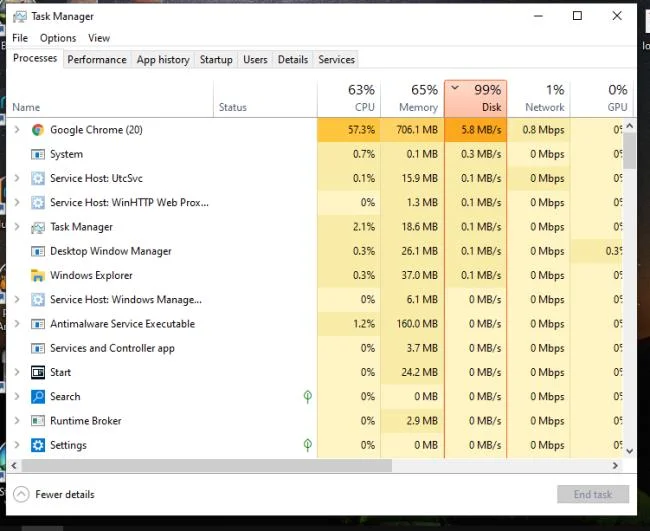
From Windows 8 onwards, Microsoft has detailed the Task Manager window so that users know exactly which applications are taking up a lot of resources and what kind of resources it is. However, until Windows 10, disaster happened with the classic full disk or 100% disk usage error. 

This error is mainly caused by Windows 10 turning on many tasks running in the background by default, while computers with ancient configurations forced to the latest Windows will experience many problems. This used to be a fairly common error when Windows 10 first launched, but it was gradually fixed by new Microsoft updates, as well as thanks to a significantly stronger computer configuration.
Getting sick why Windows 10 is often full disk?
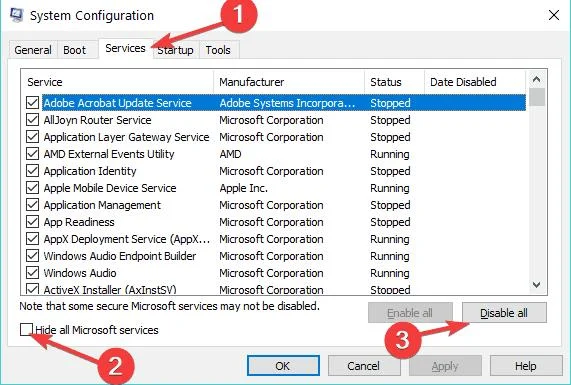
Turning off Microsoft's background services is the most effective thing to help your computer run smoother, regardless of whether there is a full disk error or not.

Thanks to the fact that most computers are equipped with SSD drives, the basic read and write is faster, so a full disk error rarely occurs for Windows 10 users. However, there is still a certain probability when a Good day you get this error, what to do?

Usually, online instructions will ask users to turn off all Microsoft services in services.msc, reset virtual RAM, turn off Sysmain (formerly Superfetch), turn off search, turn off antivirus, turn off yourself Windows dynamic update, driver update, comprehensive hard drive check ...

However, if I have followed the instructions on the network and still have a full disk, what should I do? This case is quite rare but not uncommon, even with high-end computers with a usable life of less than 2 years. At this point, let's 'catch' the full disk by opening up Task Manager and finding the application that is taking up the most resources and trying to turn it off with specific instructions on the network. 


Getting sick why Windows 10 is often full disk?
Note the difference between the full disk error and the full disk error because the machine is weak, but opens too many tasks

However, users should be very careful not to equate the error of 100% disk with other problems such as 100% CPU, 100% GPU or 100% Memory. Because depending on each specific case, there are different solutions. 

The last strong measure for all software errors that users have been unable to fix is ​​to wipe the SSD drive, reinstall a clean version of Windows. But this is a measure for experienced users and need to back up data before proceeding. 

Finally, 100% of the disk in certain cases is not necessarily an error, but maybe because the hard drive has been exhausted by too much software, the task that pops up at the same time is the most consuming is opening the browser. many tabs, too many add-ons running in the background in the browser.

 

Leave a Comment

Side Hustles That Actually Pay in 2026: 7 Realistic Options and the Tradeoffs to Know

Side Hustles That Actually Pay in 2026: 7 Realistic Options and the Tradeoffs to Know

Compare realistic side hustles for 2026 by startup cost, fees, flexibility, and income control, with current tax and scam guidance from official sources.

Remote Work Ergonomics in 2026: Upgrade Your Home Office Without Overbuying

Remote Work Ergonomics in 2026: Upgrade Your Home Office Without Overbuying

Upgrade your home office ergonomics with current OSHA and NIOSH guidance on chair fit, monitor height, laptop setup, lighting, and movement.

Why Emotional Intelligence Matters in Leadership—and How to Build It

Why Emotional Intelligence Matters in Leadership—and How to Build It

Learn why emotional intelligence matters in leadership, where it helps most, how to strengthen it, and how to tell whether your approach is working.

How to Transition to a Tech Career Without a Degree: A Results-First Roadmap for 2026

How to Transition to a Tech Career Without a Degree: A Results-First Roadmap for 2026

A practical roadmap for moving into tech without a degree: choose an accessible role, build job-ready skills, prove them with projects, and use hiring feedback to improve.

Building a Personal Brand on LinkedIn in 2026: What Still Works, What Changed, and What to Ignore

Building a Personal Brand on LinkedIn in 2026: What Still Works, What Changed, and What to Ignore

Build a credible LinkedIn personal brand in 2026 with current profile, content, newsletter, analytics, verification, and visibility guidance from LinkedIn.

Quiet Quitting vs. Quiet Firing in 2026: What’s Really Changing at Work

Quiet Quitting vs. Quiet Firing in 2026: What’s Really Changing at Work

Quiet quitting and quiet firing are catchy labels, not diagnoses. Learn what is verified, what depends on context, and what employees and managers can do next.

The Rise of the Fractional Executive: When Part-Time C-Suite Leadership Makes Sense

The Rise of the Fractional Executive: When Part-Time C-Suite Leadership Makes Sense

Fractional executives offer senior leadership without a full-time hire. Learn when the model works, what to ask, and the risks to manage.

How to Negotiate a Raise During Q4 Performance Reviews: A Practical 2026 Decision Guide

How to Negotiate a Raise During Q4 Performance Reviews: A Practical 2026 Decision Guide

Prepare a stronger Q4 raise request with current wage data, timing options, compensation tradeoffs, and scripts for yes, partial, or no outcomes.

6 High-Income Skills You Can Start Learning Before 2026 Ends

6 High-Income Skills You Can Start Learning Before 2026 Ends

Choose a high-income skill you can realistically start before 2026 ends, with current pay data, learning priorities, and a practical self-check.

Mastering the Hybrid Work Schedule: A Practical Framework That Actually Holds Up

Mastering the Hybrid Work Schedule: A Practical Framework That Actually Holds Up

Build a hybrid work schedule around tasks, team overlap, and measurable outcomes. See sample patterns, warning signs, and when to adjust your plan.