Heres How to Delete the Recovery Partition and the 450 MB Recovery Partition on Windows 10

The Recovery partition is a separate partition on your computer's hard drive or SSD and is used to restore or reinstall the operating system in case of system failure.

However, starting Windows 10, users can reinstall or reset the system without the help of the Recovery partition, so Windows 10 users can delete the Recovery partition to free up disk space.

1. What is Recovery partition?

The Recovery partition is a separate partition on your computer's hard drive or SSD and is used to restore or reinstall the operating system in case of system failure.

The Recovery partition is extremely useful in case you want to restore Windows 10 or in case you want to factory reset Windows 10.

However, starting Windows 10, users can reinstall or reset the system without the help of the Recovery partition, so Windows 10 users can delete the Recovery partition to free up disk space.

Windows 10 allows you to create a USB recovery drive and use this USB Recovery drive to restore your computer in case of need.

Deleting a Recovery partition is not too difficult, below are some ways you can apply to delete the Recovery partition on Windows 10.

2. Delete Recovery partition on Windows 10

Important note: these methods only apply to OEM recovery partitions.

Windows 10 does not allow users to delete existing Recovery partitions on the system when they have not created a USB recovery drive. In fact, you can only access to delete the Recovery partition after creating a new Recovery drive.

Step 1:

Use a USB drive with at least 8 GB capacity, then plug the USB drive into your Windows 10 computer and back up all data to a safe location because all data on the USB drive will be erased during the creation of the Recovery drive.

And WebTech360 mentioned above, Windows 10 does not allow users to delete the Recovery partition without creating a USB Recovery drive.

Step 2:

Type Create a recovery drive into the Search box on the Start Menu or the Search box on the Taskbar and then press Enter to open the Recovery drive wizard.
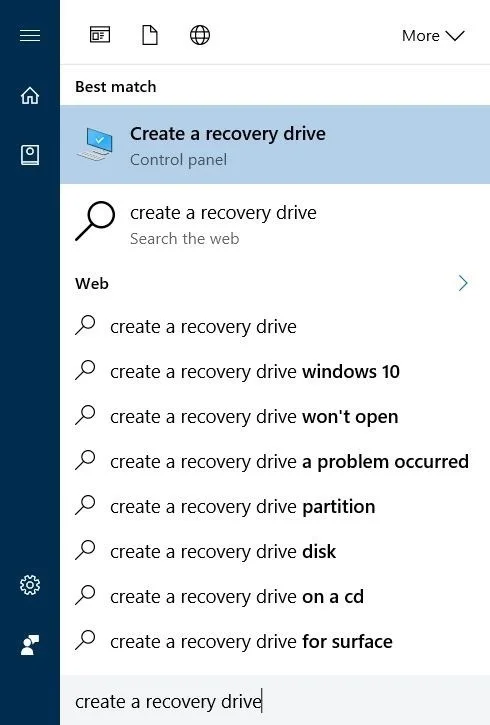
Here's How to Delete the Recovery Partition and the 450 MB Recovery Partition on Windows 10

Step 3:

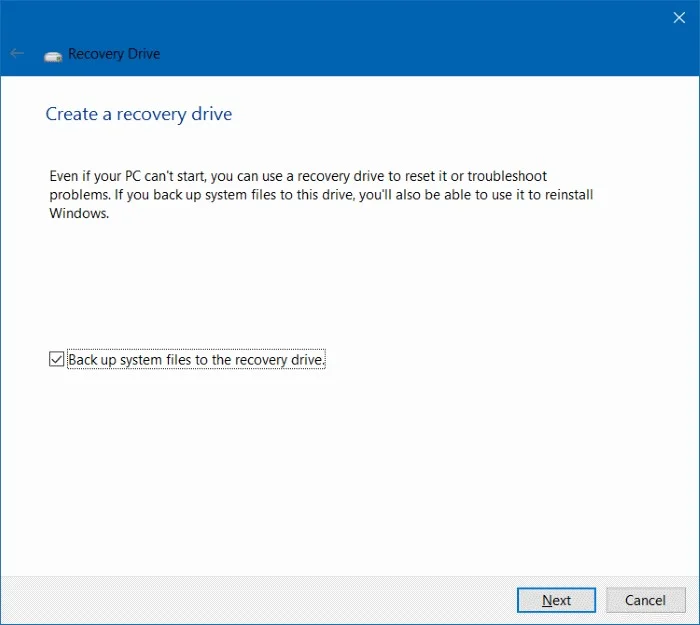
On the Recovery drive window, check the Back up system files to the recovery drive option and then click Next .

Here's How to Delete the Recovery Partition and the 450 MB Recovery Partition on Windows 10

Step 4:

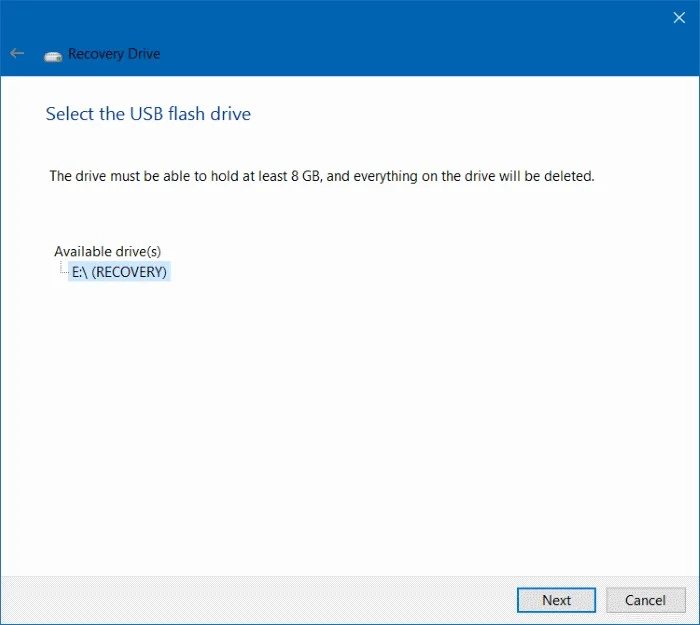
Wait a few seconds, now on the screen you will see the window as shown below, here select the USB drive you want to use to create the Recovery drive.

Note:

Back up all data on the USB drive to a safe location because creating a Recovery drive will erase all data on the USB drive.

After selecting the USB drive, click Next to continue.

Here's How to Delete the Recovery Partition and the 450 MB Recovery Partition on Windows 10

Step 5:

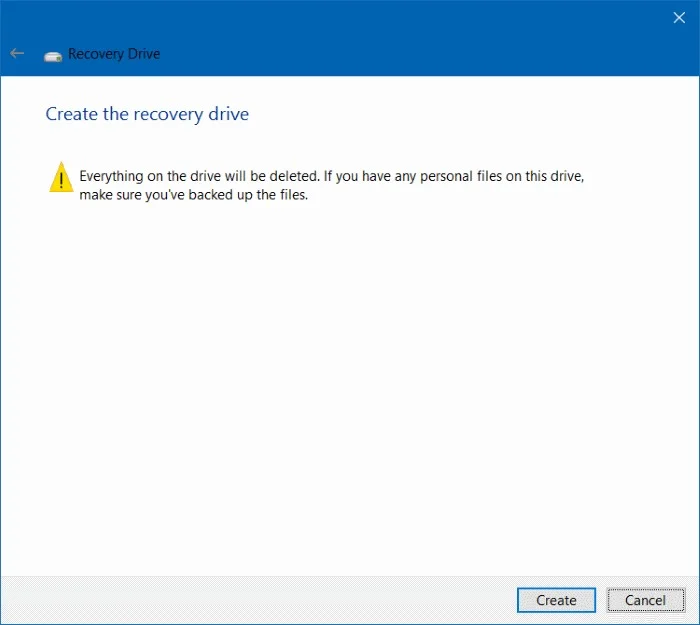
At this point on the screen you will see the message: “Everything on the drive will be deleted. If you have any personal files on this drive, make sure you have backed up the files”.

Here's How to Delete the Recovery Partition and the 450 MB Recovery Partition on Windows 10

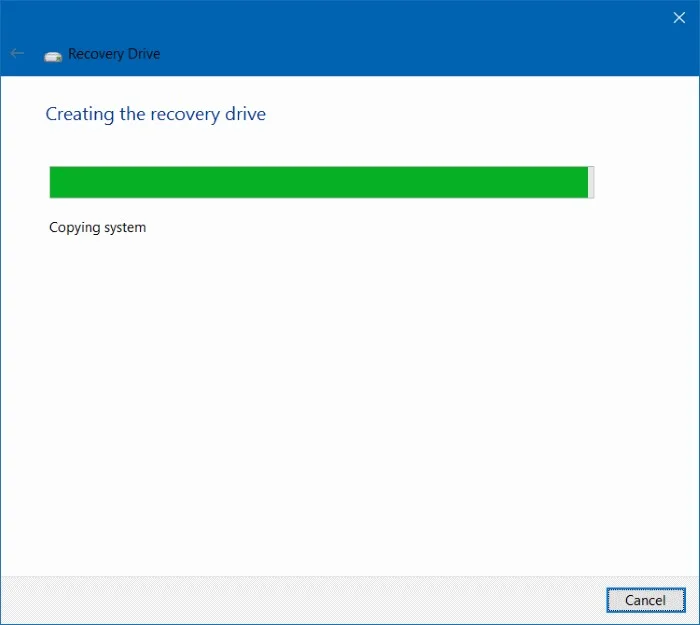
You just need to click the Create button to start the process of creating a Recovery drive on Windows 10. The process will take a long time, so you should wait patiently.

Here's How to Delete the Recovery Partition and the 450 MB Recovery Partition on Windows 10

Step 6:

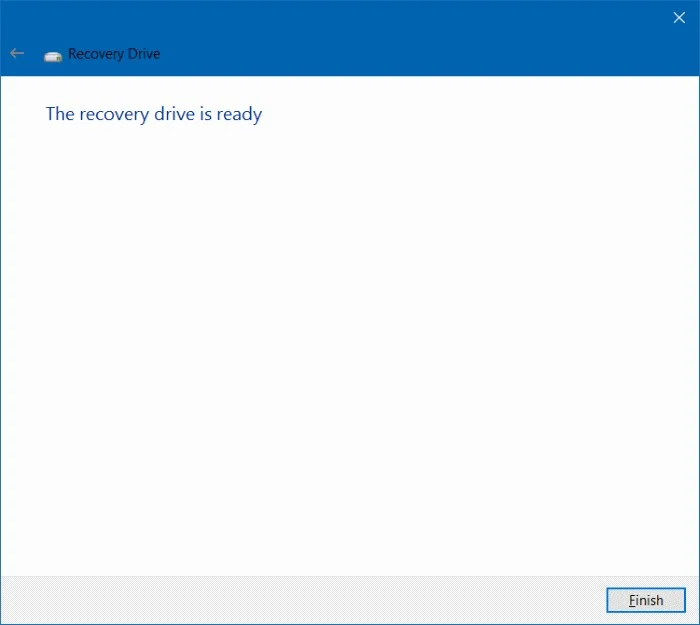
Once the process is complete, you will see the link Delete the recovery partition from your PC. To delete the Recovery partition on Windows 10, click the link Delete the recovery partition from your PC , then click Delete .

Here's How to Delete the Recovery Partition and the 450 MB Recovery Partition on Windows 10

However, on many Windows 10 computers, the Delete the recovery partition from your PC link does not appear on the screen. In that case, you can apply the solution by using the support of a third-party tool. WebTech360 will mention it in part 3 below.

2. Delete 450 MB Recovery partition on Windows 10

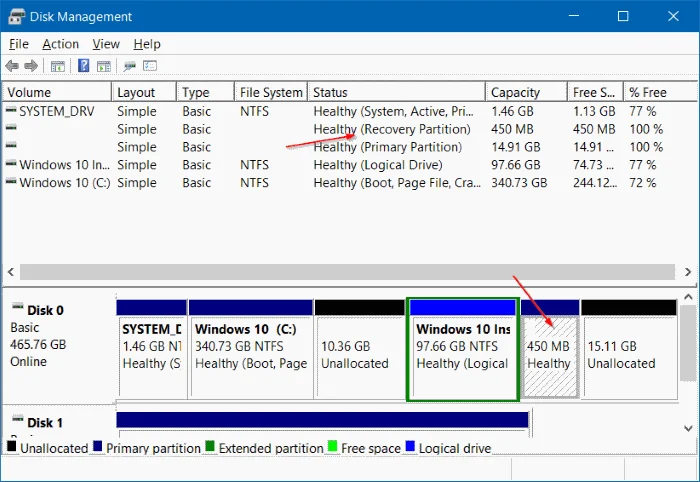
As you know, Windows 10 creates a 450 MB Recovery partition (recovery partition) during the process when you install Windows 10 or upgrade an older version to Windows 10.

The 450 MB Recovery partition created by Windows 10 allows users to boot into the Windows Recovery environment in case of system failure. Once booted into the Windows Recovery environment, users can fix errors and restore their Windows computer using previously created Restore points or System images.

Here's How to Delete the Recovery Partition and the 450 MB Recovery Partition on Windows 10

Should I delete the 450 MB Recovery partition?

If you still have a lot of free space on your HDD or SSD, deleting the 450 MB Recovery partition is not recommended. Furthermore, if your computer has little free space, deleting the 450 MB Recovery partition is also meaningless. In fact, you can free up 450 MB by deleting the Download folders or uninstalling programs, applications or software that you do not use, or deleting temporary files on Windows 10.

And you need to note one more point that you will not be able to use the Windows Recovery option if you delete the 450 MB Recovery partition. Or in other words, if you delete the 450 MB Recovery partition, you will not be able to boot your computer in the Recovery environment to fix Windows 10 installation errors.

However, if you want, you can still delete the Recovery partition.

Warning: It is recommended that you back up all data to a safe location before deleting the 450 MB Recovery partition in case anything bad happens.

Steps to delete 450 MB Recovery partition on Windows 10:

To delete the 450 MB Recovery partition on Windows 10, follow the steps below:

Step 1:

Open Command Prompt as Admin. To do this, right-click the Start button in the lower-left corner of the Taskbar, then click Command Prompt (Admin) .

A User Account Control notification window will appear on the screen, your task is to click Yes .

Here's How to Delete the Recovery Partition and the 450 MB Recovery Partition on Windows 10

Step 2:

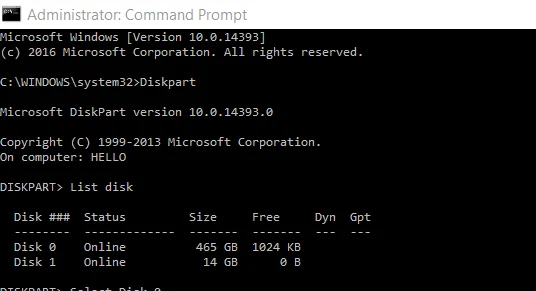
On the Command Prompt window, enter each command below, after each command press Enter to execute each command one by one.

Diskpart

Press Enter

List disk

Here's How to Delete the Recovery Partition and the 450 MB Recovery Partition on Windows 10

The List disk command displays all drives connected to your Windows computer, including removable hard drives (USB drives, ...). Therefore, carefully note down the hardware Disk number / SSD, including the Recovery partition (recovery partition) that you want to delete. Usually if there is only one HDD / SSD, the Disk number is 0

Step 3:

Next, enter each command below into the Command Prompt window, after each command you also press Enter to execute each command one by one.

Select disk n

Note, in the above command replace "n" with the Disk number of the HDD / SSD containing the Recovery partition.

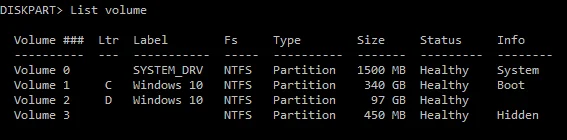
List volume

Here's How to Delete the Recovery Partition and the 450 MB Recovery Partition on Windows 10

The above command displays all partitions on the drive you selected, including the Recovery partition.

Select volume n

Note, replace "n" with the Volume number of the Recovery partition you want to delete.

You can easily identify the Recovery partition by looking at the partition size. The Recovery partition on Windows 10 is 450 MB in size.

Delete volume

Here's How to Delete the Recovery Partition and the 450 MB Recovery Partition on Windows 10

The above command will delete the Recovery partition you selected on your Windows 10 computer. If you encounter any errors, it may be because you have not run Command Prompt as Admin.

You can also use a third-party tool to delete the 450 MB Recovery partition on Windows 10.

3. Use 3rd party tool to delete Recovery partition and 450 MB Recovery partition on Windows 10

It is recommended that you create a System image on your Windows 10 computer or back up all data to a portable hard drive (USB drive, for example, ...) before proceeding to erase the system drive because it is very likely that your computer will not boot.

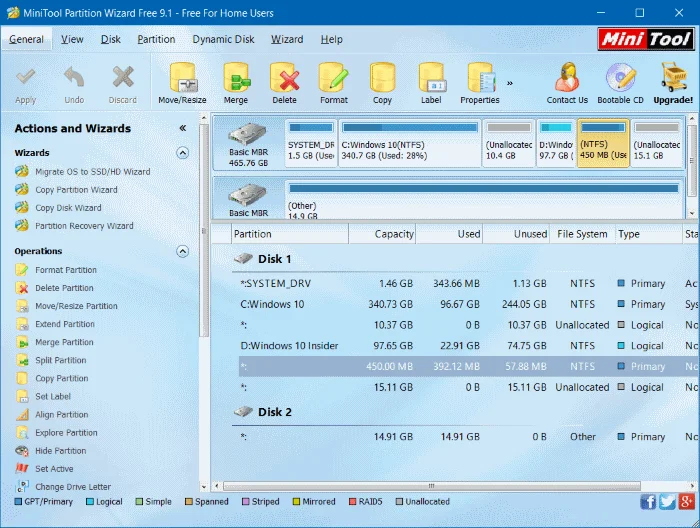
With this second solution, you need to use the support of a third-party application - MiniTool Partition Wizard Free to delete the Recovery partition on your Windows 10 computer.

Step 1:

Download MiniTool Partition Wizard Free to your computer and install it.

Download MiniTool Partition Wizard Free to your computer and install it here .

Step 2:

After installation is complete, open MiniTool Partition Wizard Free.

Step 3:

Right-click on the Recovery partition then click Delete .

Here's How to Delete the Recovery Partition and the 450 MB Recovery Partition on Windows 10

Step 4:

Finally click Apply to delete the Recovery partition and free up disk space.

Step 5:

You can create a new drive by right-clicking, selecting Create , and following the on-screen instructions.

See more articles below:

Good luck!
Tags: #System

Leave a Comment

Fix Windows Error Code 0xc0000098: Backup ACPI.sys to Prevent Boot Failure

Fix Windows Error Code 0xc0000098: Backup ACPI.sys to Prevent Boot Failure

Error code 0xc0000098 in Windows causes a blue screen error on startup. The ACPI.sys driver is often to blame, especially on unsupported versions of Windows 11 like 23H2 or 22H2 or Windows 10.

Quickly fix Windows 10/8/7 computer error that freezes and cannot exit Safe Mode

Quickly fix Windows 10/8/7 computer error that freezes and cannot exit Safe Mode

In some cases, sometimes you start your computer in Safe Mode and the computer freezes. So how to fix the error in this case, please refer to the article below of WebTech360.

How to fix Snipping Tool keeps showing error

How to fix Snipping Tool keeps showing error

Snipping Tool is a powerful photo and video capture tool on Windows. However, this tool sometimes has some errors, such as constantly displaying on the screen.

How to get the fastest internet connection from your router

How to get the fastest internet connection from your router

Every network has a router to access the Internet, but not everyone knows how to make the router work better. In this article, we will introduce some router tips to help speed up the wireless connection in the network.

Common Mistakes When Performing Internet Speed ​​Tests

Common Mistakes When Performing Internet Speed ​​Tests

If the results seem slower than expected, don't be too quick to blame your ISP - mistakes when performing the test can skew your numbers.

What is QoS? How to use QoS for faster Internet speeds when you need it most

What is QoS? How to use QoS for faster Internet speeds when you need it most

In the article below, we will introduce and guide you to learn about the concept of QoS - Quality of Service on router devices.

Why cant this built-in Credential Manager feature in Windows replace a password manager?

Why cant this built-in Credential Manager feature in Windows replace a password manager?

Windows has a built-in Credential Manager, but it's not what you think it is—and certainly not a replacement for a password manager.

How to install free HEVC codecs on Windows 10 (for H.265 video)

How to install free HEVC codecs on Windows 10 (for H.265 video)

Microsoft charges for its official codecs and doesn't include them in Windows 10. However, you can get them for free without pulling out your credit card and spending $0.99.

Instructions to fix Access Denied error when accessing files or folders on Windows

Instructions to fix Access Denied error when accessing files or folders on Windows

While having trouble accessing files and folders can be frustrating, don't panic—with a few simple tweaks, you can regain access to your system.

How to check if USB Boot has been created successfully?

How to check if USB Boot has been created successfully?

After creating a USB boot to install Windows, users should check the USB boot's performance to see if it was created successfully or not.

4 Types of Windows Data That Are Growing in Size: How to Control Them?

4 Types of Windows Data That Are Growing in Size: How to Control Them?

Although Windows Storage Sense efficiently deletes temporary files, some types of data are permanent and continue to accumulate.

How to turn off background apps in Windows 11, reduce RAM consumption on Win 11

How to turn off background apps in Windows 11, reduce RAM consumption on Win 11

You can turn off Windows 11 background apps to optimize performance, save battery and reduce RAM consumption.

Instructions to fix the error “Network path was not found” in Windows

Instructions to fix the error “Network path was not found” in Windows

When a computer, mobile device, or printer tries to connect to a Microsoft Windows computer over a network, for example, the error message network path was not found — Error 0x80070035 may appear.

How to block Internet connection of Windows 10 software and applications

How to block Internet connection of Windows 10 software and applications

We can block Internet access for any application or software on the computer, while other programs can still access the network. The following article will guide readers on how to disable Internet access for software and applications on Windows.

How to Stay Safe on Windows 10 Until 2030

How to Stay Safe on Windows 10 Until 2030

Instead of paying $30 for a year of security updates, keep Windows 10 safe until 2030 with this simple solution.

Troubleshooting Windows 11 Antimalware Service Executable

Troubleshooting Windows 11 Antimalware Service Executable

Struggling with Antimalware Service Executable hogging your CPU in Windows 11? Discover proven troubleshooting steps to fix high resource usage, optimize performance, and regain control of your PC. Easy, step-by-step guide for all users.

Troubleshooting Windows 11 Visual Studio Code Lagging

Troubleshooting Windows 11 Visual Studio Code Lagging

Struggling with Visual Studio Code lagging on Windows 11? Discover proven troubleshooting steps to boost performance, optimize settings, and get back to smooth coding. Essential tips for developers.

How to Fix Error Encountered During Windows 11 Update

How to Fix Error Encountered During Windows 11 Update

Struggling with "Error Encountered" during Windows 11 updates? Discover proven, step-by-step fixes to resolve this frustrating issue quickly and get your system updated smoothly. Updated with the latest 2026 patches.

Solving Windows 11 Microsoft Word Not Responding Error

Solving Windows 11 Microsoft Word Not Responding Error

Struggling with Microsoft Word not responding on Windows 11? Discover proven fixes to resolve crashes, freezes, and errors quickly. Step-by-step guide with tips for smooth productivity.

How to Fix Windows 11 RGB Not Syncing After Sleep

How to Fix Windows 11 RGB Not Syncing After Sleep

Struggling with Windows 11 RGB not syncing after sleep? Discover proven fixes to restore seamless lighting control for your gaming setup. Step-by-step guide to solve sync issues quickly and easily.

How to Fix Windows 11 Notepad and Paint Missing Fix

How to Fix Windows 11 Notepad and Paint Missing Fix

Struggling with missing Notepad and Paint in Windows 11? Discover proven, step-by-step fixes to restore these essential apps quickly and easily. No tech expertise needed – get back to seamless editing today!

Troubleshooting Windows 11 Unexpected Kernel Mode Trap

Troubleshooting Windows 11 Unexpected Kernel Mode Trap

Struggling with the Unexpected Kernel Mode Trap error on Windows 11? This comprehensive guide walks you through proven troubleshooting steps to resolve the BSOD quickly and get your PC running smoothly again. Discover causes, fixes, and prevention tips.

Solving Windows 11 Digital License Linking Errors

Solving Windows 11 Digital License Linking Errors

Struggling with Windows 11 digital license linking errors? Discover proven steps to resolve activation issues, reactivate your license, and get back to smooth computing. Expert tips for quick fixes.

How to Reinstall Game Bar on Windows 11 via PowerShell

How to Reinstall Game Bar on Windows 11 via PowerShell

Struggling with Game Bar issues on Windows 11? Learn how to reinstall Game Bar using PowerShell step-by-step. Quick, easy fixes to get back to gaming without hassle.

Troubleshooting Windows 11 Update Error 0x80073712

Troubleshooting Windows 11 Update Error 0x80073712

Struggling with Windows 11 Update Error 0x80073712? Discover proven fixes to resolve this common issue quickly. Step-by-step guide to get your updates running smoothly without frustration.

How to Fix Windows 11 Git Permission Denied Error

How to Fix Windows 11 Git Permission Denied Error

Struggling with the frustrating Windows 11 "Git" Permission Denied Error? Discover proven, step-by-step solutions to fix it fast and get back to coding without hassle. Updated with the latest Git and Windows tweaks for seamless performance.

Solving Windows 11 DNS Probe Finished Nxdomain Error

Solving Windows 11 DNS Probe Finished Nxdomain Error

Struggling with the "DNS Probe Finished Nxdomain" error on Windows 11? Discover proven fixes to resolve DNS issues fast, restore your internet connection, and get back online without frustration. Step-by-step guide for beginners.

How to Repair Corrupted Windows 11 Update Components

How to Repair Corrupted Windows 11 Update Components

Struggling with failed Windows 11 updates? Discover proven steps to repair corrupted Windows 11 update components and get your system running smoothly again. Easy, step-by-step fixes for beginners.

Solving Your PC Ran Into a Problem After Hibernate

Solving Your PC Ran Into a Problem After Hibernate

Struggling with the "Your PC Ran Into a Problem" error after hibernate? Discover proven steps to resolve this frustrating BSOD issue on Windows, from quick restarts to advanced fixes. Get your PC back online fast!

How to Split Screen on Windows 11 Like a Pro

How to Split Screen on Windows 11 Like a Pro

Discover how to split screen on Windows 11 like a pro. Unlock multitasking secrets with step-by-step guides, advanced tips, and shortcuts to boost your efficiency effortlessly.