Home
» Wiki
»
How to create a table of contents in Word automatically on Word 2019/2016/2010/2007
How to create a table of contents in Word automatically on Word 2019/2016/2010/2007
Creating an automatic table of contents in Word helps save time and increases convenience when working on this text editor. Below are detailed instructions for creating an automatic Word table of contents, please follow along.
Quick look at the steps to create a table of contents in Word
1. How to make automatic table of contents in Word
To make it easier to visualize, creating an automatic table of contents requires 2 steps, step 1 is marking the table of contents, step 2 is displaying the table of contents. Marking the table of contents is the most important and it determines the accuracy of the table of contents, you need to do it carefully.
Step 1: Mark the table of contents in Word
You can mark items in the table of contents automatically in one of two ways: using built-in Headings, or marking individual text items.
Method 1: Use built-in Heading Styles
Select the content you want to format as a Heading, highlighting carefully so as not to add extra spaces or text to the table of contents.
Click the Home tab
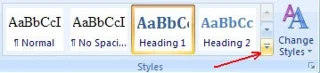
In the Styles group , click Heading 1 (or select any heading).
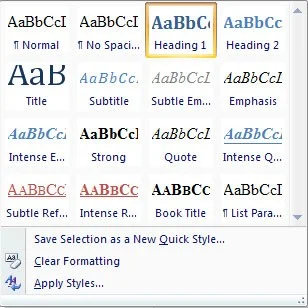
If you don't see the Style you want, click the arrow to expand the Quick Styles Gallery.
If the style you want does not appear, click Save Selection as New Quick Style
Method 2: Highlight items using Add Text of Table of Contents
Select the content you want to create a Heading for by highlighting it, highlight just enough of the line you want to create a Heading for, avoid highlighting too much.
Click the References tab
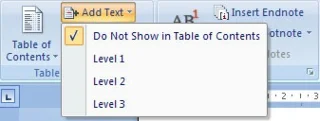
Click Add Text in the Table of Contents group
Click the Level you want to apply to the selected content.
Step 2: Insert automatic table of contents in Word
To create a table of contents automatically, follow these steps:
Place the cursor in the document where you want the automatic table of contents to be placed (usually the first or last page).
Click the References Tab
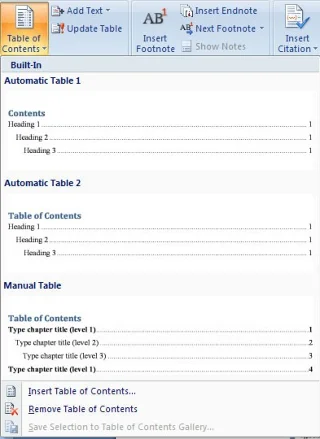
Click the Table of Contents button and choose from the available table of contents templates. If you don't like it, you can click Insert Table of Contents and format the table of contents in your own way.
On Word 2016, 2019, Word 365 versions, you have an additional option called Custom Table of Contents to edit the table of contents style.
2. Update the table of contents when there are changes
If you add or delete Headings. The Table of Contents can be updated by:
Apply Headings or markup to items as described above
Click the References tab in the Ribbon group.
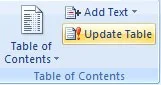
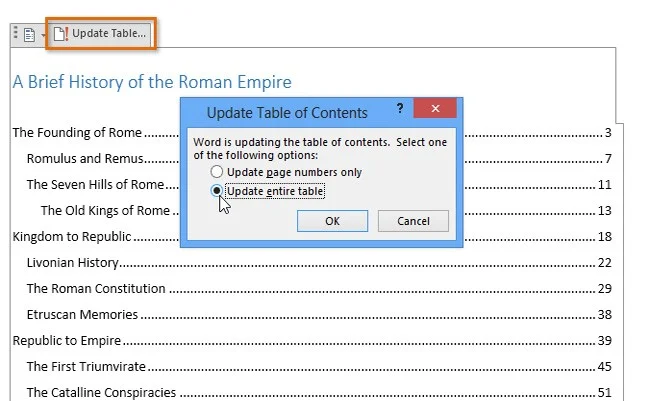
Click Update Table, there are 2 options to update the table of contents:
is update page numbers and update all. If you do not edit the names of the Headings, but only edit the text that changes the page numbers, then just select Update page numbers only.
3. Customize table of contents
Not happy with the way your table of contents looks in your existing templates? The good news is that there is a way to customize the look of your table of contents.
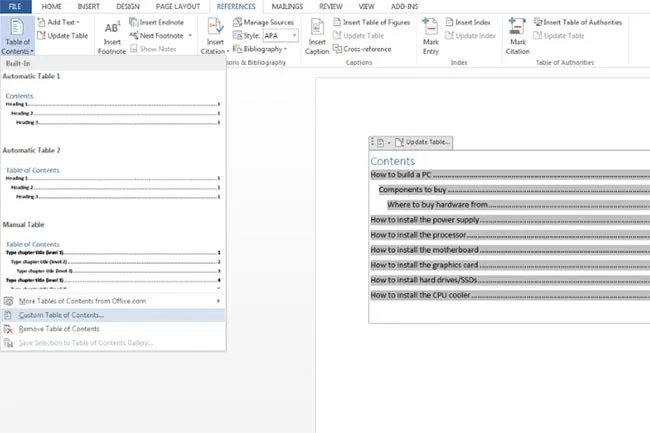
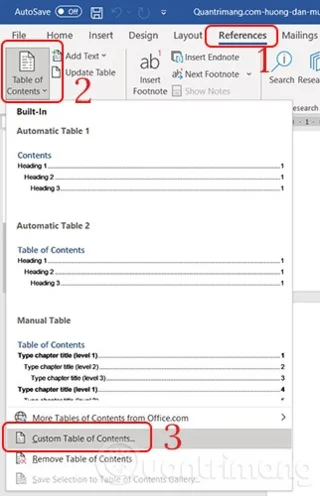
Step 1 : Click on your table. Select the References tab , select Table of Contents and click Custom Table of Contents .
The Custom Table of Contents button on Microsoft Word is used to customize the table of contents.
Step 2 : In the pop-up window, you can make various adjustments to the table, including how many levels to display, removing page numbers, and changing the alignment. You can also open the Options button for further customization. Click OK when you're done.
Customize options to your requirements
Step 3 : If you want to apply additional formatting, such as changing the look of text in a table, simply highlight what you want to change in the table and modify the size, color, style, etc. These options are located on the Home tab.
4. Build a table of contents manually
Your document may be set up in a way that makes it difficult to automatically create a table of contents. Therefore, you may choose to insert a manual table instead.
Step 1 : Click References , select Table of Contents and select Manual Table.
As the name suggests, you will be asked to make all the necessary edits, such as page numbers. It cannot be updated automatically. You will need to enter all the relevant details yourself.
Step 2 : To further customize the manual table of contents, click on the table of contents you created. Click the Custom Table of Contents field in the Table of Contents menu .
Build a table of contents manually
5. Delete table of contents in Word
To delete an automatic table of contents, follow these steps:
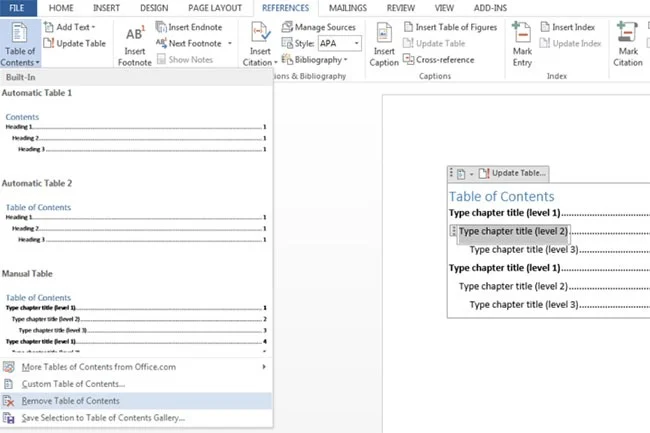
Click the References tab on the Ribbon group.
Click Table of Contents
Click Remove Table of contents.
6. Some common errors when creating a table of contents in Word
Automatic table of contents creation but no dots in table of contents?
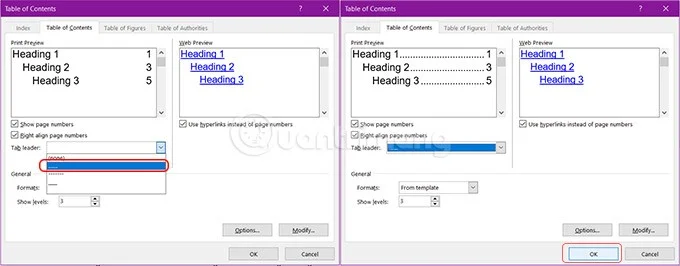
You can set up the table of contents by clicking on the References tab > Table of Contents > Custom Table of Contents :
In Leader Tab > select .... > OK :
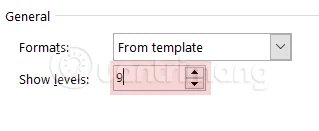
The table of contents only shows 3 levels?
You also go to the table of contents settings as above, then, in the Show levels section: you select the table of contents levels you want to display, up to 9. And make sure that you have marked enough headings according to the selected level for it to appear.
Table of contents does not show all headings
Error 1: The table of contents does not contain the heading you just added to your document.
Solution : Update the entire table of contents. If it still doesn't show up, check to see if a style is applied to the heading you're trying to include. If it is, apply the appropriate style and update the table of contents.
Error 2: The table of contents does not display all heading levels (i.e. level 1 is displayed but a subheading is not displayed).
How to fix : This could be related to not applying a style (see above) or the table of contents not being set up to pick up the correct style you applied.
Select Table of Contents then click the References tab and select Table of Contents/Custom Table of Contents to check the custom settings.
The table of contents displays too much information.
Error 1: Table of Contents is showing the entire paragraph
Solution : Go to the current paragraph(s) in the table of contents. They may have incorrect styles applied. This sometimes happens when you continue from previous paragraphs where the styles are not set correctly.
Select the paragraph and reapply the appropriate style, so that the paragraph content does not get mistakenly included in the table of contents. Check the previous paragraphs for correct formatting, then copy the appropriate style to another paragraph.
Error 2: Table of Contents is showing all paragraphs
Solution : In this case, the same style applies to both headings and paragraphs, so you need to correct the style as instructed above. Otherwise, the table of contents may mistakenly include some items in the table.
Video on how to create an automatic table of contents in Word 2019
The easiest way to create an automatic table of contents is to take advantage of the Heading Styles that you want to include in the table of contents. For example, there is Heading 1, Heading 2… depending on the content of the document. When you add or delete any Heading from the document, Word will update the table of contents automatically. Word also updates the page numbers in the table of contents when information in the document is added or deleted. When you create an automatic table of contents, the first thing you think about is marking the items in the document. The table of contents is formatted according to the levels of Headings. Level 1 will include any content formatted with Heading 1 style.
The above tutorial guides you on how to create an automatic table of contents on Word 365, Word 2021, 2019, 2016, 2013, 2010, even Word 20207, because their methods are basically not much different. If you are using Word 2003, you can refer to how to create an automatic table of contents in Word 2003 here.