Would Europe Be Drawn into a Hypothetical U.S.-Israel-Iran Nuclear War? NATO Rules Explained

A guide to NATO Articles 4 and 5, UN self-defense rules, and why consultation does not mean automatic European entry into war.
By default, Adobe Illustrator saves files in AI format. This is the ideal format when you are working on a project or saving a copy of your main job. But if you have to print, share, post online or import your finished product to other programs, you'll need to save it in popular formats like jpeg, png, svg ...
Adobe Illustrator gives you lots of file format options. The best choice depends on how you want to use the resulting image. Join us to find out the best image formats and how to use them offline.
Adobe Illustrator CC Adobe Illustrator CC for Mac
Before you learn how to save files in a specific format, it's important to know how Adobe Illustrator handles artboards and how to save them as separate files.
Artboard is like different pages in an Adobe Illustrator file. You can easily combine them into a single image, but you can also save them individually.
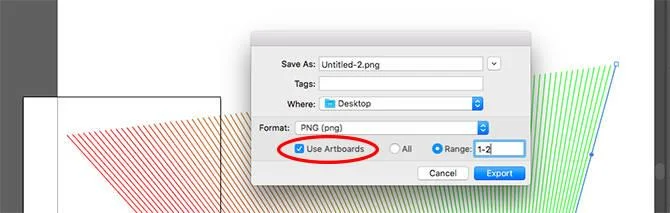
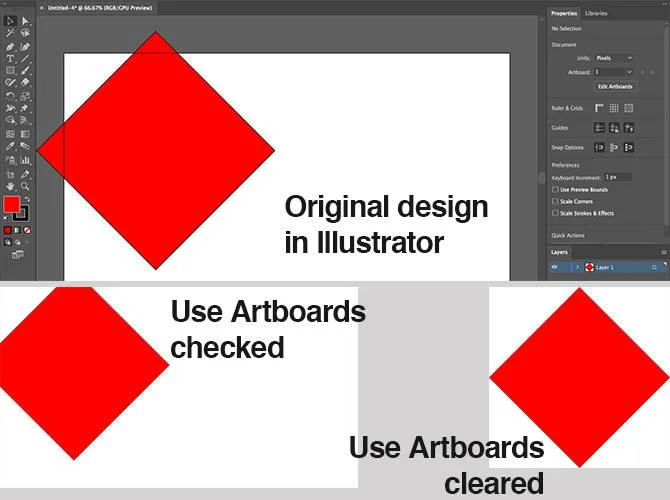
Most ways to save Adobe Illustrator files allow users to choose an artboard processing method. This affects the final output. In most cases, you need to select the action in the Export screen .
For illustration, infographic, or anything else that you need to print, such as a business card, it's best to export the file as a high-resolution jpeg file.
Ideally, you should design the work to the most realistic size. Although it's easy to resize an AI file without losing quality, you'll find that the size between objects, especially the content in the text - needs to be tighter at large sizes.
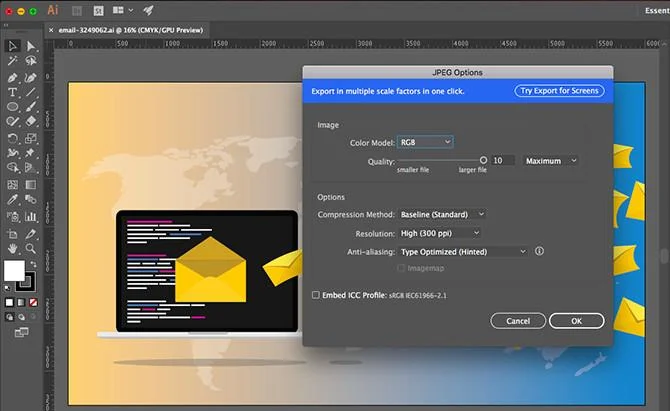
If you haven't done it this way, create a new document, paste it in the image, and then tweak it as you like. Now the image is ready to be saved in high resolution jpeg.
When you need to save images as logos or icons for use on the web, especially if you have a transparent background image, you probably want to save it as a PNG file.
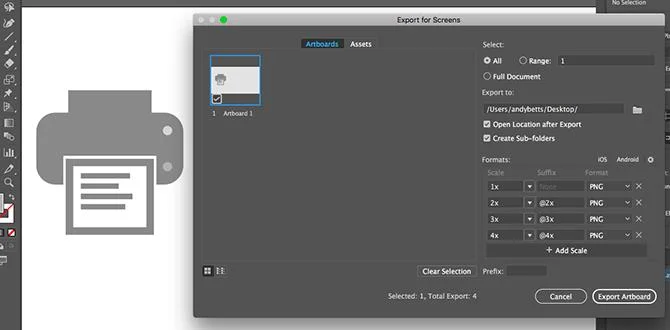
To meet standard and high resolution screens, export files in different sizes. You can do this automatically.
The best and most modern way to export icons, web logos is to use SVG (Scalable Vector Graphics) format. SVG is actually an XML markup language. While you can export the file to a web page, you can also save the image as a code snippet paste directly into the HTML file. You can then edit it with CSS. It is an effective way to add effects and motion to an image.
Saving AI files to SVG also has many other benefits: low size images, easy resizing because they are vector. You do not need to export multiple images in size to meet the different resolution screens as time consuming anymore.
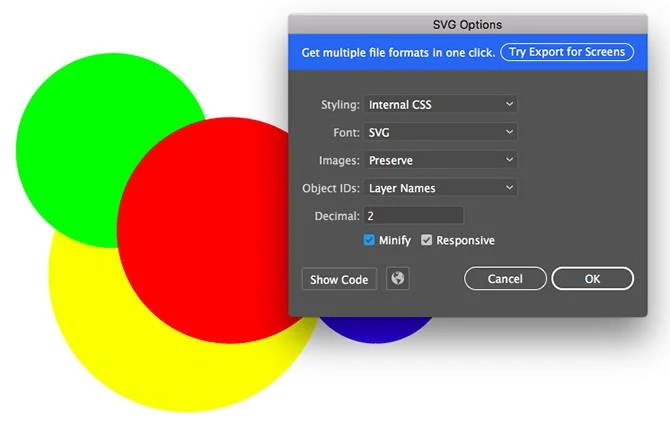
There are several ways to create SVG. Use Save As to create a larger file to work with. To create the final image used in the project, use the Export option .
The simplest way to save Adobe Illustrator files to PDF is via the Save As option . However, if you are using more than one artboard, it will combine them into a multi-page PDF.
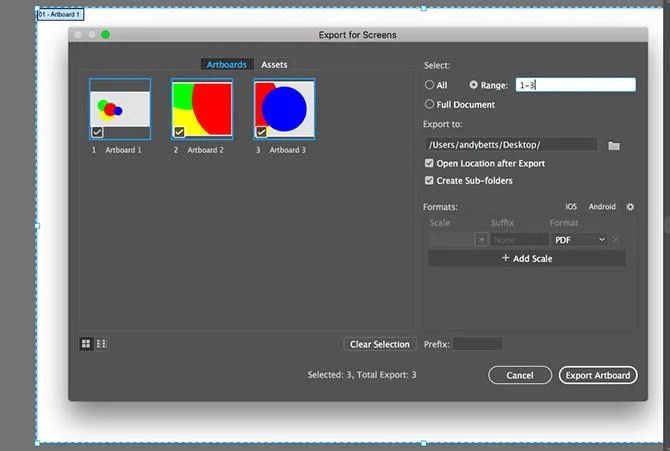
Here is a simple trick to save the artboard into a separate PDF file:
Sometimes, you need to save or export only selected objects from a large work. For example, if you designed your logo, you might want to save its text or icon as a separate file.
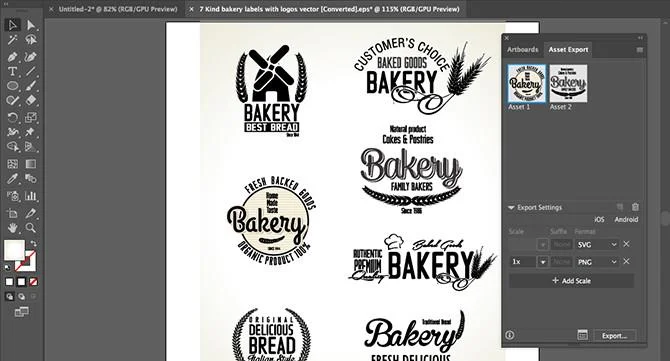
You can do this by turning objects into Assets .
There are actually many ways you can use Adobe Illustrator files in other programs. For example, Photoshop can open an AI file directly, but only as a flat image and cannot be edited. Use Export As instead of saving the file in PSD format, to retain the entire layer when opening it in Photoshop.
You can use AI files in Adobe applications and products like InDesign. Although not editable here, the image retains all the elements as transparent background ...
For most non-Adobe applications, you almost need to save the file in SVG format (using Save As). You can refer to the Guide to open AI files without Adobe Illustrator to better understand.
Hope the article is helpful to you!
A guide to NATO Articles 4 and 5, UN self-defense rules, and why consultation does not mean automatic European entry into war.
Assess claims about Iran in six steps, distinguishing uranium enrichment, weapons development and verified possession.
Understand nuclear decision authority in six steps, including US civilian control and the limits of public information about Israel.
A guide to official 2026 evidence on Hormuz shipping disruption, Iran-related claims, confirmed incidents, and what remains uncertain.
A source-based guide to nuclear escalation risks, UN Charter rules and NATO Article 5 in a strictly hypothetical Iran scenario.
Use five steps to prepare for an outage; nuclear and EMP scenarios are hypothetical, and official shelter instructions come first.
Use 5 defensive steps to verify a cyber disruption, protect household accounts, and avoid mistaking an outage for war.
Use these 5 steps to assess climate effects from a hypothetical Iran strike, compare model assumptions, and avoid unsupported predictions.
Explore six steps for reading research on climate, food and ecosystem recovery after a hypothetical nuclear conflict.
Build a practical fallout preparedness kit in six steps, with sealed food and water, a radio, medical supplies and shelter guidance.