Restore Collabora CODE Settings Without Losing Deployment Changes
Back up coolwsd.xml and its deployment sources, restore them safely, and verify CODE before users return to editing.
When you use the network, especially the Wifi network, the slow and losing network phenomenon is unavoidable, there are many causes of this unpleasant phenomenon, possibly due to the network operator , the connection line. The connection is unstable, users download is overloaded, and it can also be caused by multiple users at the same time, most afraid of your wifi users.
The reason why users of the temple may be that you do not set a wifi password makes your wifi access point overloaded if too many people access and use it at the same time, the second is that you have set a password but maybe the user password, or you have your password revealed, one for the other, hack the wifi password ... So how to know who is using your wifi.
The Wireless Network Watcher tool will help you do that, with a scan of users using WiFi and a list of those who are using your wifi, which will help you control the situation of using wifi in the temple, causing your network to be slow or worse than losing your network due to overload. Download.com.vn will guide you how to use and check who uses your Wifi via Wireless Network Watcher.
Step 1: First you download and install the software to your computer, see the article on how to download and install Wireless Network Watcher to see how to install it.
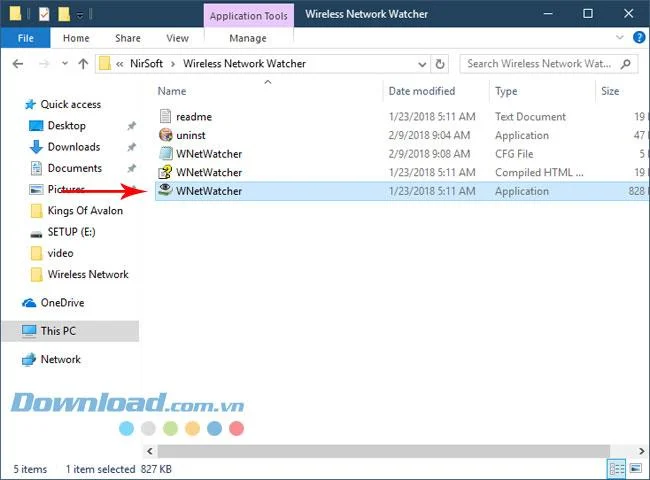
After installing the software, go to the folder containing the software and open the software with admin rights (right-click on the software icon, select Run as administrator ).
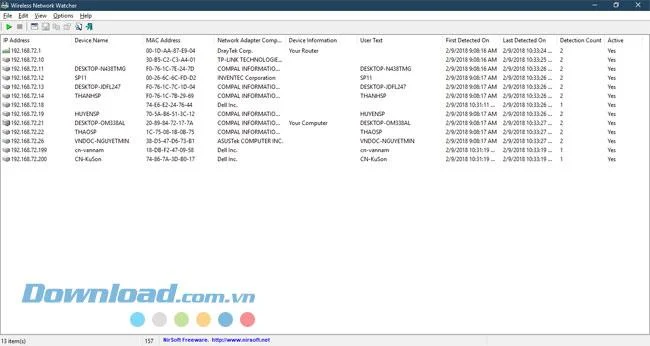
Step 2: When you start the software, you will immediately see the list of computers that are using your Wifi. Each column will have its own information such as:
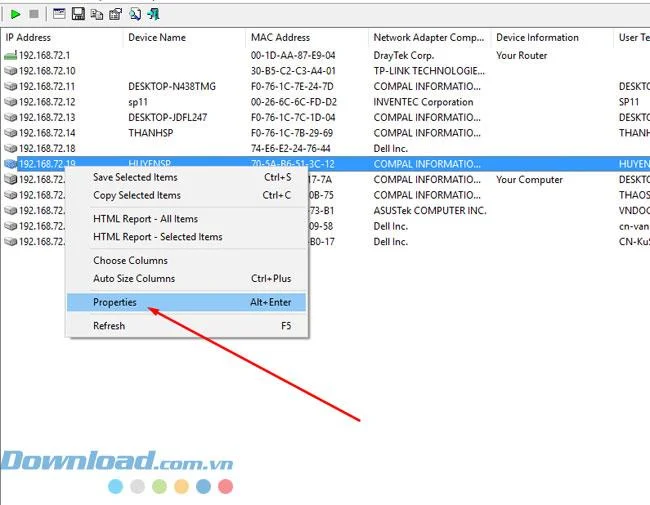
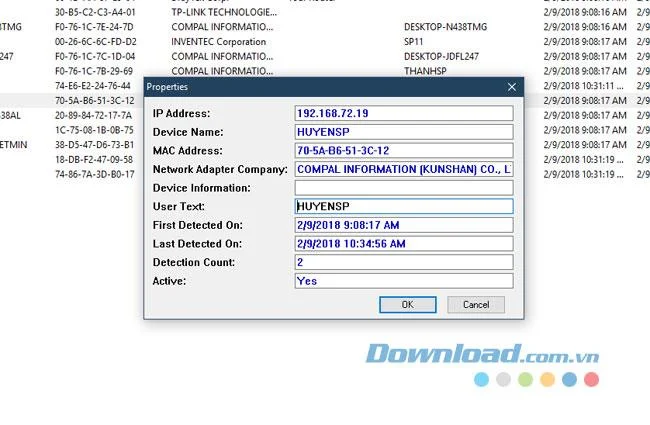
Step 3: You want to see the details of the device, just right click on the device information line and click Properties , or simply double-click on the device line.
This table will allow you to view more fully the information of that device and edit the content in the User Text section.
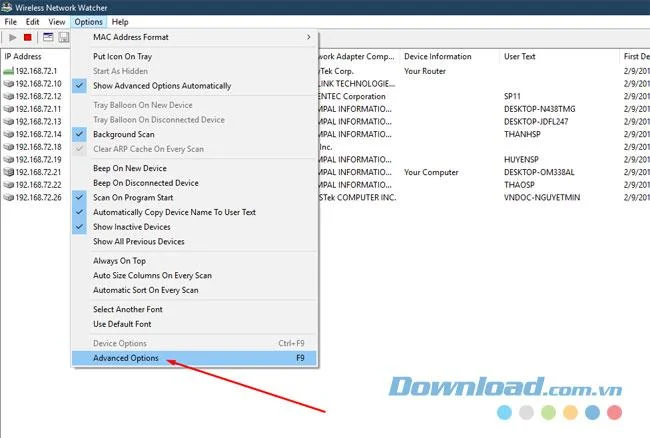
If you want to identify the graphics card you are using, go to Options and click Advanced Options or press the F9 shortcut .
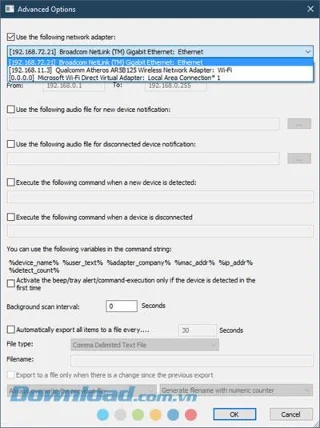
In Advanced Options, you can select the default network by checking the Use the following network adapter and select the network card you want to use.
There are detailed steps on how to use and use the Wireless Network Watcher tool to control and know who is using your Wifi, so you can actively prevent that person from connecting to your Wifi. To prevent users from using your Wifi, you should apply how to change the wifi password regularly, the article how to change the Wifi password on the computer will help you protect your Wifi, please refer to the article.
Wish you can protect your Wifi network safely.
Back up coolwsd.xml and its deployment sources, restore them safely, and verify CODE before users return to editing.
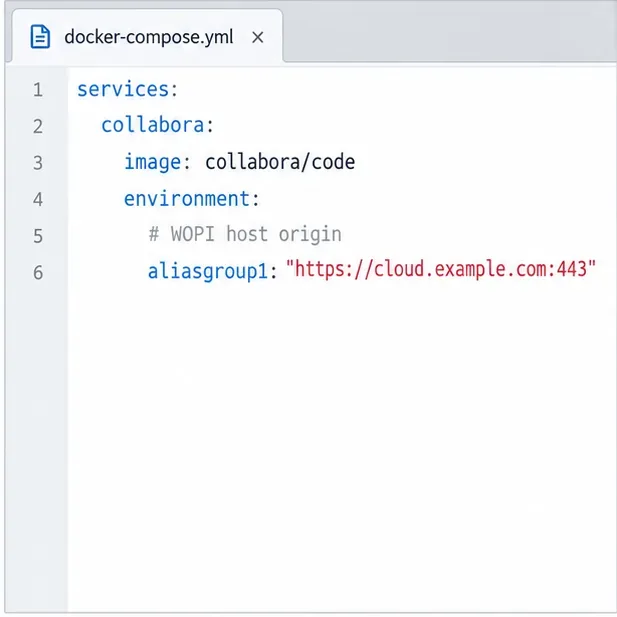
Allow the exact Nextcloud or other WOPI origin in CODE, then verify the active host allow-list and distinguish it from Nextcloud’s source-IP restriction.
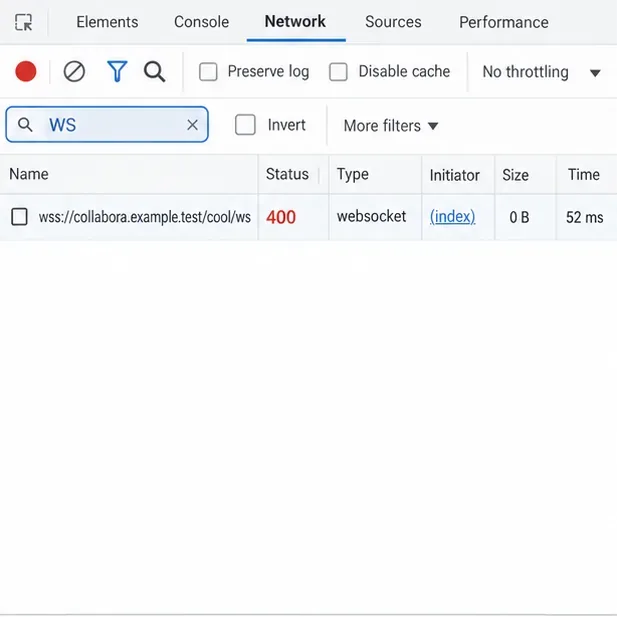
Trace Collabora’s browser, WOPI, and WebSocket connections to find why a document will not open, then apply the fix that matches your Nextcloud setup.
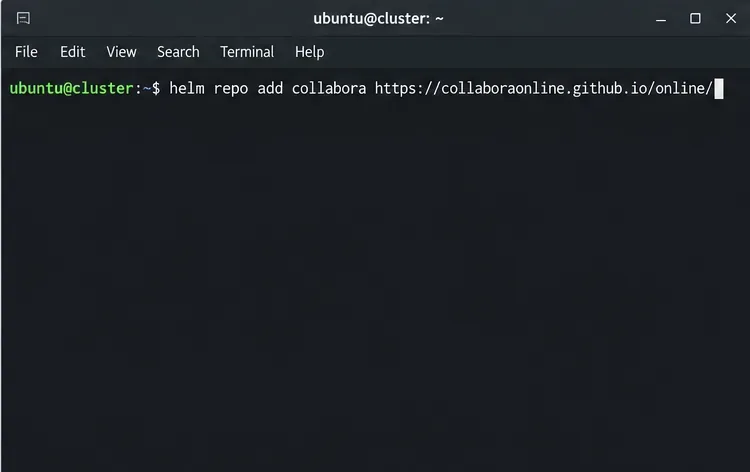
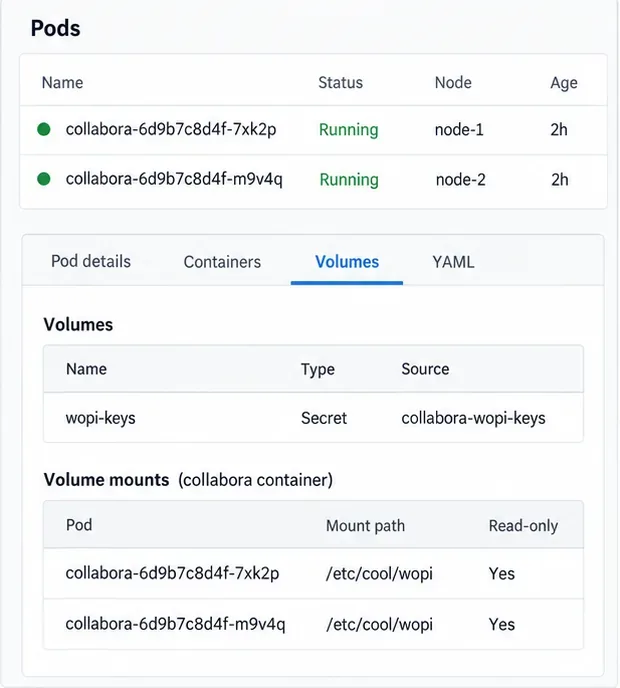
Deploy Collabora CODE replicas with Helm, keep each document on one pod through WOPI affinity, and verify ingress, node placement, and Nextcloud editing.
Trace a failed socket handshake from browser to coolwsd, then match the reverse-proxy route to your Collabora version, including the CODE 26.04 Apache change.
Trace Collabora WOPI proof failures to mismatched keys, stale discovery data, clock drift, or proxy URL changes—without weakening validation.
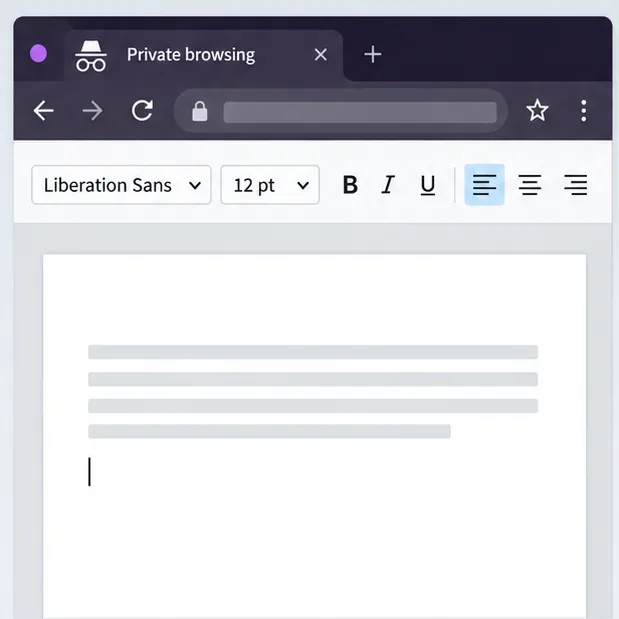
Reset browser zoom, test a clean session, and identify when a malformed size menu needs a Collabora server update.
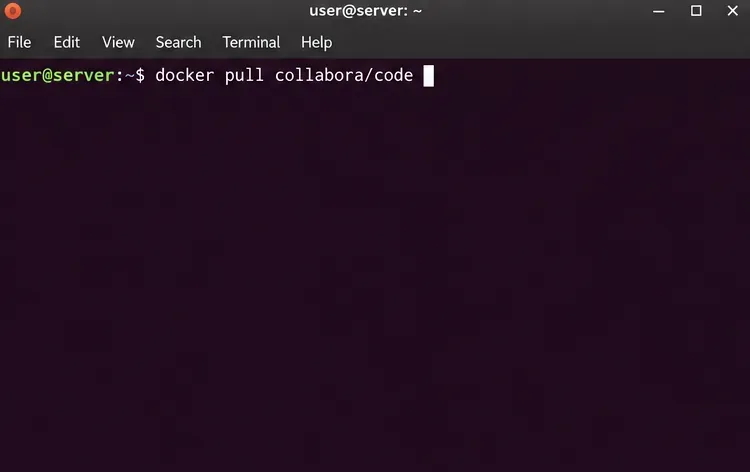
Deploy Collabora CODE with Docker, connect it securely to Nextcloud Office, and verify document editing with practical WOPI and proxy checks.
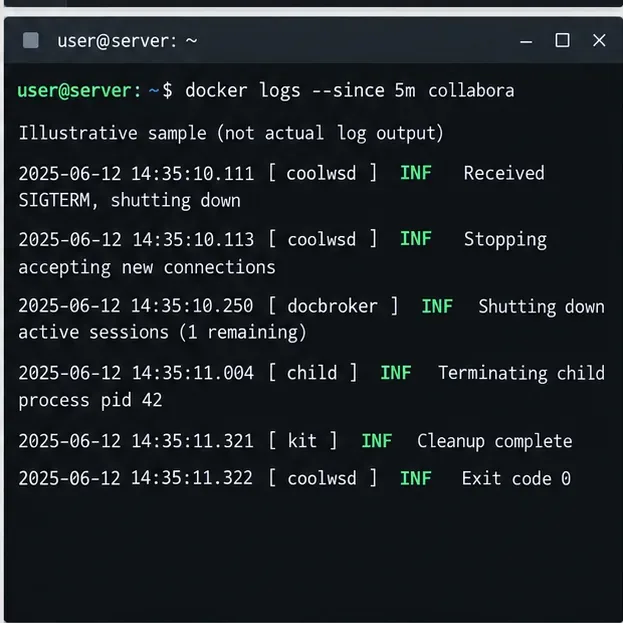
Temporarily raise coolwsd to debug, capture one failed open, and use the log sequence to separate WebSocket, WOPI, proxy, and container issues.
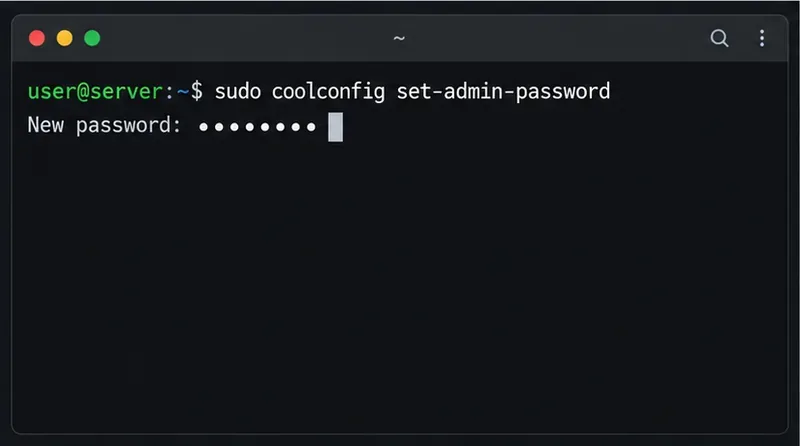
Configure the Collabora Online admin login for Docker or Linux, restart the right service, and verify the new password without exposing it.