Home
» Wiki
»
Stunning images reveal the strange phenomenon of the Serpens Nebula
Stunning images reveal the strange phenomenon of the Serpens Nebula
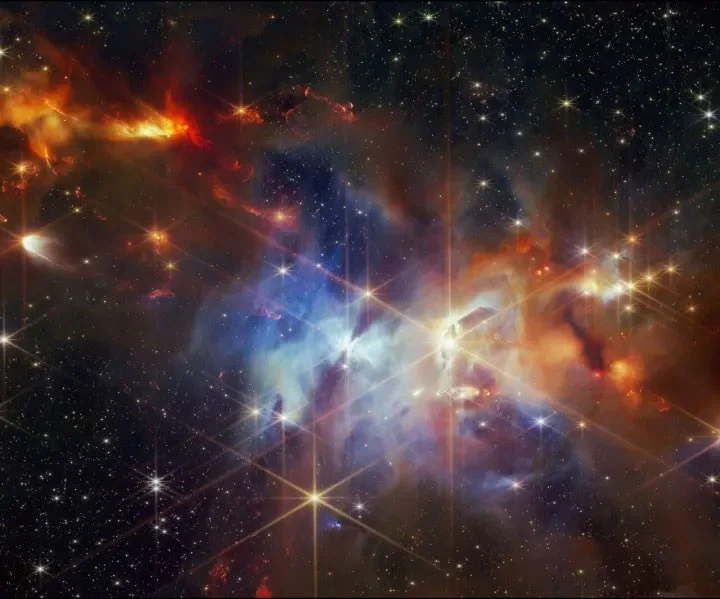
A stunning new image from the James Webb Space Telescope shows the famous Serpens Nebula, a dense star-forming region where new stars are constantly being born amid clouds of dust and gas. Unlike some other nebulae that are illuminated by radiation from stars, making them glow at observable wavelengths, Serpens is a type of nebula known as a reflection nebula, so it only shines due to light reflected from other sources.
The Serpens Nebula, located 1,300 light-years from Earth, is home to an exceptionally dense cluster of newly formed stars (around 100,000 years old), some of which will eventually grow to the mass of our Sun. The image shows a group of aligned protostar outflows (seen above left). These jets are identified by clumpy streaks of light that appear red, which are shock waves created when the jets hit the surrounding gas and dust.
In addition to being visually stunning, the image helps astronomers learn about a unique phenomenon involving newborn stars. When stars first form, they start out as objects called protostars, and these protostars can emit powerful jets of gas that flow out from their north and south poles.
As this gas escaping from the protostar collides with nearby dust and gas, it creates shock waves (visible in the upper left of the image). Red streaks of hydrogen molecules represent these shock wave flows, and one thing that is immediately noticeable is that they are all tilted at an angle. This is the first time such a jet alignment has been observed.
Normally, protostars have outflows of gas in all different directions, so the strange discovery in the image above suggests that something special is going on in this region, and it's directly affecting the young stars that are forming.
Astronomers have initially speculated that there are several forces that could be changing the direction of the outflows during this stage of a young star's life. One theory is that binary stars orbit each other and wobble in direction, deflecting the outflows over time.
To learn more about the Serpens Nebula, scientists plan to use James Webb's NIRSpec instrument to understand what the cloud is made of. Hopefully, more interesting information will be published in the near future.