Kawaii Halloween Decor Without Gore or Jump Scares

Create a gentle Halloween look with pastel colors, friendly ghosts, easy no-carve accents, and practical safety tips for your home.
Erasing the device is considered the number 1 option when it comes to dealing with malware . You erase all the data on the infected drive with the theory that the malware cannot survive the process. But is that really the case?
Why does wiping a hard drive not always remove malware?
Persistent malware is some of the worst out there. Most malware is effectively removed by a system restore or, worse, wiping the entire drive. But in either case, some types of malware stay active even after you think you’ve wiped everything off your drive.
Actually, this is a two-part problem.
First, restoring a system restore point is often recommended as a good way to remove malware. This makes sense; you're returning your computer to a known good configuration and hopefully avoiding significant data loss in the process.
However, system restore points are not a panacea. You have to hope that you created a system restore point before you discovered the malware. Furthermore, some types of malware can hide in files and folders that remain unchanged after a system restore, while other types of malware exist entirely outside of traditional file structures. Some malware can even delete your system restore points, making it difficult to restore a good configuration.
This brings us to our second point: Rootkits and bootkits. These truly dangerous types of malware hide outside of your hard drive and infect your hard drive firmware, BIOS/UEFI, master boot record (MBR), or GUID partition table (GPT). Since these components don’t exist on your hard drive, they can escape a system restore point or wipe your entire drive and re-infect your computer just when you thought you were safe.
Are Rootkits and Bootkits Different? How to Check for Persistent Malware
As you may already know, persistent malware, such as rootkits, bootkits, or other types, is particularly dangerous. However, there is a difference between rootkits and bootkits, and the way you remove them is different.
|
Rootkits |
Bootkits |
|
|---|---|---|
|
Location of infection |
Targets the operating system kernel, applications, or user space components. Embeds into system files or processes. |
Specifically targets the boot process, infecting areas such as MBR, GPT or BIOS/UEFI firmware. |
|
Control phase |
Gain control after the operating system has booted, usually in connection with system processes or drivers. |
Execute malicious code during the initial boot sequence, allowing control before the operating system loads. |
|
Maintenance mechanism |
Uses advanced techniques to maintain a hidden state in the operating system, which can occasionally be removed with rootkit removal tools |
More difficult to remove, as they can survive reboots and OS reinstalls, especially if embedded in the BIOS/UEFI. |
|
Complexity and detectability |
Can often be detected by security tools that scan memory and file systems, although they have the ability to evade these tools. |
More difficult to detect because it operates outside the control of OS-based antivirus tools, removal may require a boot-level scan. |
Detecting persistent malware is difficult no matter how you look at it, but there are some options.
First, consider your computer's performance. If you notice unusual startup issues or a significant decrease in performance, your computer may be infected with malware. It may not be persistent malware, but if you run regular malware scans and clean up your system, but the malware keeps coming back, it could be a sign of a more serious problem.
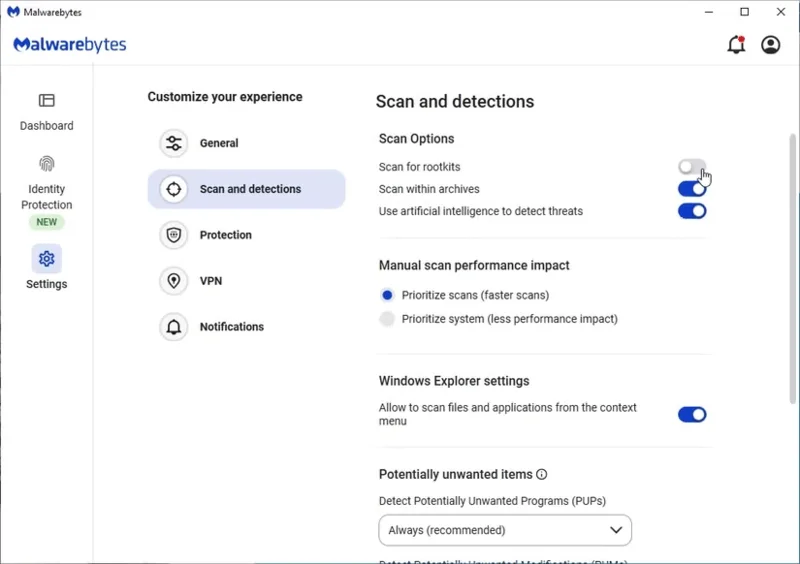
If so, you have a few options:
You should also consider checking with your motherboard manufacturer for firmware updates, as they may have patched bootkit exploits.
Persistent malware is a terrible experience. The best protection is to avoid getting infected in the first place, which means avoiding downloading untrusted, pirated, and similar content, and making sure you have a suitable antivirus or antimalware suite installed in the first place.
Create a gentle Halloween look with pastel colors, friendly ghosts, easy no-carve accents, and practical safety tips for your home.
Create a spooky office cubicle with Halloween desk decor ideas that keep your workspace usable, tidy, and mindful of workplace safety.
Plan a recognizable Halloween 2026 look with pop culture costumes inspired by Spider-Man, Supergirl, Toy Story 5, Moana, Mario, and Wednesday.
Sort leftover Halloween candy safely, share or repurpose sealed treats, and choose food use or compost for pumpkins based on their condition.
Compare workplace Halloween costume choices by respect, dress code, mobility, and safety—and learn when a subtle accessory or a policy check is the better option.
Find a couples costume that fits your style, budget, and comfort level, from Addams Family classics to original inside-joke duos.
Need a last-minute high school Halloween costume? Compare 10 easy closet-based ideas by prep time, comfort, school-day practicality, and simple safety checks.
Use a simple 2026 Halloween decorating timeline for indoor décor, outdoor displays, and fresh pumpkins, with practical adjustments for weather and events.
Mix five vivid, approachable Halloween cocktails with measured recipes, simple prep tips, and an alcohol-free option for your party guests.
Find 15 office-friendly Halloween costume ideas for 2026, with practical checks for dress codes, respectful themes, comfort, and workplace safety.