Home
» PC Tips
»
3 ways to update Windows 10 to the latest update 2025
3 ways to update Windows 10 to the latest update 2025
Have you recently noticed that Windows 10 is getting a new update with some bug fixes? Not updating Windows can be a pain, as Windows 10 updates bring a number of new features and improvements to the operating system.
There are 3 common ways to update Win 10: using Update Assistant, Media Creation Tool and Windows Update. Quantrimang.com will guide you to update Windows 10 in detail using all 3 of these methods.
Instructions for updating to the latest version of Windows 10
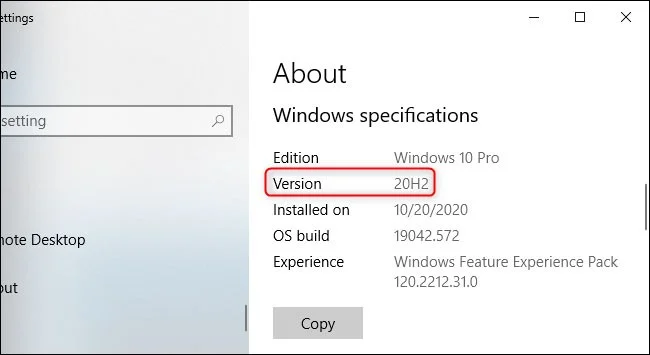
The latest version of Windows 10 is the 2022 Update, version “22H2”, which was released on October 18, 2022. Currently, Microsoft releases new major updates to Windows 10 every year, but there aren't many new features or changes in this version.
These major updates can take a while to reach your PC because Microsoft and PC manufacturers need to do extensive testing before rolling out the update widely.
The latest version of Windows 10 is the 2022 Update, released on October 18, 2022.
This update was codenamed “22H2” during development as it was due for release in the second half of 2022.
The Windows 10 2022 Update is such a minor update that Microsoft won’t even say what’s new in it. Microsoft says it’s “delivering a limited range of new features” in this update. According to Bleeping Computer, one known user change in this update is the option to see important notifications when Focus Assist (Do Not Disturb) is enabled. There are likely to be some smaller bug fixes and security improvements as well, as always.
When Microsoft makes an update available to your PC, it installs automatically. But Microsoft doesn’t push new Windows updates to all PCs at once. Instead, Microsoft rolls them out slowly over time, after both Microsoft and various PC manufacturers test whether they cause problems with different hardware configurations. If your PC isn’t getting an update, it means Microsoft isn’t confident that it will work on your hardware.
However, you can ignore this and choose to install the update. Because, you can always downgrade back to your current version of Windows 10 if you run into any problems, assuming you choose to do so within 10 days of upgrading. There is some risk here, but you are still installing a stable operating system update.
Why is keeping your PC up to date a good idea?
You may be tempted to pause Windows updates or click “Remind Me Later” when a software update notification appears so you can get back to work and do it later. This may seem harmless, but delaying software updates can have unfortunate consequences.
Programmers try their best to optimize software to prevent third-party intrusion. Hackers can find loopholes in the program's source code and exploit them to get user data.
Software updates will find these vulnerabilities and fix them, making the program and the information you store on it more secure.
Windows updates also help fix bugs. These are errors in the program code that cause the program to misbehave and display error messages. Updating your programs means you get the best performance from your software.
Installing these updates can be tedious and sometimes inconvenient, but they will be helpful in the long run.
1. How to update Windows 10 November 2021 using Update Assistant
Although this method is not as convenient as checking Windows Update , many users consider it more stable and less prone to minor errors. In particular, it can update to skip versions.
To update Windows 10 November 2021 using Windows 10 Update Assistant, do the following:
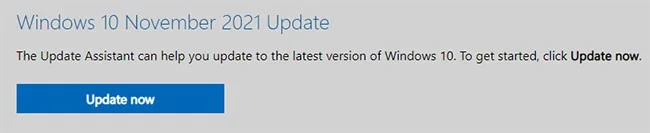
Step 1: Go to Microsoft's support website and click Update Now , the file saving window opens, select the folder to save the file (about 6MB).
Step 2: Download and run the file Windows10Upgrade9252.exe .
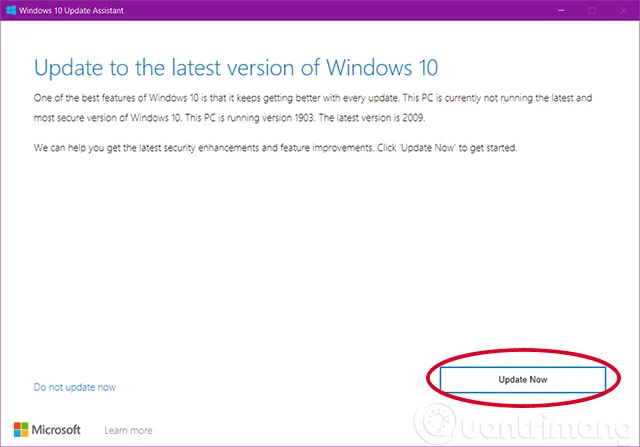
Step 3: In the Windows 10 Update Assistant window that just opened, click Update Now .
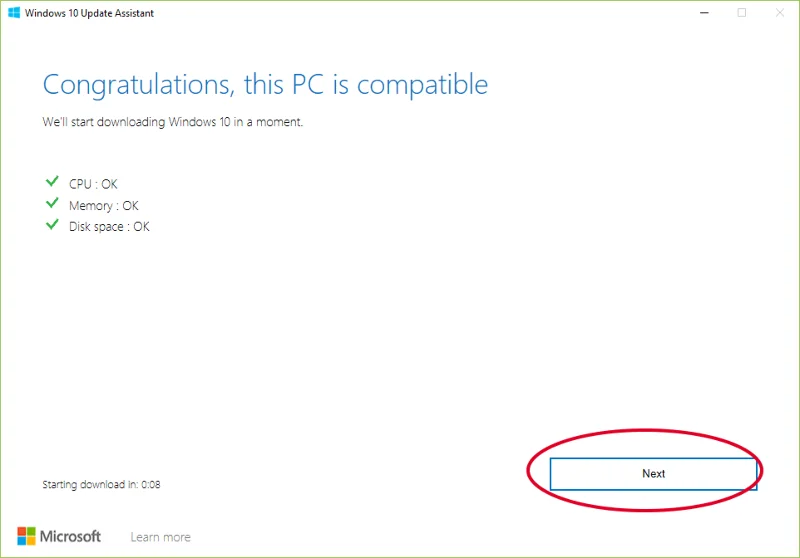
Step 4: Windows 10 Update Assistant will check if your computer is compatible with the update. If all conditions are met, you will see 3 green check buttons, click Next to continue.
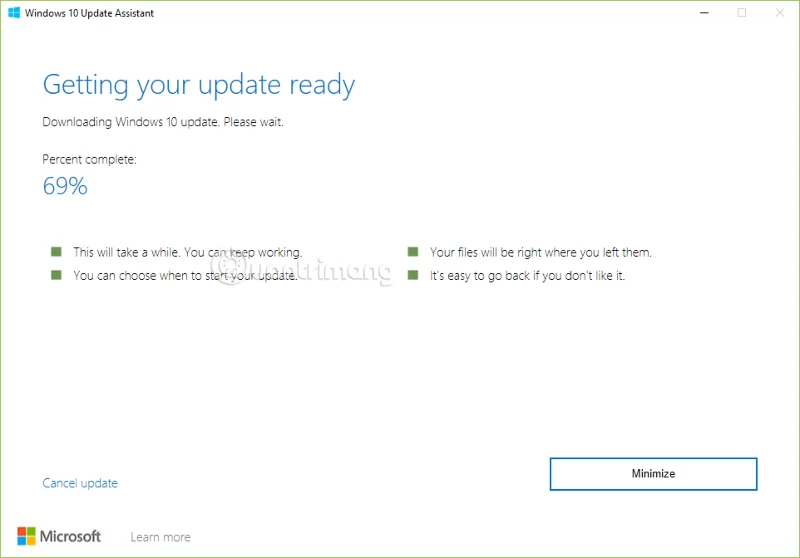
Step 5: The update assistant will download the necessary files for the update process to your computer. Depending on your network speed, this step may be fast or slow. It took my computer nearly 1 hour.
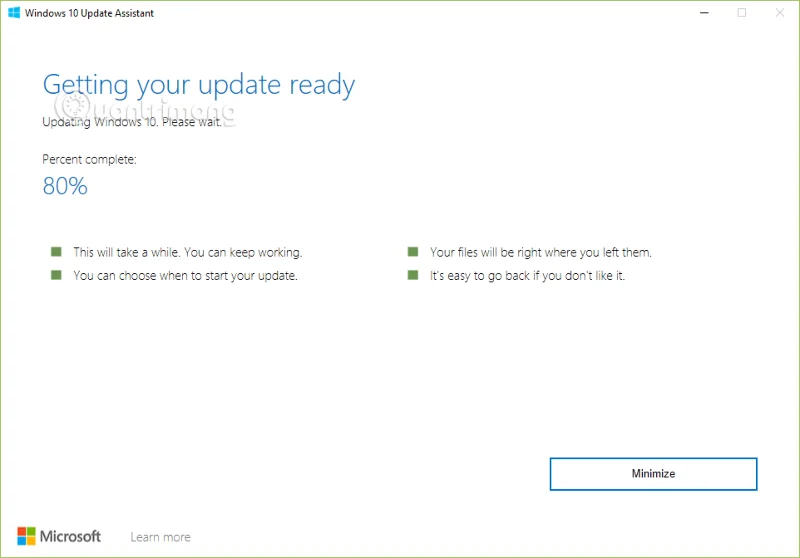
Step 6: The assistant will proceed to update the computer to Windows 10 November 2021 Update. This step will be slow at about 80%, then it will start to slow down like a snail, taking about 2 hours to complete.
Step 7: Restart your computer and wait for it to configure the new update, about 1 hour.
During the running process, the first 6 steps, you still work on the computer normally. When step 6 is finished, the computer will need to restart to configure the update, during this time you will only see a blue screen, displaying % and cannot do anything. You can restart immediately or set a timer to restart later. Restarting the computer is complete, you have finished updating.
Since it's just an update, all your data, apps, and most of your settings remain as they were before.
2. How to update Windows 10 using Media Creation Tool
If your device is compatible with the new feature update, but you're having trouble with Windows Update, you can use the Media Creation Tool to install the latest Windows 10 update on your computer.
To install a new version of Windows 10 using the Media Creation Tool, follow these steps:
Open the Microsoft support website, link in section 1.
Click on the Download tool now button .
Double-click the MediaCreationTool20H2.exe file to run the support tool.
Accept the terms of use, click Accept .
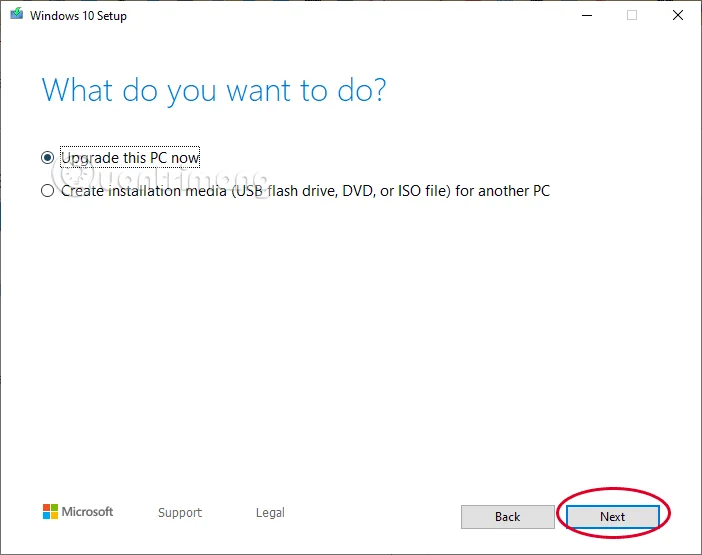
Here, click Upgrade this PC now to update your current computer or select Create installation media (USB flash drive, DVD, or ISO file) for another PC to create a bootable USB or download the Windows 10 ISO file to install on another computer. Then click Next.
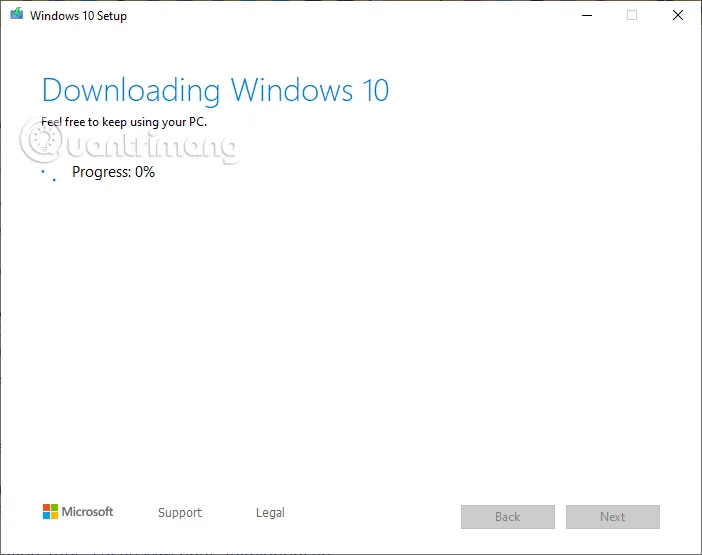
Next, the tool will download the Windows 10 update file to your computer and proceed with the update. Follow the instructions on the screen.
The Media Creation Tool will install Windows 10 version 2004 on your desktop, laptop, or tablet without losing your personal files, settings, and apps.
3. How to download Windows 10 updates using Windows Update
The safest way to get the November 2021 update is to wait until you receive an update notification on your device. However, you may wait a while and still not receive the update. So if you want to get the update quickly, you can force your computer to update using Windows Update when the update is available.
To update to Windows 10 November 2021 using Windows Update, follow these steps:
Step 1 . Open Settings .
Step 2. Click on Update & Security .
Step 3. Click on Windows Update .
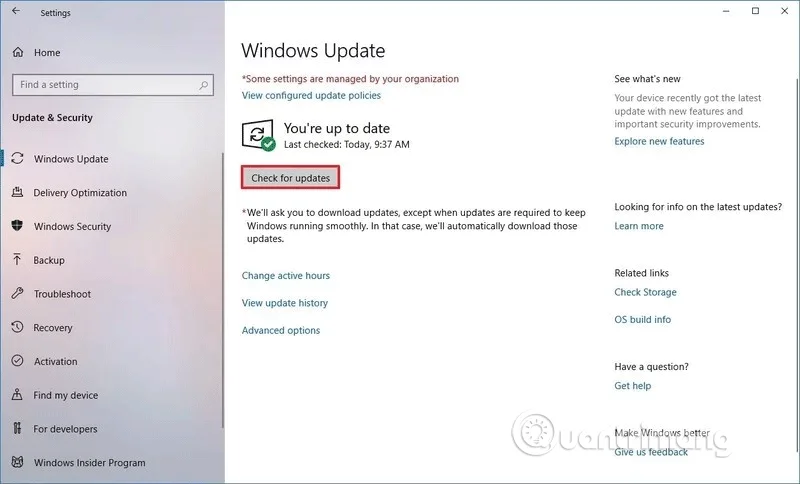
Step 4. Click the Check for updates button .
Step 5. Click the Download and install now button in the Feature Update to Windows 10 section .
Step 6. Click the Restart Now button after downloading the update to your device.
Once you complete the above steps, the new version will be downloaded and installed automatically, similar to installing a quality update, except it will take longer.
If you use Windows Update and your device doesn't see the update, it may be blocked by Microsoft because the new version isn't compatible with your hardware or software configuration.
If the above methods don't work, you can use the Media Creation Tool to create a bootable USB drive and perform a fresh installation of Windows 10 with the latest features and changes.
Note: New updates can be buggy. If you're not in a hurry for some reason, we recommend waiting until Windows Update automatically delivers the update to your computer. This will ensure that the update runs as smoothly as possible on your device.