Home
» PC Tips
»
5 ways to quickly launch programs on Windows
5 ways to quickly launch programs on Windows
On Windows, there are a few tricks that allow users to launch frequently used applications using keyboard shortcuts. By setting up and using these shortcuts, you will be able to quickly open the application you need without having to use the mouse to hover over each step to find the application.
Note : The instructions in this article apply to Windows 11/10 and Windows 7. Although the instructions in this article are for programs/applications, you can still use it to open folders as well as favorite websites with keyboard shortcuts.
Open the program on the Taskbar with a shortcut key
This trick works well on Windows 11, Windows 10, and 7. To do this, you will first need to pin frequently used applications to the Taskbar, then use the Windows key + the order of the application on the Taskbar . Here are the specific steps:
- Step 1 : Pin the application/program to the Taskbar
On Windows 10/7 : Go to Windows icon > right click on the application you want to create a shortcut for > More > Pin to taskbar .
On Windows 11 : Go to Windows icon > All apps > right click on the application > More > Pin to taskbar .
Pin an app to the taskbar on Windows 10
- Step 2 : Use shortcut keys on Taskbar
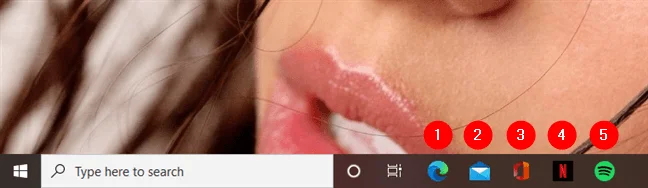
On Windows, we can press Windows key + order number to quickly launch the corresponding application on the taskbar. Example image below:
Shortcuts to run programs on Windows Taskbar
To open the above applications, we can use the following shortcuts:
Windows + 1 for Microsoft Edge
Windows + 2 for Edge
Windows + 3 for Office
Windows + 4 for Netflix
Windows + 5 for Spotify
....
You can do this with the first 9 apps pinned to the Taskbar, each getting a corresponding number from 1 to 9 based on their position.
If the program is already open, pressing the shortcut key will also quickly switch to the program. When the program has multiple windows open, the shortcut key will allow switching between these windows.
Open right on Start Menu Search
Users can use the search feature in the Start menu to launch a program.
- Step 1 : Press the Windows key on the keyboard.
- Step 2 : Type the program name. You can type the full name of the program, such as Chrome , or you can also type part of the name and see suggestions.
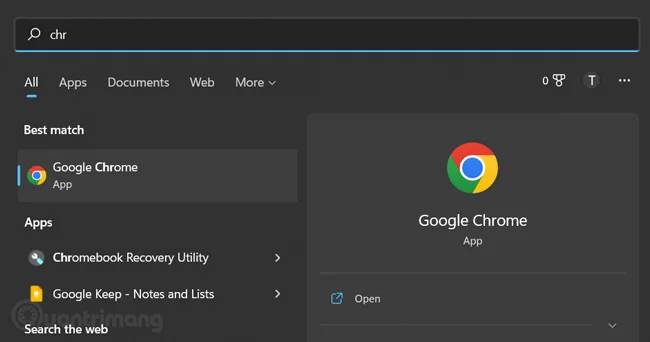
For example, press the Windows key, type chr , and press Enter to quickly launch Chrome (this works if no other installed apps also have chr in their names).
Quickly open applications from Start Menu Search
We can also use this trick to quickly open files in My Computer . Just type part of the file name.
Run the application from the Run dialog box
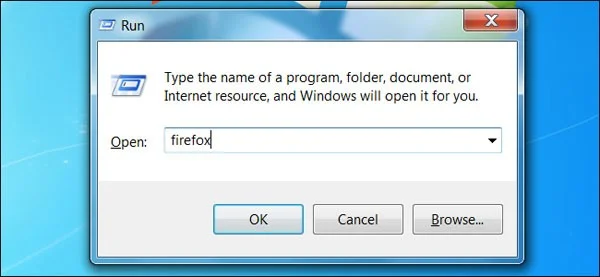
Another way is to use the Run box to quickly launch the application. Open the Run box by pressing the key combination Windows + R.
In the Run box , type the name of the program's .exe file and press Enter to launch it. For example, type firefox and press Enter to launch Firefox, or type chrome to launch Chrome.
Open any application by creating Shortcut
In addition to opening the application from the Taskbar, you can place the application shortcut right on the Desktop screen. Normally, when installing an application, the installer will immediately ask if you want to create a shortcut. If you have skipped this step, follow these steps to create a shortcut for the application or any folder/file:
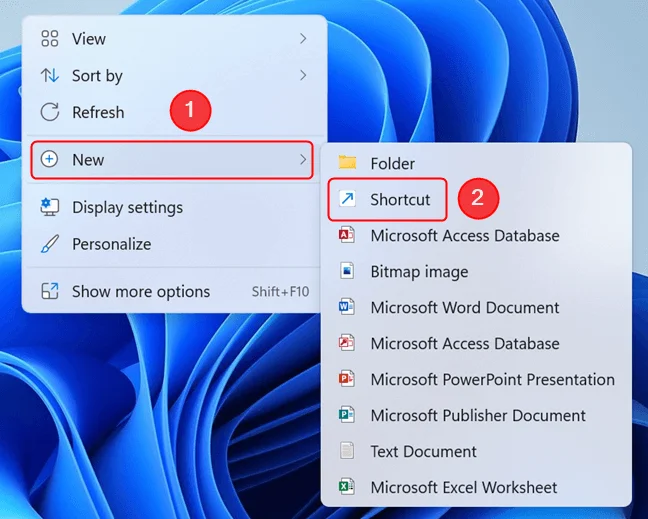
Step 1 : On the Desktop screen > right click > New > Shortcut
Create New Shortcut from Desktop
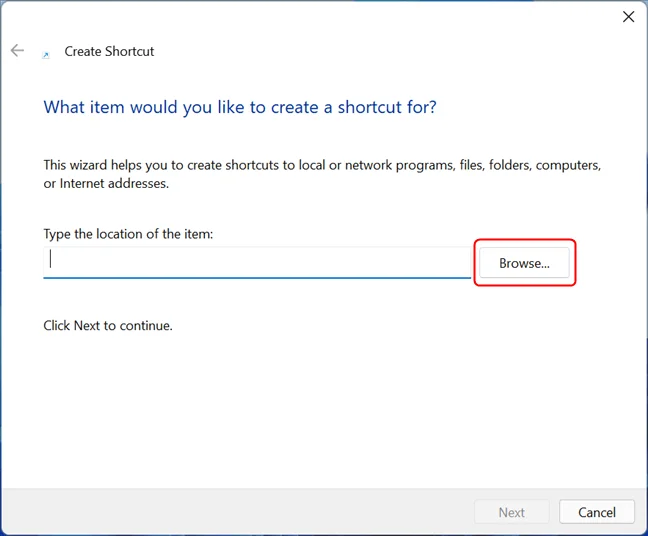
Step 2 : On the shortcut creator, enter the location of the application you want to create a shortcut for or select Browse... to find the location of the program you want to create a Shortcut for:
Click Browse... or enter the path of the file
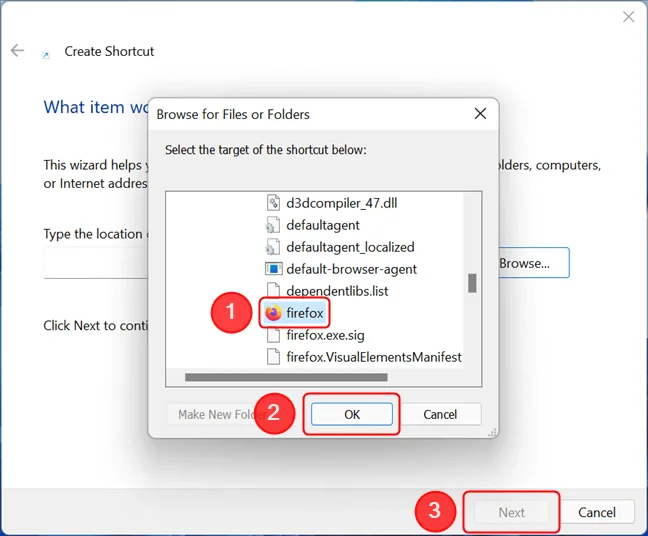
Step 3 :
A window to browse to the application path will open, select the location of the application or file you want to create a shortcut for and press OK . Hint: for example, if you want to create a shortcut for the Mozilla Firefox application, navigate to This PC > Windows (C:) > Program Files > Mozilla Firefox > firefox . After selecting the correct file, press OK and Next to continue.
Navigate to the application or file you need to create a shortcut for.
Note : If you are creating a shortcut for an application, make sure to select the correct program executable file (usually an .exe file) and not the support file.
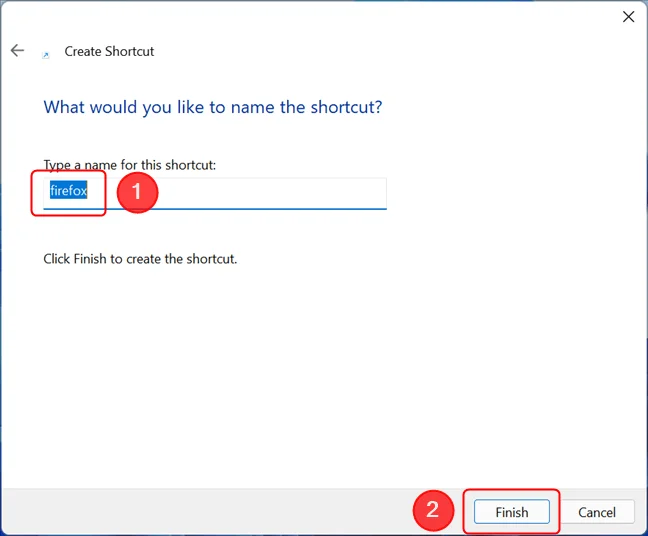
Step 4 : Name the shortcut, then click the Finish button .
Name the shortcut
The shortcut after creation is available on the Desktop screen and you can use it.
Create Shortcut for Shortcut application on screen
With the above instructions, you can quickly open the application on the screen. However, if you want to open the application faster with shortcut keys, follow a few more steps below:
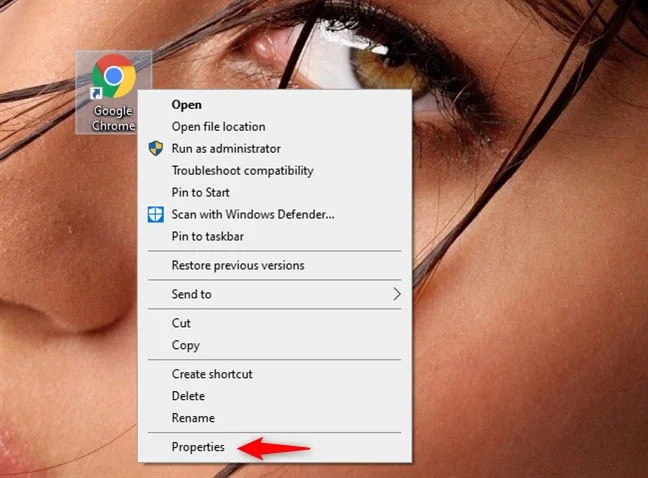
Step 1 : Right-click on the application shortcut you want to create a shortcut for on the screen.
Windows 10/7: select Properties
Windows 11: Show more options > Properties
Open the shortcut's Properties
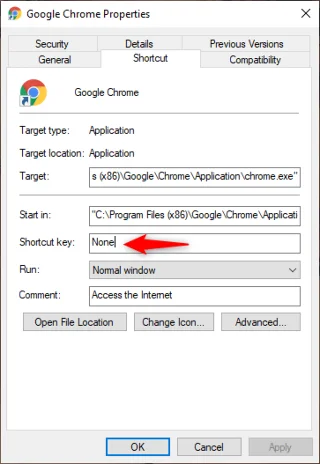
Step 2 : On the Properties window , go to the Shortcut tab , find the Shortcut key: section . If this shortcut has created a shortcut key, you will see its shortcut key here, if not created, you will see the word None .
Create a shortcut in the Shortcut Properties window
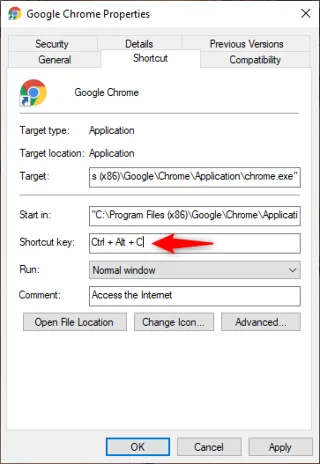
Step 3 : Click on the Shortcut key box and press the shortcut key combination you want to use to call the application, in this example we use the key combination: Ctrl + Alt + C to launch Chrome.
Press the shortcut key combination you want to use in the Shortcut key section
Step 4 : Once done, press OK to save the settings. Next, try pressing the shortcut you created to see if it works.
If you want to delete this shortcut, go back to the Shortcut key section above and delete the shortcut key cluster you created.