Home
» Health
»
Composting 101 for Apartment Dwellers: Choosing the Right Method for Your Space
Composting 101 for Apartment Dwellers: Choosing the Right Method for Your Space
Apartment composting is not about finding one “best” bin. The right choice depends on four practical questions: How much space do you have? What kinds of food scraps do you generate? How much maintenance are you willing to do? And, most importantly, what will happen to the material after it leaves your kitchen?
That last question matters because not every device marketed around food waste actually makes compost. Compost is a biologically stable soil amendment created by managed decomposition. A countertop grinder or dehydrator may make scraps smaller, drier, and easier to store, but the U.S. Environmental Protection Agency (EPA) explicitly distinguishes that output from finished compost. Likewise, bokashi is primarily a fermentation process that produces material requiring a second finishing stage.
For many apartment residents, the simplest and most reliable solution is a municipal or community food-scrap collection program. If you want to make a usable soil amendment at home, vermicomposting—composting with specialized worms—is usually the most apartment-friendly true composting method. Bokashi can be useful when you want to handle a wider range of foods, but only if you have a realistic destination for the fermented material. Electric food-waste appliances are best treated as storage and pre-processing tools, not as automatic compost makers.
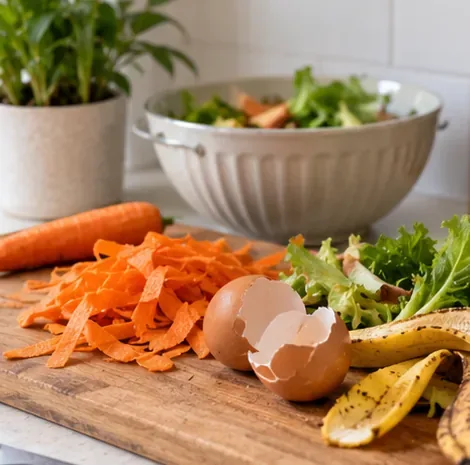
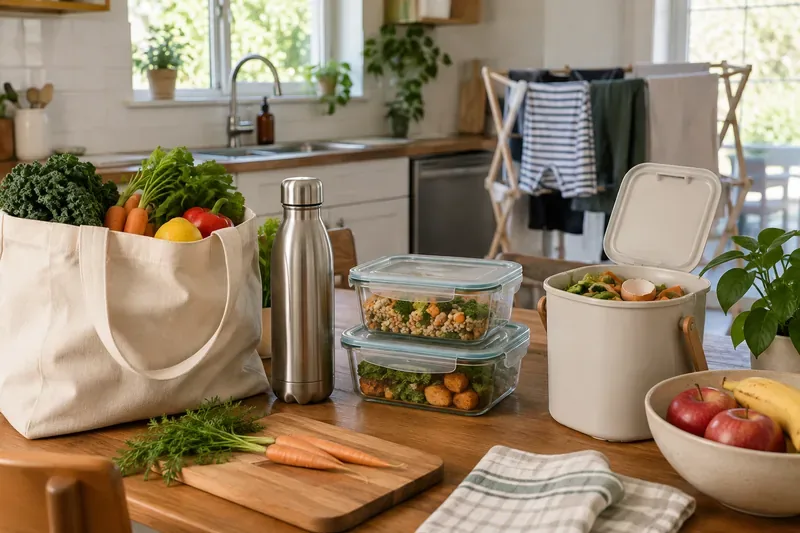
Sorting unavoidable kitchen scraps separately from edible leftovers makes it easier to choose the right apartment composting or collection method.
Start With the Bigger Goal: Waste Less Before You Compost
As of September 2026, the EPA’s current Wasted Food Scale still places preventing wasted food above composting. That is a useful reality check. Composting is valuable, but it does not erase the land, water, energy, labor, refrigeration, and transportation already used to produce food that was never eaten.
So the first apartment-composting habit is surprisingly simple: separate unavoidable scraps from avoidable waste. Banana peels, coffee grounds, eggshells, and vegetable trimmings may be unavoidable. A forgotten container of leftovers often was not. Meal planning, using older ingredients first, freezing food before it spoils, and serving smaller portions can reduce waste before you need a compost solution.
Once you have done that, composting helps keep unavoidable organic material out of disposal pathways such as landfills. EPA research estimates that food makes up about 24% of material disposed in U.S. municipal solid waste landfills and is responsible for a disproportionate share of landfill methane emissions. The exact benefit of composting in your situation still depends on local collection, transportation, processing, and disposal systems, but diverting food scraps from landfill is a meaningful goal.
Four Apartment Composting Options Compared
Option
Space Needed
Daily Upkeep
Food Types
What You Get
Best Fit
Municipal or community collection
Very low
Low
Depends on local rules
No compost at home
People who want the easiest, lowest-maintenance route
Can handle a wider range, including many cooked foods and animal products
Fermented pre-compost that needs a second stage
People with access to soil, a community garden, or another compost system
Electric grinder/dehydrator
Low
Low to moderate
Varies by appliance
Dried or processed food material, not finished compost
People prioritizing odor and volume reduction over making compost at home
Option 1: Municipal or Community Collection
If your building, city, private hauler, farmers market, or community garden accepts food scraps, this is often the best starting point for an apartment. You do not need to maintain a biological system indoors, and a commercial or community operation may accept materials that are impractical in a small home bin.
The EPA describes both curbside collection and drop-off sites as established models in its overview of composting approaches. The tradeoff is that acceptance rules are local. Some programs accept meat, bones, dairy, certified compostable serviceware, or soiled paper; others do not. Never assume that a package labeled “compostable” belongs in your local organics bin.
How to make collection work in a small kitchen
Use a small, washable, lidded container rather than a huge indoor bin. If odors or fruit flies are a problem, refrigerate or freeze food scraps until collection day. The EPA’s home-composting guidance specifically notes that kitchen scraps can be stored in a closed container, refrigerator, or freezer before composting.
This method has one major limitation: you do not receive compost at home unless the program redistributes finished material. If your main goal is simply reducing trash, that may not matter. If you specifically want compost for houseplants or balcony containers, consider vermicomposting instead.
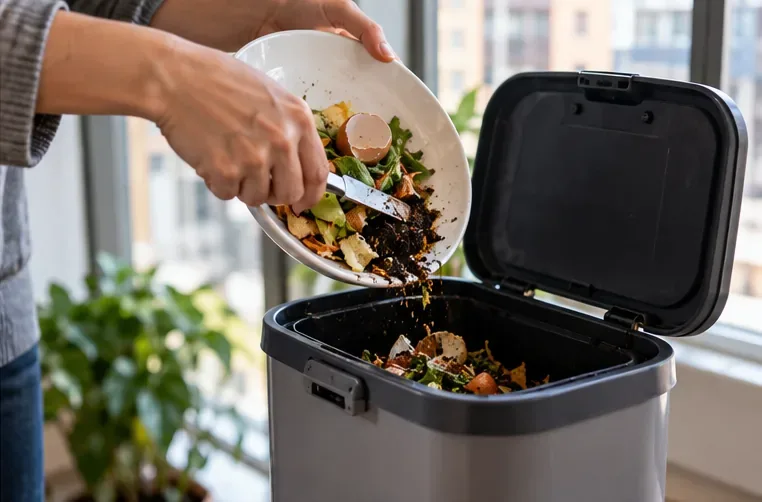
A compact collection bin keeps scraps contained between trips to a curbside or community program; freezing scraps can further reduce odor and insect problems.
Option 2: Vermicomposting — Best for Making Compost Indoors
Vermicomposting means using composting worms and microorganisms to convert food scraps and bedding into vermicompost, a stable soil amendment. Unlike backyard hot composting, a worm bin does not need a large outdoor pile, making it one of the most practical ways to produce compost inside an apartment.
The EPA’s updated indoor worm-bin guidance recommends a ventilated container, damp bedding, suitable composting worms such as red wigglers, and a location protected from temperature extremes. EPA guidance identifies roughly 59°F to 77°F as the preferred temperature range, although worms can survive a wider range when conditions are otherwise adequate.
What goes in a worm bin?
A beginner-friendly worm bin is easiest to manage with fruit and vegetable scraps, coffee grounds and paper filters, plain paper tea bags without staples, crushed eggshells, and moist shredded paper or cardboard bedding. Bedding is the carbon-rich material that gives the bin structure, holds moisture, and maintains air spaces.
The EPA advises avoiding meat, dairy, greasy foods, bones, pet waste, and large amounts of pungent or acidic foods in a home worm bin. These restrictions are not because worms are fragile decorations; they are about keeping a small indoor ecosystem balanced and less attractive to pests.
The tradeoffs
A worm bin can produce useful vermicompost in roughly three to six months under good conditions, according to EPA guidance. It also requires observation. Overfeeding is one of the most common mistakes. If food is accumulating faster than worms can process it, stop feeding until the backlog decreases. If the bin smells bad, it is usually a management signal rather than an unavoidable feature of worms.
Worm bins also require an outlet for the finished vermicompost. That is easy if you have houseplants, balcony planters, a community garden, or a neighbor who gardens. It is less useful if you have nowhere to use or share the material.
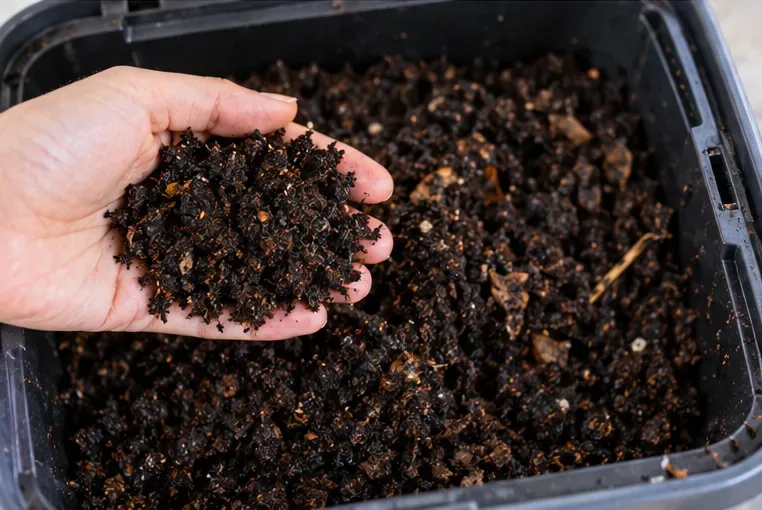
Finished compost or vermicompost should be dark and crumbly rather than recognizable as fresh kitchen scraps; this material can be used as a soil amendment.
Option 3: Bokashi — Compact and Flexible, but Not Finished Compost
Bokashi is an anaerobic fermentation process. “Anaerobic” means it happens with little or no oxygen, so scraps are packed into an airtight container with inoculated bran containing microorganisms that ferment the food. This differs from conventional composting, which is aerobic—meaning oxygen is part of the decomposition process.
Arizona’s Department of Environmental Quality explains in its household bokashi guide that bokashi technically ferments food rather than producing finished compost. Washington State University Extension similarly describes the result as a pre-compost that must be buried in soil or added to another compost system to complete breakdown.
The attraction for apartment dwellers is clear: the sealed bucket is compact, the process can handle a broader range of foods than a typical worm bin, and properly managed fermentation usually has a sour or pickle-like smell rather than the odor of rotting food. Guidance from these public agencies includes meat, dairy, and cooked food among the materials bokashi can process.
But this advantage creates the biggest tradeoff: you still need a second destination. Fermented bokashi material should not simply be spread on top of houseplant soil as though it were mature compost. If you have access to a community garden, large planter, outdoor soil bed, or a compatible composting system, bokashi can be excellent. If you live on the twentieth floor with no garden access and no participating community program, you may end up with a bucket of fermented material and nowhere appropriate to finish it.
Bokashi also requires a continuing supply of inoculated bran, adding a recurring cost that worm bins do not have in the same way.
Option 4: Electric Food-Waste Appliances — Convenient Pre-Processing
Countertop “food recyclers,” grinders, and dehydrators are attractive because they can reduce the volume, moisture, and odor of food scraps. They can be particularly useful when you must store scraps for several days before a collection or drop-off.
However, the EPA’s current composting guidance is clear: residential grinders and dehydrators do not produce compost. Their output remains food-derived material that needs further composting, curing, or another appropriate treatment before it should be considered a stable soil amendment.
The tradeoff is convenience versus energy and end-of-process clarity. An electric appliance uses power to make scraps easier to handle. Whether that is environmentally worthwhile depends on the device, electricity source, what material you process, and where the output goes next. If the dried output ultimately goes into the trash, you have mainly changed its weight and volume, not completed a composting cycle.
What Should You Put in Your System?
The answer depends on the destination, not just on whether something seems “natural.” Apartment composting goes wrong when people treat all organic-looking materials as universally compostable.
For a worm bin: favor fruit and vegetable scraps, coffee grounds, plain paper filters, suitable tea bags, crushed eggshells, and shredded non-glossy paper or cardboard bedding.
For bokashi: a wider variety of food scraps may be acceptable, but follow the guidance for your bucket and make sure you have a finishing destination.
For curbside or drop-off: follow the local program’s list exactly. Commercial facilities vary widely in what they are designed to process.
For an electric appliance: follow the manufacturer’s input restrictions, then verify what you are supposed to do with the processed output.
Produce stickers, conventional plastic, glass, and metal do not belong in compost. Compostable bags and foodservice ware should go into a collection program only when that specific program says it accepts them.
Odor, Fruit Flies, and Other Apartment Problems
If your scrap container smells
Reduce how long scraps sit at room temperature. Use a tight-fitting container, empty it more frequently, or store scraps in the refrigerator or freezer. Wash the container after collection. For a worm bin, persistent odor often means excess food, excess moisture, or insufficient bedding and airflow.
If fruit flies appear
Keep fresh scraps covered rather than exposed. In a worm bin, bury food beneath bedding. Avoid leaving wet food residue around the rim or lid. Freezing scraps before adding them can also make storage easier, although a healthy worm bin still depends on good feeding and moisture management.
If a worm bin looks too wet
Add dry shredded cardboard or paper and reduce watery food temporarily. Bedding should be moist, not waterlogged. Poor airflow and excessive moisture encourage unpleasant anaerobic conditions.
If nothing is breaking down quickly
Expect apartment-scale systems to work more slowly than marketing photos imply. Chop large scraps into smaller pieces, avoid overfeeding, and keep conditions appropriate for the organisms doing the work. A worm bin is a living system, not a garbage disposal.
Where Will the Finished Material Go?
This is the question to answer before buying equipment. Finished compost is a soil amendment—a material mixed with soil to improve properties such as organic matter, structure, and water-holding capacity. It is not a replacement for all potting mix, and more is not automatically better.
If you have only a few houseplants, a productive worm bin may eventually make more vermicompost than you need. Plan to share it with neighbors, a community garden, or friends who grow plants. For bokashi, confirm access to a suitable second-stage composting or soil system before you begin.
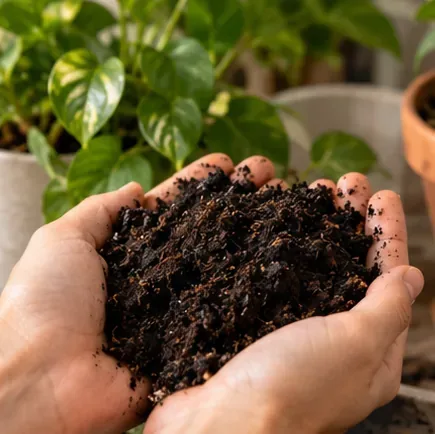
Finished compost can support container plants when used appropriately as a soil amendment; extra material can be shared with gardeners or community growing spaces.
Which Method Should You Choose?
Choose municipal or community collection if your priority is convenience, you have very little space, or you do not want to manage worms or fermentation. This is also the easiest option for households that generate more scraps than a small indoor system can comfortably process.
Choose vermicomposting if you want to make a genuine soil amendment indoors, mostly generate plant-based scraps, and do not mind maintaining a small living system. For many apartment dwellers who enjoy houseplants, this is the best balance of space efficiency and useful output.
Choose bokashi if you want to process a broader range of foods in a compact sealed bucket and you have a reliable place to bury or further compost the fermented material. The method is less attractive when you have no soil access or no partner willing to accept the pre-compost.
Choose an electric grinder or dehydrator if your main problem is storing wet scraps without odor and you understand that the output still needs another destination. Treat the machine as a pre-processing appliance rather than a substitute for composting.
And if none of those options fits your apartment today, simply reducing food waste and keeping an eye out for a local drop-off program is still progress. You do not need to force a poorly matched indoor system into a small home just to say you compost.
A Practical Apartment Composting Checklist
First reduce edible food waste through better planning, storage, and leftovers management.
Check your building and municipality for curbside or food-scrap drop-off options.
Estimate how much scrap you actually generate for one week before choosing a bin.
Confirm which materials your chosen system accepts.
Decide where the final compost, vermicompost, bokashi pre-compost, or dehydrated material will go.
Use a small, washable kitchen collection container rather than oversizing.
Refrigerate or freeze scraps when collection is infrequent or odors are a concern.
Keep contaminants such as plastic produce stickers out of organic material.
For worms, feed conservatively and maintain moist, airy bedding.
For bokashi, plan the second-stage finishing process before filling the first bucket.