Home
» Health
»
Eco-Friendly Habits You Can Start Today: Practical Changes That Actually Stick
Eco-Friendly Habits You Can Start Today: Practical Changes That Actually Stick
The best eco-friendly habits are not the ones that require a complete lifestyle overhaul. They are the repeatable choices that reduce waste, energy use, water use, and unnecessary driving without making daily life harder. If you want to start today, focus first on preventing food waste, driving fewer miles when practical, using less heating and cooling energy, washing clothes efficiently, and buying fewer disposable or short-lived products.
That order matters because “green” choices are not automatically equal. The environmental effect of a habit depends on where you live, how your electricity is generated, how you travel, what you buy, and what services your community provides. The U.S. Environmental Protection Agency's Household Carbon Footprint Calculator reflects this by separating household emissions into home energy, transportation, and waste.
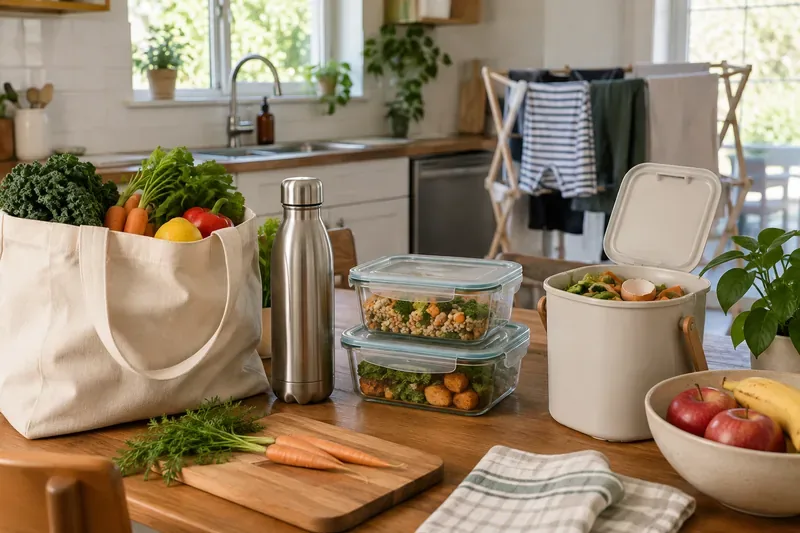
Simple household habits can work together: buy only what you will use, carry reusable items, store leftovers, separate food scraps where appropriate, and air-dry laundry when practical.
Start with the habits you can repeat every week
A sustainable routine is more useful than an ambitious one-day challenge. Pick two or three changes that fit your home, budget, schedule, and local infrastructure, then make them automatic. The table below is a practical starting point.
Habit
What to do today
Best fit
Important condition
Prevent food waste
Check the refrigerator and plan one meal around food that needs to be used first.
Almost every household
Preventing waste is preferable to managing it after the fact.
Drive less
Replace one short car trip with walking, biking, transit, carpooling, or a combined errand trip.
People with safe, practical alternatives
Options depend heavily on location, mobility, weather, and transit access.
Wash efficiently
Run a full load and choose cold water for normal laundry.
Most households with a washer
Some oily stains or sanitation needs may require a different cycle.
Use less HVAC energy
Adjust the thermostat when the home is empty or while you sleep.
Homes with controllable heating or cooling
Comfort, humidity, pets, health needs, and heat-pump controls can change the best setting.
Cut water waste
Turn off the tap while brushing your teeth and check for obvious leaks.
Nearly everyone
Fixing leaks may require a landlord or plumber.
Buy less disposable stuff
Put a reusable bottle, mug, bag, or utensils where you will remember them.
People who regularly buy takeout or packaged goods
Use what you already own before buying new “eco” replacements.
1. Prevent food waste before you think about composting
If you change only one kitchen habit, make it this: use the food you already bought. The EPA places prevention at the top of its Wasted Food Scale because avoiding waste also avoids wasting the land, water, energy, labor, storage, and transportation that went into producing the food. Its guidance recommends checking your refrigerator, freezer, and pantry before shopping, planning meals, making a list, and buying only what you expect to use. See the EPA's guidance for preventing wasted food at home.
A concrete habit is to create a “use first” area in your refrigerator. Put open containers, ripe produce, and leftovers in one visible spot. Before ordering takeout or opening something new, check that area. If your schedule changes often, freeze suitable leftovers instead of relying on an optimistic meal plan.
Composting still helps with unavoidable scraps, but it should not become permission to overbuy. EPA guidance treats composting as a useful way to keep organic material out of landfills and return nutrients to soil, while prevention remains the preferred first step. If you compost, follow the rules of your curbside program or local facility because accepted materials vary. The EPA's composting overview explains the main approaches.
2. Replace one car trip instead of trying to quit driving overnight
Transportation changes can be meaningful, but they need to be realistic. The EPA recommends walking, biking, public transportation, and carpooling where those choices are available, and it also suggests combining errands to reduce unnecessary driving. Its current guidance is summarized on ways to reduce pollution from vehicles and engines.
Start with the easiest trip, not the hardest commute. A half-mile pharmacy run may be replaceable even if a 25-mile work trip is not. If walking or biking is unsafe, public transit is unavailable, you have mobility limitations, or you are transporting children or heavy goods, combine errands into one route or carpool instead. The habit should reduce unnecessary miles without creating a safety problem.
3. Wash clothes in cold water and wait for a full load
Laundry is a simple place to cut both energy and water use. ENERGY STAR advises running full washer loads when possible and washing in cold water. It notes that water heating accounts for about 90% of the energy used to operate a clothes washer, and that cold water generally cleans well unless you are dealing with oily stains. Those recommendations appear in the ENERGY STAR clothes washer guidance.
You can go one step further by air-drying some items. Towels, bedding, or urgent clothes may still go in the dryer, while lightweight shirts or workout clothes can go on a rack. This is especially practical in a well-ventilated space. In humid climates, allow enough airflow so clothes dry fully and do not develop odors.
4. Make heating and cooling respond to your schedule
You do not need a new appliance to stop heating or cooling an empty home as aggressively as an occupied one. The U.S. Department of Energy says households can save energy by adjusting thermostat settings when they are asleep or away; its home-upgrade guidance cites potential savings of up to about 10% per year on heating and cooling when the thermostat is set back 7°F to 10°F for eight hours a day. Read the Department of Energy's home upgrades guidance for the stated conditions.
Do not treat that number as a guarantee. Savings depend on climate, the building, the HVAC system, and the size and duration of the temperature change. Heat pumps can also need different control strategies. If a large setback makes your home uncomfortable, choose a smaller change you can maintain.
5. Stop paying to heat water you do not need
Water-saving habits are useful even when your water supply is not currently under drought restrictions, because treating and heating water also requires resources. EPA WaterSense recommends turning off the tap while brushing teeth or shaving, keeping showers efficient, and paying attention to leaks. Its Start Saving guidance offers practical indoor and outdoor tips.
The easiest trigger is behavioral: toothbrush in hand, tap off. You can also listen for toilets that continue running, look under sinks for dampness, and compare water bills for unexpected increases. Renters should report leaks promptly rather than attempting repairs that the lease assigns to the property owner.
6. Use reusable items you already own
A reusable bottle sitting at home does not reduce much waste. Put it next to your keys, in your work bag, or beside the door so it becomes part of your routine. Do the same with a shopping bag, travel mug, food container, or set of utensils if those match your habits.
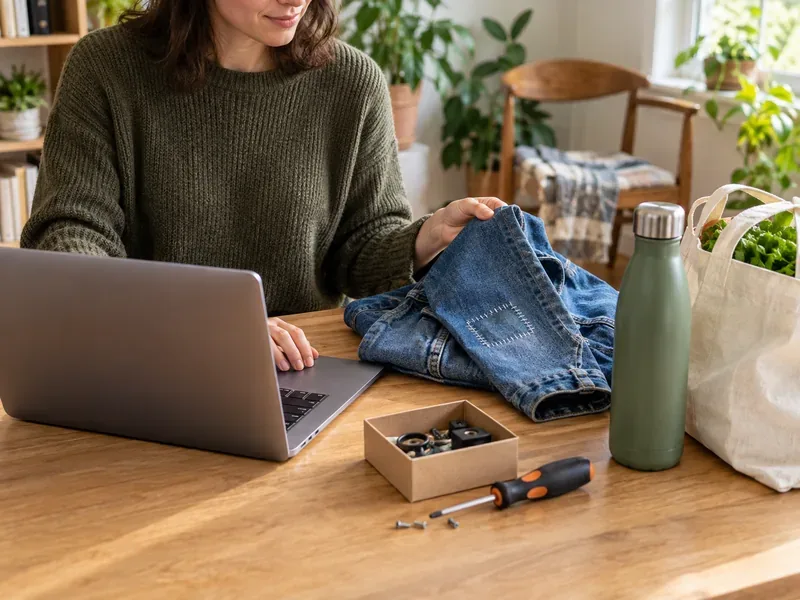
Avoid replacing functioning disposable-looking items simply to buy a matching set of “sustainable” products. The EPA's waste guidance emphasizes refusing unnecessary items, reducing consumption, reusing, repairing, and then recycling. You can review the agency's five-R approach to waste reduction. In practice, the greenest immediate choice is often to keep using a durable item you already have.
7. Buy fewer things, and make the next purchase last longer
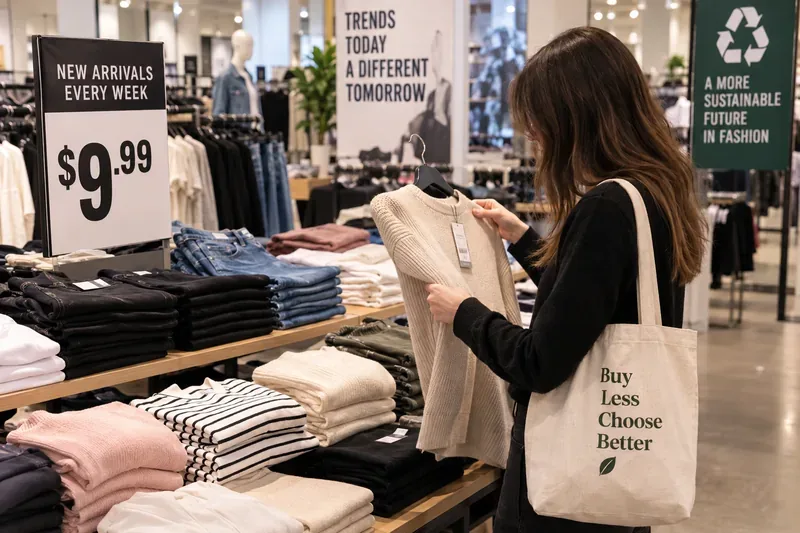
Eco-friendly shopping is less about finding a green label on every product and more about slowing down replacement. Before buying, ask three questions: Do I need it? Can I borrow, rent, repair, or buy it used? If I buy new, will it last?
This habit is especially useful for tools, party supplies, furniture, clothing, small appliances, and hobby equipment that may be used infrequently. It may be less practical for products where hygiene, safety, warranties, or current efficiency standards matter. The goal is not to make secondhand purchasing a rule; it is to make “buy new immediately” less automatic.
8. Recycle correctly, not optimistically
Putting a questionable item into a recycling bin does not ensure that it will be recycled. Local programs differ, so check your municipality or hauler before adding unfamiliar materials. EPA guidance specifically notes that some plastics are not accepted by community programs and that plastic bags and films generally should not go in a household recycling bin even when store drop-off recycling is available. See the EPA's common recyclables guidance.
A useful habit is to keep a short list of your local rules near the bin. That takes less effort than trying to interpret packaging every time, and it helps everyone in the household sort materials consistently.
9. Track one number for a month
You do not need to calculate your entire environmental footprint. Pick one number connected to a behavior you control: weekly miles driven, number of trash bags, electricity use, water use, food thrown away, or dryer loads. Compare four weeks before and after the habit change.
This keeps eco-friendly living grounded in results rather than aesthetics. A reusable bottle is useful if it replaces disposable bottles. A smart thermostat is useful if it actually changes HVAC use. A compost bin is useful if it handles unavoidable scraps without distracting from food-waste prevention.
What should you start with today?
Choose the habit with the least friction and the clearest repeat opportunity. For many households, that means planning one meal around food already in the refrigerator, washing the next normal load in cold water, turning off the tap while brushing, putting a reusable bottle by the door, or replacing one short drive with another option.
Then add another habit only after the first feels routine. Sustainable living works better as a system of ordinary decisions than as a collection of perfect purchases. The best eco-friendly habit is the one that measurably reduces waste or resource use and still fits your real life well enough to repeat next week.