Home
» Technology
»
Cybersecurity in the FinTech Era: Protecting Financial Data Against Modern Threats
Cybersecurity in the FinTech Era: Protecting Financial Data Against Modern Threats
FinTech companies sit at an unusually sensitive intersection: they move money, hold identity data, expose APIs, depend on cloud services, and often connect to banks, payment processors, card networks, identity vendors, and analytics platforms. That makes cybersecurity less a single control than a system of decisions about identity, data, software, vendors, detection, and recovery.
Illustrative example: throughout this article, imagine a fictional company called Northstar Pay. It offers a mobile wallet, card payments, bank transfers, and business expense accounts. Northstar Pay is not a real company, and the events below are hypothetical examples used only to show how defensive choices work in practice.
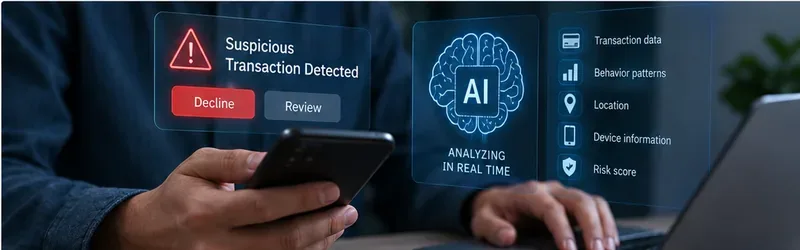
A secure FinTech experience depends on several layers working together: strong authentication, protected data, monitored transactions, secure software, and tested response processes.
Why is FinTech cybersecurity different from ordinary application security?
A compromise in a typical consumer app may expose profiles or disrupt service. In a financial platform, the same identity failure can also lead to unauthorized transfers, fraudulent account changes, access to regulated data, or abuse of connected institutions. The FBI's 2025 account-takeover warning specifically described criminals impersonating financial institutions to steal money or information and reported more than 5,100 related complaints and over $262 million in losses since January 2025. See the FBI account takeover alert.
That does not mean every FinTech company faces the same risk. A budgeting app that never stores payment credentials has a different exposure from a card issuer, brokerage, lender, or crypto platform. The right security program starts by mapping what the organization actually stores, processes, transmits, and can authorize.
Practical action: inventory high-value assets and business actions, not just servers. Include customer PII, authentication secrets, cardholder data, bank-account data, API keys, signing keys, admin consoles, payout functions, and the ability to alter beneficiary or recovery information.
What would a modern attack on a FinTech company look like?
In the Northstar Pay example, an attacker does not begin by "breaking encryption." Instead, the attacker impersonates internal support, persuades an employee to approve a login, and gains access to a legitimate account. From there, the attacker attempts to reach cloud administration tools, search for reusable credentials, and trigger fraudulent payout activity. A second-stage ransomware attempt is used to increase operational pressure.
This hypothetical chain matters because many modern incidents cross layers. Strong database encryption does little if an attacker is operating through an authorized session. A firewall does little if a stolen identity can legitimately call a sensitive API. A clean production environment can still be exposed by a compromised vendor or software dependency.
Practical action: model at least three end-to-end attack paths against your most important financial actions. For each path, identify prevention, detection, containment, and recovery controls. If one stolen account can traverse the entire chain, the architecture needs stronger boundaries.
Is multifactor authentication enough?
No. MFA is essential, but the method matters. CISA warns that some forms of MFA remain vulnerable to phishing, push-fatigue attacks, SIM swapping, and interception. Its guidance describes phishing-resistant MFA as the strongest widely deployable direction and points organizations toward FIDO/WebAuthn-based methods. See CISA's MFA guidance.
For Northstar Pay, that means administrators, developers with production access, finance operators, and help-desk staff should not rely on passwords plus easily phished codes if stronger methods are available. High-risk actions should also require fresh authorization rather than assuming that a successful login hours earlier proves the user is still trustworthy.
Practical action: prioritize phishing-resistant MFA for privileged and financial-operation accounts, shorten sessions for high-risk consoles, require step-up authentication for sensitive changes, and review failed or denied MFA events as security signals rather than harmless noise.
What does zero trust actually mean in a FinTech environment?
Zero trust is often misunderstood as a product or a rule that says "trust nobody." NIST describes it more precisely: trust should not be granted implicitly just because a user, device, or service is inside a network or owned by the enterprise. Authentication and authorization should focus on users, assets, and resources. The foundational reference is NIST SP 800-207, Zero Trust Architecture.
Applied to Northstar Pay, an engineer connected through the corporate network would not automatically gain broad database access. A microservice would not be trusted merely because it runs in the same cluster. Administrative access would depend on identity, device posture, role, context, and the specific resource requested.
Practical action: remove broad network-based trust, separate human and service identities, enforce least privilege, regularly expire unused access, and require explicit authorization between sensitive services.
Does encryption solve financial-data protection?
Encryption is necessary, but it is not sufficient. Data should be protected in transit and at rest, and cryptographic keys should be managed separately from the data they protect. Yet encryption cannot stop an authorized application from exposing too much data, an overprivileged analyst from querying a large dataset, or a stolen session from initiating a valid transaction.
The better design principle is data minimization: collect less, retain it for less time, tokenize or segregate sensitive values where practical, and restrict who and what can decrypt them. For payment-card environments, organizations should determine whether PCI DSS applies to their scope. As of September 2026, the PCI Security Standards Council's official library lists PCI DSS v4.0.1, and the future-dated v4.x requirements have been effective since March 31, 2025. See the PCI SSC Document Library.
Practical action: create a data-flow map that shows where sensitive data enters, where it is stored, which services can read it, how long it is retained, and how it is deleted. Then remove copies that exist only for convenience.
Why are APIs such a critical security boundary?
FinTech products increasingly rely on APIs for account aggregation, payments, identity verification, partner integrations, and mobile backends. That makes authorization logic as important as transport security. An API can be perfectly encrypted with TLS and still expose another customer's data if object-level authorization is wrong. Similarly, a leaked API key can become a financial risk if the key has broad permissions and no transaction limits.
In the Northstar Pay scenario, the safer design is to give each service only the permissions it needs, use short-lived credentials where feasible, validate authorization on every sensitive request, and apply business-level controls such as amount thresholds, velocity checks, beneficiary-change protections, and anomaly detection.
Practical action: test APIs for broken authorization, excessive data exposure, replay risk, weak secrets handling, and privilege escalation. Treat money movement as a business-control problem as well as an application-security problem.
How should secure software development change for FinTech?
Security reviews performed only before release are too late for fast-moving financial software. NIST's Secure Software Development Framework recommends integrating secure development practices into the software lifecycle so vulnerabilities are prevented, found earlier, and addressed at their root causes. The current final publication is NIST SP 800-218, SSDF Version 1.1. NIST published a Version 1.2 revision as an initial public draft in December 2025, so teams should distinguish draft material from the final 1.1 publication.
For Northstar Pay, this means source-control protection, code review for sensitive changes, dependency governance, secrets scanning, software composition analysis, protected build pipelines, signed release artifacts where appropriate, and security testing tied to risk. It also means defining who can change payment rules or production configuration.
Practical action: add security gates to the development workflow based on impact. A cosmetic UI change should not require the same review as a change to authentication, payout logic, cryptography, access control, or transaction limits.
Can third-party vendors become your weakest security layer?
Yes. FinTech companies often depend on identity providers, cloud platforms, payment processors, KYC vendors, messaging services, fraud engines, and open-source components. A vendor may be outside your infrastructure but still inside your risk boundary if it handles customer data or can alter a financial workflow.
This is also reflected in regulation. The U.S. Federal Trade Commission's Safeguards Rule requires covered financial institutions under FTC jurisdiction to maintain safeguards for customer information and to take steps regarding service providers that handle that information. The rule does not apply to every FinTech organization in every jurisdiction, so applicability should be confirmed with qualified legal or compliance professionals. See the FTC Safeguards Rule.
Practical action: classify vendors by the data and privileges they receive, not by contract value. Require security review before onboarding, define breach-notification expectations, monitor critical vendors, and plan how to continue or shut down safely if a provider becomes unavailable.
What does ransomware resilience look like beyond backups?
Backups matter, but ransomware resilience also requires segmentation, identity protection, logging, hardening, incident response, and recovery exercises. CISA's StopRansomware guidance recommends network segmentation and maintaining current network diagrams, among other measures. See the CISA StopRansomware Guide.
In the Northstar Pay example, the goal is not merely to restore files. The company must know whether payment credentials were exposed, whether production secrets were changed, whether transaction data is trustworthy, and whether attackers still have persistence after restoration. Recovery must restore confidence, not just uptime.
Practical action: keep recoverable backups isolated from normal administrative paths, test restoration regularly, document the order in which financial services must return, and rehearse a scenario where identity systems or cloud administration are also compromised.
How much logging is enough?
Logging should answer business-security questions, not just infrastructure questions. A useful FinTech detection program can correlate identity events, device changes, API calls, beneficiary changes, password resets, privilege grants, token creation, payment attempts, payout velocity, and unusual administrative activity.
Northstar Pay should be able to investigate a suspicious transfer without manually collecting evidence from ten systems after the fact. Logs also need integrity, retention, access controls, and accurate time synchronization. Excessive logging can create privacy and cost problems, so the goal is high-value visibility rather than collecting everything forever.
Practical action: define the top 10 incident questions investigators must answer and verify that current telemetry can answer them within minutes. If not, close the visibility gaps before adding more alert rules.
Which cybersecurity framework should a FinTech use?
NIST Cybersecurity Framework 2.0 is a useful organizing model because it focuses on outcomes rather than prescribing one technology stack. Published in February 2024, CSF 2.0 added stronger emphasis on governance and supply-chain risk and is intended for organizations of all sizes and sectors. Its six functions are Govern, Identify, Protect, Detect, Respond, and Recover. See NIST Cybersecurity Framework 2.0.
For Northstar Pay, CSF 2.0 can become the map, while more specific standards and regulatory obligations provide detail. PCI DSS may govern cardholder-data environments. The FTC Safeguards Rule may apply to certain financial institutions. New York-regulated financial entities may have obligations under 23 NYCRR Part 500; the New York Department of Financial Services Cybersecurity Resource Center contains the official regulation and compliance resources.
Practical action: create a single control map that links business risks to one primary internal control and then maps that control to every applicable framework or regulation. Avoid running separate, disconnected security programs for every compliance label.
What should leadership measure?
Counting blocked attacks or open vulnerabilities alone can mislead executives. Better indicators show whether the organization can prevent, detect, contain, and recover from financially meaningful events. Examples include the percentage of privileged accounts using phishing-resistant MFA, time to revoke compromised sessions, percentage of critical services with tested recovery, high-risk vulnerabilities past SLA, unused privileged accounts, security coverage of critical vendors, and mean time to detect abnormal financial behavior.
The central question is whether controls reduce credible business loss. A control can be technically impressive yet irrelevant to the transaction paths attackers would target.
Practical action: report a small set of security metrics alongside the financial processes they protect. Make ownership explicit: every high-risk control should have a business owner, a technical owner, and evidence that it works.
A practical security model for the FinTech era
The Northstar Pay scenario illustrates the broader lesson: modern financial cybersecurity depends on layered trust decisions. A stolen password should meet phishing-resistant MFA. A stolen session should meet narrow authorization and short-lived privileges. A compromised service should meet segmentation and service identity controls. A fraudulent transfer should meet business-rule checks and monitoring. A ransomware event should meet isolated recovery and rehearsed incident response.
No framework, encryption algorithm, compliance certificate, or security product can guarantee that a FinTech platform will not be breached. What organizations can do is reduce the probability of compromise, limit the blast radius when controls fail, detect abuse faster, and recover with evidence that systems and financial records can be trusted again.
Practical action: start with one critical customer journey, such as account recovery or money movement, and trace every identity, API, data store, vendor, privilege, detection signal, and recovery dependency involved. That exercise often reveals more actionable risk than another generic security checklist.