Home
» Today
»
Do You Need to Register Again After Moving or Changing Your Name?
Do You Need to Register Again After Moving or Changing Your Name?
Yes—you should update your voter registration after moving or changing your legal name. Whether that means a simple update or effectively registering again depends on what changed and where you live.
If you moved within the same state, you generally need to update the address on your existing voter record. If you moved to a different state, Vote.gov says to register in the state you moved to. If you changed your legal name, you need to update your voter registration with your state or territory so the record reflects your current name.
The important idea is that voter registration is tied to state and local election records. Your address can determine your precinct, districts, and ballot, while your legal name is part of the identity information election officials use to maintain your record. The exact update method and deadline are set by your state.
First, understand what “update your voter registration” means
An update is a change to an existing voter record, such as a new home address or legal name. In many states, the update process looks much like registering to vote again: you may use an online portal, submit a paper form, or complete the change through an election office or other authorized agency.
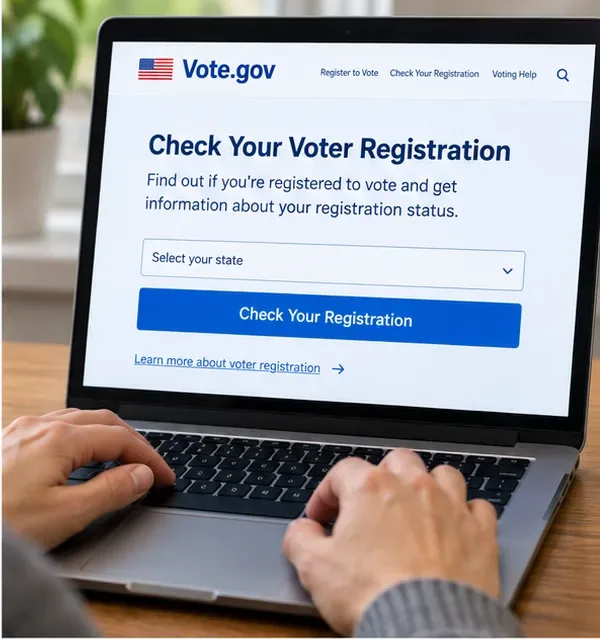
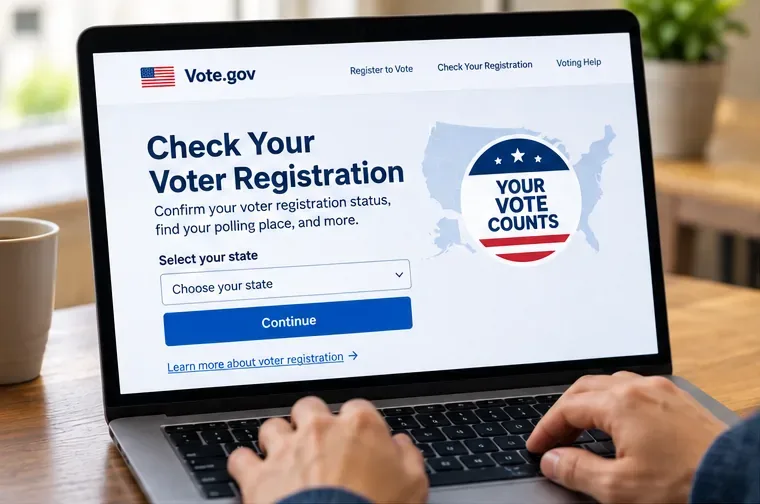
The U.S. Election Assistance Commission, or EAC, says the process to update voter information is usually the same as the process to register. It specifically recommends updating your registration if you move or change your name. You can start with Vote.gov to find your state or territory’s official instructions.
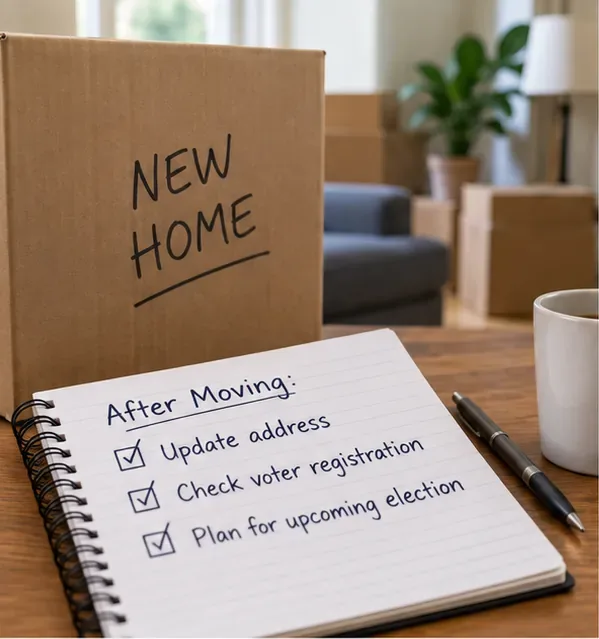
After a move, add voter registration to the same checklist as other address changes. Your new residence can affect where and what you vote on.
If you moved within the same state
You usually do not create a completely separate voting identity, but you do need to update your address. Vote.gov states that you should update your voter registration after any change of address, including a move within the same state.
This matters even if the move was only a few blocks. Your new address may place you in a different precinct, city council district, school district, legislative district, or congressional district. Election officials use your residential address to determine which contests and questions belong on your ballot.
The practical steps are:
Go to your state’s official voter registration page through Vote.gov.
Choose the option to update or register, depending on how your state labels the process.
Enter your new residential address and any other information requested.
Submit the update before your state’s deadline.
After processing, check your registration status again to confirm the new address appears correctly.
Many states allow online updates, while others may require a printed form, mailed form, or in-person action. The EAC also notes that some people can update voter registration while changing an address through a motor vehicle agency, depending on the state.
If you moved to a different state
A move across state lines is different. Vote.gov says that if you moved out of state, you should register with the state you moved to. Your old state’s registration does not automatically transfer into the new state’s voter database.
For a beginner, the safest approach is to treat an interstate move as a fresh registration in your new state. Use your new state’s official election website, review its eligibility and residency rules, and submit the required information before the deadline.
State registration deadlines can be as early as 30 days before Election Day, according to Vote.gov, although some states allow later registration or same-day registration. That is why it is better to update soon after moving rather than waiting until you are ready to vote.
Start with Vote.gov or your official state election website to find the correct update process. State systems and deadlines are not identical.
What about your old registration?
Do not assume that registering in a new state instantly erases every old record. States maintain their own voter files and have their own procedures for cancellations and list maintenance. If you want to know whether you should separately cancel a previous registration, contact the old state or local election office for instructions.
The EAC explains that states and local jurisdictions have different procedures for voters who want to cancel or withdraw a registration. Your local election office can tell you what is required.
If you changed your legal name
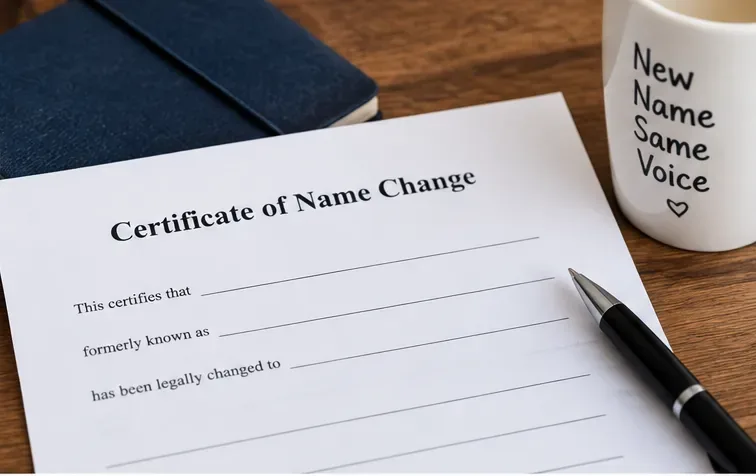
You should also update your voter registration after a legal name change. Vote.gov directly instructs voters to update their registration with their state or territory after changing their legal name.
A legal name change can happen for many reasons, including marriage, divorce, adoption, or a court-approved name change. The voting step is separate from changing your name with the Social Security Administration, driver licensing agency, bank, employer, or other institutions. Updating one system does not guarantee that every other system changes automatically.
Before starting, have your current legal name and the information your state asks for. Some states may request an identification number or other identifying details. If you use the federal National Mail Voter Registration Form, the form includes a section for the name you used before the change.
A legal name change should be followed by an update to your voter record. Your state decides what information or documentation is required.
What should you prepare before updating your registration?
You do not need to guess. State instructions tell you what information is required, but it helps to have the basics ready:
Your current legal name.
Your previous name, if you are updating after a name change and the form asks for it.
Your new residential address.
Your previous registration address, if requested.
Your date of birth.
Any state identification, driver’s license, or other number your state’s form asks you to provide.
If your mailing address is different from your residential address, read the form carefully. Voter registration forms often distinguish between the address where you live and the address where you receive mail.
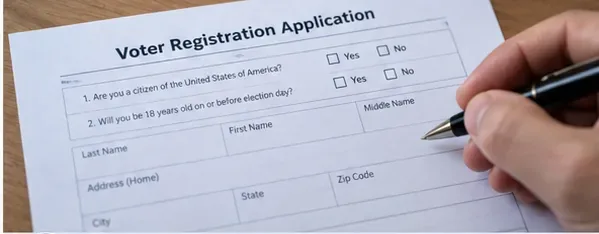
The EAC’s National Mail Voter Registration Form page explains that the form can be used to register or update information such as a name or address, but you must follow the state-specific instructions included with the form.
How to make the update
Option 1: Update online
If your state offers an online voter registration system, this is often the simplest route. Use the official state link provided through Vote.gov, then follow the instructions for updating an existing record or submitting a registration with your new information.
Online is usually best when your information is straightforward, your state supports the needed update, and you have the identification details the portal requires.
Option 2: Use a paper form
If you prefer paper or cannot complete the change online, the National Mail Voter Registration Form may be an option, subject to state-specific rules. Read the instructions for your state before filling it out. The EAC says the form can be used for changes of address and name, and the form itself includes fields for a previous name and previous address.
Keep a copy before mailing it, note the date you sent it, and leave enough time for delivery and processing.
Option 3: Update in person
You can also contact your state or local election office. In-person help is especially useful if you recently moved across state lines, your record cannot be found, your legal name change is complicated, or you are close to a registration deadline.
In some states, you may also be able to update voter registration during a motor vehicle agency transaction. Because these procedures vary, confirm your state’s rules rather than assuming the option is available everywhere.
Do not stop after submitting the change
One of the most common mistakes is assuming that submitting an update means the voter record has already been changed. Processing can take time.
After the state has had time to process your request, check your voter registration status again. Verify:
Your registration status is valid under your state’s terminology.
Your current legal name is correct.
Your residential address is correct.
Your precinct or polling information, if shown, matches your new location.
Your party affiliation is correct if your state records party affiliation.
A final checklist helps prevent a common problem: submitting an update but never confirming that the voter record was actually changed.
Common mistakes to avoid
Waiting until Election Day is close. State deadlines differ, and some are weeks before an election. Update as soon as practical after a move or legal name change.
Assuming a move within the same state does not matter. Even a local move can change your precinct or ballot districts.
Assuming a new state automatically receives your old registration. Interstate movers should register in the new state according to that state’s rules.
Updating your driver’s license but not checking voter registration. Some motor vehicle transactions can include voter registration updates, but you should verify afterward rather than assume the voter record changed.
Using your mailing address when the form asks for your residential address. Read the labels carefully. Your residence is generally what election officials use to assign districts and precincts.
Using an unofficial website. Start with Vote.gov or your state election authority, especially when you are entering personal information.
What if you moved near a deadline?
If the registration deadline in your new state is close or has passed, contact the election office immediately. Vote.gov notes a special federal rule for people who moved to another state shortly before a presidential general election: if there was not enough time to register in the new state because the deadline passed, the old state must allow voting for president and vice president, either by mail or in person. That rule is specific and should not be generalized to every election.
For non-presidential elections, rules can be different. Ask the relevant election office what options apply to your situation.
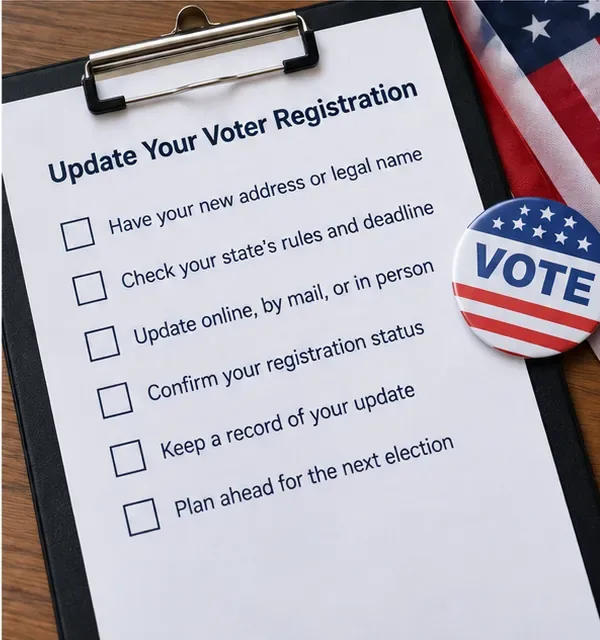
Beginner’s final checklist
If you moved within your state, update your address.
If you moved to a new state, register in the new state.
If you changed your legal name, update the name on your voter record.
Use Vote.gov to reach official state instructions.
Submit the update before your state’s deadline.
Keep any confirmation or copy of your submission.
Check your registration again after processing.
Contact your election office if the updated information does not appear correctly.
The key is not whether your state calls the process “register again,” “re-register,” or “update your registration.” What matters is that your voter record matches your current legal name and residence before you vote. State rules control the details, so use the official state instructions for the final answer in your situation.