Creating a table in Canva is not difficult. This article will guide you in detail on how to draw a table in Canva .
If you’re creating content online, you’ve probably heard of Canva. It’s been growing in popularity since 2012. It’s now one of the most popular online visual content creation tools for amateurs and those with little design skills.
Canva is essentially an online graphic design tool, available to everyone, but is more commonly used by small businesses and freelancers.
You can use Canva's basic tools for free. However, if you want more options, you'll need to upgrade to Canva Pro.
You can use Canva for many different purposes, specifically:
Graphic design for services, including advertising campaigns.
Social media content such as Instagram, Facebook, Twitter, LinkedIn…
Edit photos like Adobe Lightroom.
Create a YouTube avatar.
Design resumes, presentations, infographics…
If you use Canva to create presentations for work, lead magnets, PDFs, or anything similar, you may need to insert a table. The easiest way to do this is to take a screenshot of a table you've created somewhere, then paste it into Canva as an image.
However, this is not the optimal way, especially if you want to change the data in the future or want to make it easier to copy data from the table. Here is a guide on how to create a table in Canva .
If you’re new to Canva, it’s a good idea to learn the basics of the platform first. It’s a great tool for a variety of tasks, but it’s also great for those who want to get started with simple graphic design.
This guide is for people who have some experience using Canva. Of course, you will need an account. Log in to Canva and follow these instructions:
On the home page, click Create a Design . You can choose any size you want to fit the table to the frame or page size.
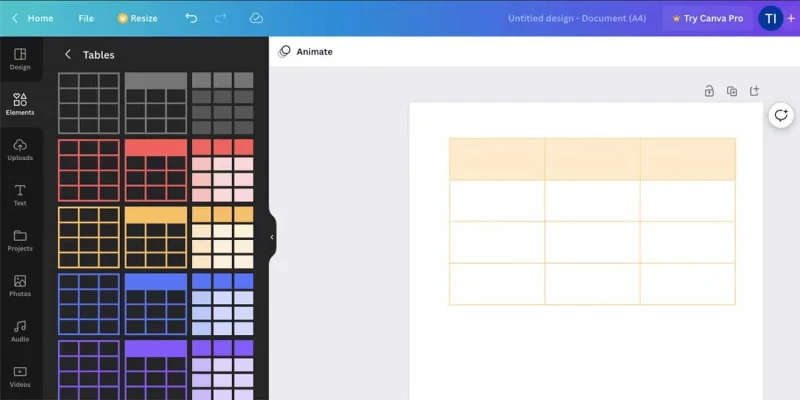
Click the Elements tab on the left side of the new screen.
Scroll down to Tables .
Click See all so you can browse all options.
Click the table style you want to add to your workspace. You can also drag it onto the canvas.
And that's it. Adding a table was easy, right? The automatic template that comes with Canva comes with 3 columns and 4 rows. Don't worry, you can change it to suit your needs.
How to Customize a Table in Canva
Like any other element in Canva, you can move and resize it. Plus, you get a bunch of other features:
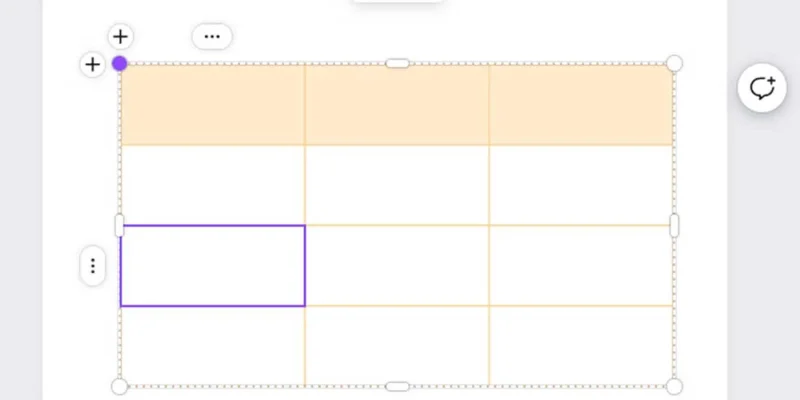
Add a row or column: If you hover over the border of your table, you'll see a plus sign. Clicking it will add a row or column next to that border.
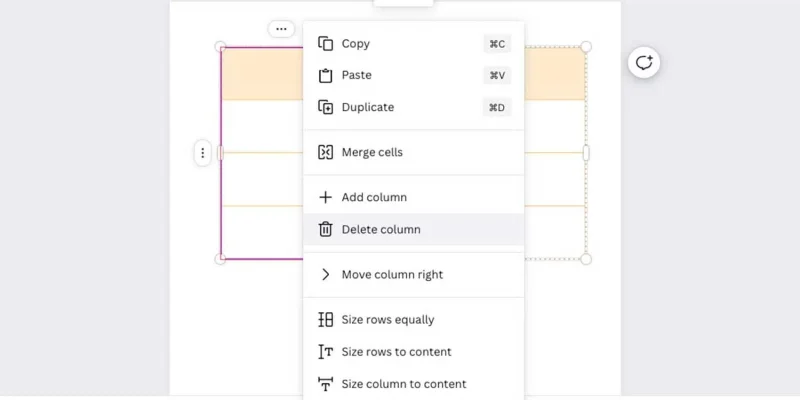
Delete a row or column: Click a cell > click the ellipsis ( … ) above the column or next to the row. Select Delete row/column from the menu that appears.
Merge cells . Select the cells you want to merge while holding Shift, then right-click and select Merge cells.
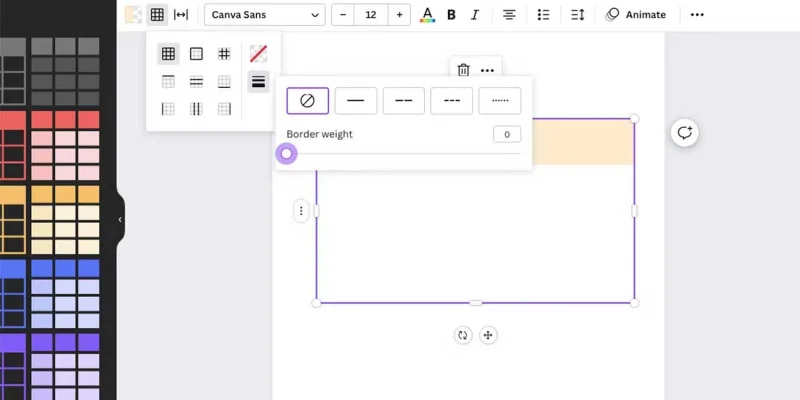
Change borders : Select the table and click the Border button in the top menu. You can remove the border completely with the Border Style button , just set it to 0. You can then choose to add borders to adjust the lines or columns.
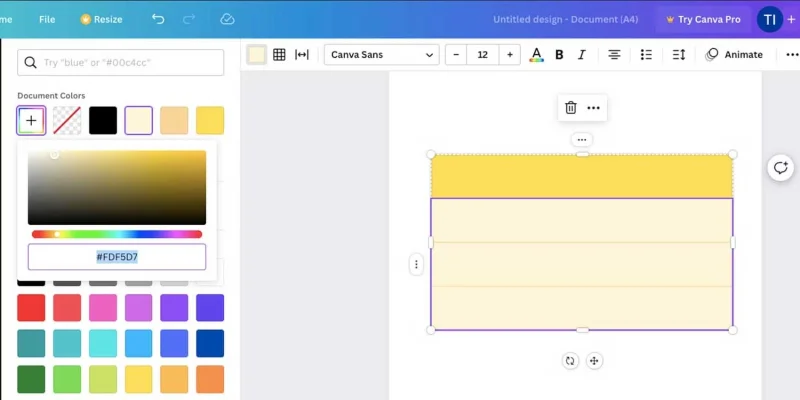
Change color : You can change the border color in Borders . Cell color is the button on the left. This action will color whatever you select, from rows, columns to cells.
These are the most basic ways to change your table. However, there are many other options, such as cell spacing, as well as adjusting the cells to fit your content. You can customize the text you enter into your table and even add animations if you're feeling bold.
Plus, Canva also has a mobile app if you want to create documents on the go.
How to Create a Custom Table in Canva
Sometimes a pre-built table isn't what you want. That's when you can use one of these methods to create a custom table.
The first way to create a custom table in Canva is the simplest. It may seem a bit lengthy, but once you have the basics down, it really doesn't take long to create.
This feature works in both the free and Canva Pro versions of Canva.
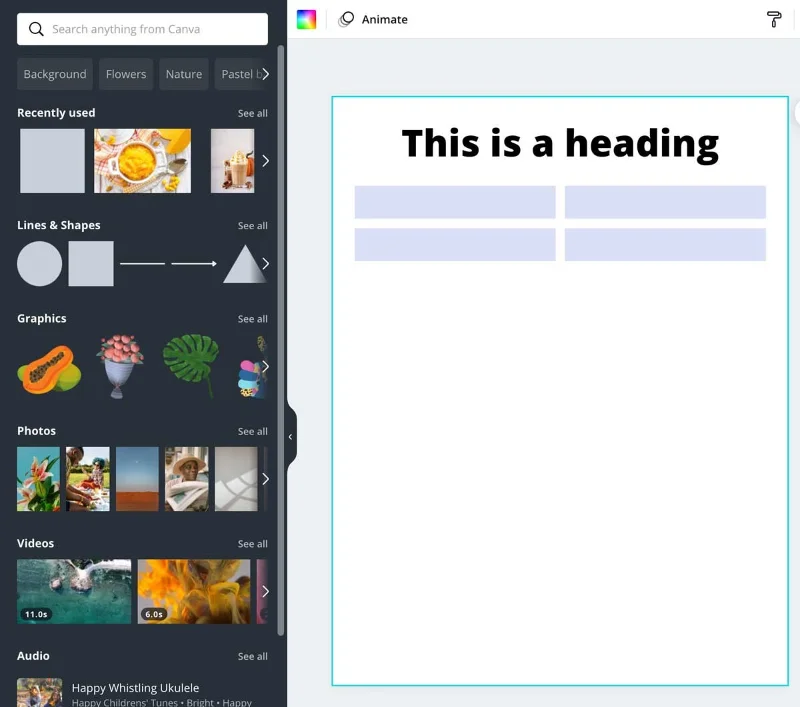
Start by creating a document that is the size you want your finished product to be. Decide how many columns you want and whether you want them to be the same size or if you want some columns to be a different size than others. Add a header to your page if you want.
Add Titles in Canva
Next create the first row for the first column. To do this:
Open the sidebar and go to Elements.
Find Square and incorporate it into your design.
Resize and shape the square to the dimensions required for a row or column.
Move it to cell position 1 if it is a spreadsheet.
Add Cells to a Table in Canva
Now that you have the starting part of your table, you can copy the cell and move it into place for the second cell. If they are the same size, you're good to go. If not, resize as needed.
Duplicate the first cell of the table
If you want multiple columns, repeat the process again until you have enough cells for columns. Now select both (or all) cells and copy them. Move the copy to the second row.
Copy the first row of cells and create another row of cells.
You can continue copying the row above, or you can use your mouse to grab all four cells and copy them, then move them into place. Keep repeating this until you have enough rows for the chart you want.
Completed table cells in Canva
Then if you want more than one page, duplicate the page. You can remove the header if you don't need it, take all the boxes and center them on the page.
How to insert a table from Excel into Canva
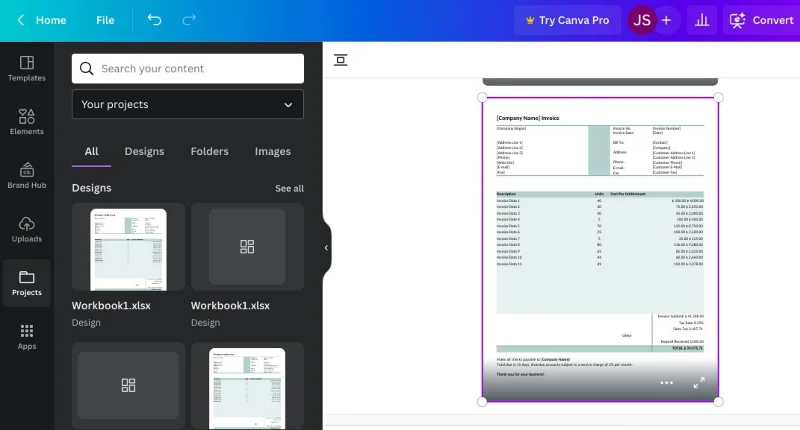
If you have the perfect Excel spreadsheet and want to upload it to Canva, you may run into a problem. Canva won’t accept Excel document uploads. But there are two options to get around this and insert your Excel spreadsheet into Canva.
To insert a table from Excel into Canva, you can either drag an Excel table into your document workspace or take a screenshot and use the upload option to Canva. Open your Canva document and use your cursor to drag the Excel document from your desktop into your workspace. You won’t be able to drag an Excel table into all Canva document workspaces – some workspaces won’t accept it.
Insert table from Excel into Canva
Once the Excel table is open in a Canva document, you'll be able to treat it like any other Canva design element – resize, copy, reposition, or delete it.
If you want more flexibility, take a screenshot of your Excel spreadsheet and upload it. To take a screenshot of your Excel spreadsheet, hold Shift, Command + 4 (for Mac), or Windows Key + Prtscn (for Windows).
Once your image is uploaded, you'll be able to use it in Canva documents.
Above is the simplest way to create a table on Canva . Hope the article is useful to you.