Home
» Health
»
Immunity-Boosting Foods for the Colder Months: Smart Choices Without the Superfood Hype
Immunity-Boosting Foods for the Colder Months: Smart Choices Without the Superfood Hype
When temperatures drop, it is tempting to look for one “immunity-boosting” food that can keep every cold or respiratory infection away. Nutrition does not work that way. No orange, soup, yogurt, spice, or supplement can switch the immune system into an invincible mode. What food can do is help you consistently meet the body’s needs for nutrients that are required for normal immune function.
The most useful winter strategy is therefore not to chase a single superfood. It is to choose foods that solve the gaps most likely to show up in your own routine: vitamin C when produce intake falls, vitamin D when sunlight is limited, zinc when protein choices are narrow, adequate protein when appetite or meal planning slips, and a broad mix of nutrient-dense foods overall. The NIH Office of Dietary Supplements notes that adequate amounts of several vitamins and minerals are important for proper immune function and that clinical deficiencies can weaken immunity.
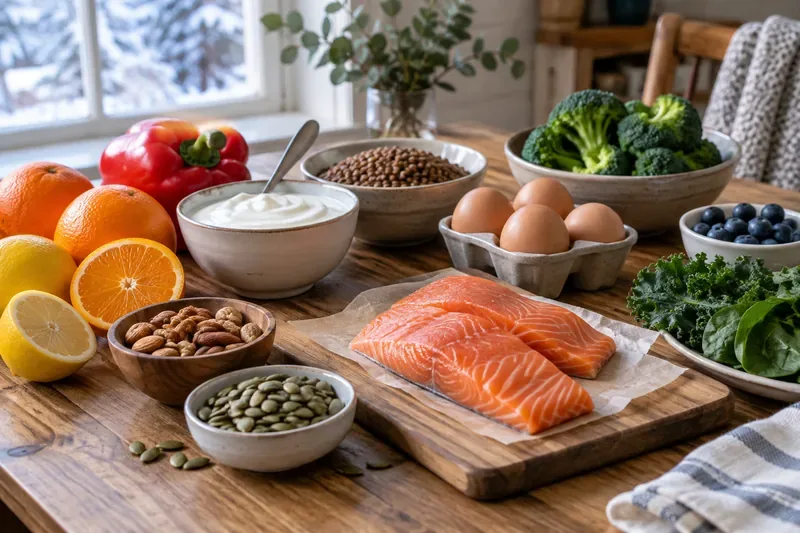
A cold-weather mix of salmon, citrus, red pepper, yogurt, lentils, eggs, broccoli, leafy greens, nuts, and pumpkin seeds provides several nutrients involved in normal immune function.
Start with the right goal: support immunity, do not try to “max it out”
An immune system depends on many cells, tissues, barriers, signaling molecules, and nutrients. More of one nutrient is not automatically better. In fact, very high supplemental intakes of some nutrients can be harmful or can interfere with other nutrients and medications. Food-first choices are usually the most practical place to begin because meals deliver protein, fiber, fats, vitamins, minerals, and other compounds together.
The current Dietary Guidelines for Americans, 2025–2030 emphasizes nutrient-dense whole foods across protein, dairy, vegetables, fruits, healthy fats, and whole grains. For colder months, that broad pattern matters more than whether any single ingredient is marketed as an immune booster.
Which foods are most useful for different winter nutrition needs?
If your priority is...
Strong food choices
Why they help
Main tradeoff
Vitamin C
Red bell peppers, oranges, kiwi, broccoli, Brussels sprouts, strawberries
Vitamin C has an established role in immune function and antioxidant activity.
Heat and long storage can reduce vitamin C, so include some fresh or lightly cooked choices.
Protein supplies amino acids used throughout the body, while these foods also contribute zinc, selenium, iron, B vitamins, or vitamin D depending on the choice.
Processed meats can add a lot of sodium and saturated fat; plant proteins may need more variety and planning.
Best vitamin C choices: peppers versus citrus versus cooked vegetables
If you want a high-impact vitamin C food without adding much volume, red bell pepper is hard to beat. The NIH vitamin C fact sheet lists one-half cup of raw red sweet pepper at about 95 mg of vitamin C, while a medium orange provides about 70 mg. Kiwi, broccoli, strawberries, and Brussels sprouts are also useful options.
The tradeoff is preparation. Citrus and kiwi are convenient raw snacks, while peppers work in salads, sandwiches, or quick sautés. Broccoli and Brussels sprouts are easy to build into warm meals, but vitamin C is water-soluble and sensitive to heat. NIH notes that steaming or microwaving may reduce cooking losses compared with longer cooking methods. That does not mean cooked vegetables are a poor choice; it simply argues for variety rather than relying on one heavily cooked food every day.
Best fit
Choose citrus or kiwi when you need a portable snack, red bell pepper when you want a very vitamin-C-dense food, and broccoli or Brussels sprouts when you want a warm vegetable that also contributes fiber and other nutrients.
Best vitamin D choices: fatty fish versus fortified foods
Vitamin D deserves extra attention in colder months because lower sunlight exposure can contribute to lower vitamin D status, particularly in people who spend little time outdoors or live at higher latitudes. The NIH vitamin D fact sheet explains that only a few foods naturally contain meaningful amounts. Fatty fish such as salmon, trout, tuna, and mackerel are among the best natural sources.
Fatty fish is a strong choice when you also want protein and omega-3 fats, but it may be more expensive, less convenient, or unsuitable for vegetarian diets. Fortified milk, many fortified plant beverages, and some fortified cereals are easier to use daily. The drawback is that fortification varies by product, so the Nutrition Facts label is more useful than assuming every milk alternative contains vitamin D. UV-exposed mushrooms can provide vitamin D2 and are useful for plant-based diets, but their vitamin D content also varies.
If you have a known vitamin D deficiency, a condition that affects absorption, or very limited sun exposure, food alone may not be enough. That is a reason to discuss testing or supplementation with a health professional rather than taking high doses blindly.
Best zinc choices: oysters, meat, or plant foods?
Zinc is often associated with cold remedies, but from a food perspective the useful question is whether your normal diet reliably supplies it. According to the NIH zinc fact sheet, oysters contain far more zinc per serving than other commonly eaten foods. Beef, other seafood, eggs, and dairy also contribute zinc.
For most people, oysters are not a practical daily strategy. Lean beef, yogurt, eggs, or mixed meals containing meat and legumes are easier to repeat. Beans, nuts, seeds, and whole grains can also supply zinc and are especially valuable for plant-based diets. The tradeoff is absorption: phytates in plant foods bind some zinc in the intestine, so bioavailability is lower than from many animal foods.
Best fit
If you eat animal foods, rotate seafood, lean meats, dairy, and eggs rather than treating oysters as a required “immune food.” If you eat mostly plants, use a wider range of beans, lentils, tofu, nuts, seeds, and fortified foods across the week instead of depending on one zinc source.
What about yogurt, kefir, kimchi, and other fermented foods?
Fermented foods are appealing in winter because they can fit breakfasts, soups, side dishes, and snacks. But “fermented” and “probiotic” are not interchangeable. The NIH probiotics fact sheet notes that yogurt can contain beneficial microbes, while many fermented foods do not necessarily contain microorganisms with proven probiotic effects. Some products are also heat-treated after fermentation, so live cultures may not remain.
If your goal is a simple food that combines protein, calcium, and potentially live cultures, plain yogurt is a practical choice. Kefir can work similarly for people who prefer a drinkable option. Kimchi and sauerkraut can add vegetables and flavor, but sodium can be high. The bigger lesson is not that fermented foods are mandatory for immunity; it is that they can be useful parts of a varied diet, and specific probiotic effects depend on the organisms and product.
Fresh, frozen, or canned: which is best in cold weather?
Winter produce can be expensive or less appealing in some regions. That does not mean you need to abandon vegetables and fruit until spring. Fresh, frozen, canned, and dried forms can all fit a nutrient-dense eating pattern. The practical winner depends on how you cook and what you can consistently keep at home.
Fresh: best when flavor and raw texture matter, especially for citrus, kiwi, peppers, and salads.
Frozen: useful for broccoli, spinach, berries, peas, and mixed vegetables when you want long storage and minimal waste.
Canned: convenient for beans, lentils, tomatoes, salmon, tuna, and fruit. Compare labels for sodium, added sugars, and serving size.
Do not let an idealized “fresh-only” rule make your winter diet less varied. A freezer bag of broccoli you actually cook is more useful than fresh produce that repeatedly spoils in the refrigerator.
Budget-friendly immunity-supporting foods
You do not need premium powders, exotic berries, or expensive wellness shots. A lower-cost winter grocery basket can cover the same nutritional ground with oranges, cabbage, carrots, frozen broccoli, eggs, lentils, beans, oats, canned salmon or tuna, plain yogurt, peanut butter, and a fortified milk or plant beverage.
For example, lentil soup with carrots and leafy greens provides plant protein, iron, zinc, and carotenoids. Add a side of citrus or red pepper for vitamin C, which also improves absorption of nonheme iron from plant foods. Another low-effort option is oatmeal made with a fortified beverage, topped with yogurt, fruit, and seeds.
Should you use Brazil nuts for selenium?
Brazil nuts are frequently promoted as a selenium shortcut. They are indeed extremely concentrated, but this is a case where concentration creates a tradeoff. The NIH selenium fact sheet reports that selenium content in plant foods varies with soil and that Brazil nuts can contain very large amounts. Eating a large handful every day is therefore not a sensible “more is better” strategy.
Seafood, eggs, meat, dairy, grains, and legumes can provide selenium as part of ordinary meals. That is usually a more balanced way to obtain it than turning one highly concentrated food into a daily supplement substitute.
How to choose foods for your own situation
If you want the simplest cold-weather routine
Build most meals from one protein food, one or two vegetables or fruits, a whole-grain or starchy plant, and a source of healthy fat. Keep a few winter staples that require almost no planning: eggs, frozen vegetables, citrus, canned beans, plain yogurt, canned fish, oats, and nuts or seeds.
If you follow a vegetarian or vegan diet
Prioritize beans, lentils, tofu, tempeh, nuts, seeds, whole grains, dark leafy vegetables, orange vegetables, and vitamin-D-fortified plant beverages. Check labels rather than assuming fortification. Zinc deserves extra attention because plant-source absorption is lower, and vitamin D can be difficult to obtain from unfortified foods.
If you have a small appetite
Choose nutrient-dense combinations instead of trying to eat very large salads or bowls of vegetables. Yogurt with fruit and seeds, eggs with spinach and whole-grain toast, salmon with potatoes and broccoli, or a blended lentil soup can pack several useful nutrients into a manageable meal.
If convenience matters more than cooking from scratch
Frozen vegetables, canned beans, canned fish, prewashed greens, plain yogurt cups, whole fruit, and fortified ready-to-eat cereals can all reduce friction. The best winter food is often the one you can repeat consistently without relying on takeout or skipping meals.
Do food labels help?
Yes, especially for fortified products. The FDA Daily Value guide explains that 5% Daily Value or less is considered low and 20% or more is considered high for a nutrient per serving. That makes the label useful when comparing fortified cereals, dairy products, plant beverages, and other packaged foods for vitamin D, zinc, iron, or other nutrients.
The label is less useful for fresh produce that may not list every vitamin. In those cases, variety is a better strategy than trying to calculate every milligram.
A practical winter plate beats an “immune booster” shopping list
If you want a food pattern that supports normal immune function through the colder months, focus on coverage rather than hype. Include vitamin-C-rich produce most days, a reliable vitamin D source, varied protein foods that contribute zinc and selenium, colorful vegetables that provide vitamin A precursors, and enough total food to meet your energy and protein needs.
There is no single best food for everyone. Salmon may be the strongest all-around choice for someone who eats fish and needs vitamin D; fortified plant milk and UV-exposed mushrooms may be more useful for a vegan; lentils, frozen broccoli, eggs, and citrus may be the best value for a tight budget; and yogurt with fruit and seeds may be the easiest option for someone who needs a no-cook breakfast.
Most important, do not use food or supplements as substitutes for medical care, vaccination, sleep, or other proven health measures. Nutrition is one part of immune health. A varied, nutrient-dense diet gives the immune system the raw materials it needs, but it does not guarantee that you will avoid infection.