Restore ownCloud WebDAV Sync by Finding the Broken Route
Trace the WebDAV request through Apache, Nginx, or a reverse proxy, then confirm ownCloud sync works with an authenticated PROPFIND test.
Google Docs is one of the online text editing tools used by many people. Currently, this application has offered many extremely useful support tools to help users compose many different types of documents quickly and easily, one of which we must mention is the Word tool . dictionary on Google Docs .
With this tool, we can look up the pronunciation, type of word, and usage of any English word in the content of the text. Next, we will introduce the steps to use the dictionary on Google Docs . We invite you to follow the article.
Instructions for using dictionary on Google Docs
Step 1: First access the Google Docs page on your browser, then log in to your Gmail account .
Step 2: Create a new file and enter English content, or any English document file .

Step 3 : In the content of the document, highlight any English word you want to look up.

Step 4: Click Tools at the top of the screen.
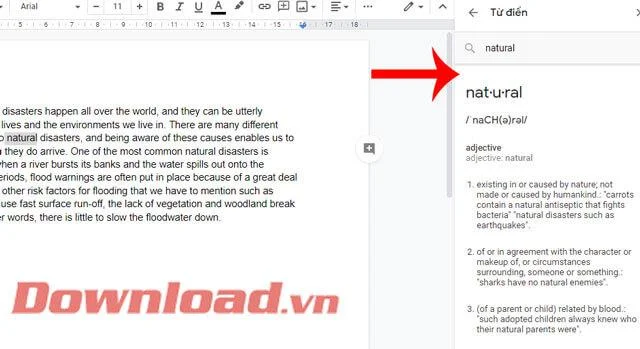
Step 5: Next in the Tools section , click on Dictionary , or you can press the key combination Ctrl + Shift + Y.
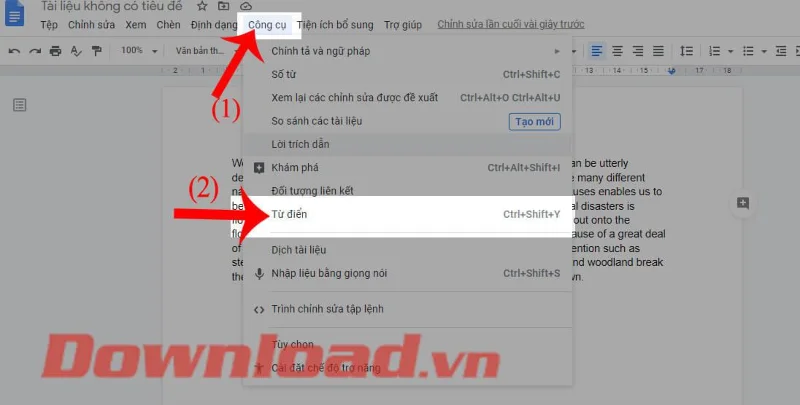
Step 6: Now on the right side of the screen a Dictionary frame will appear . Here, we will first see the pronunciation of words and word types . Next will be the usage of that word in an English sentence. This will be a useful tool to help those who are editing English content on Google Docs.
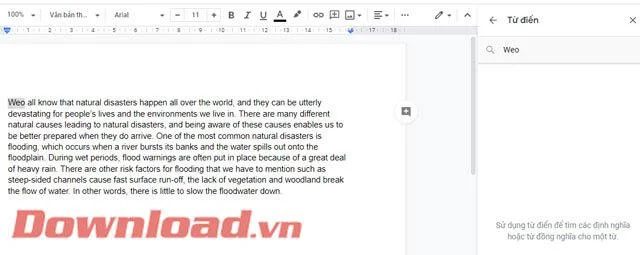
Step 7: If you enter the wrong word to look up, the Google Docs Dictionary frame will display the message "Use dictionary to find definitions or synonyms for a word" .
Wishing you success!
Trace the WebDAV request through Apache, Nginx, or a reverse proxy, then confirm ownCloud sync works with an authenticated PROPFIND test.
Fix Nextcloud’s missing outgoing address warning by setting its canonical URL and checking DNS, HTTPS, and reverse-proxy routing from the server itself.
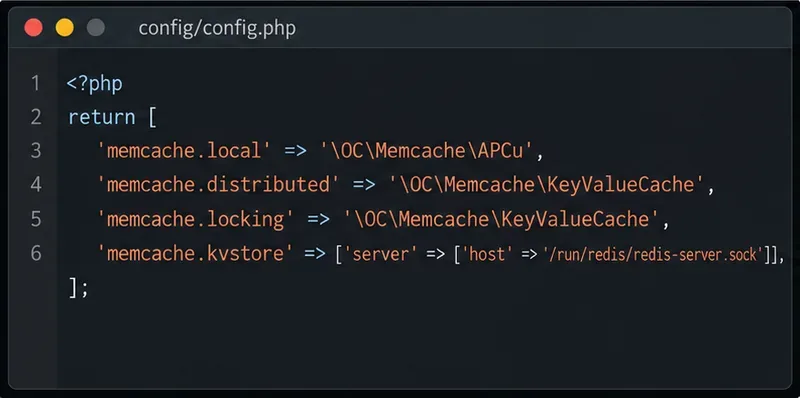
Configure APCu and Redis over a local Unix socket for Nextcloud caching and file locking, with steps for current and older Nextcloud releases.
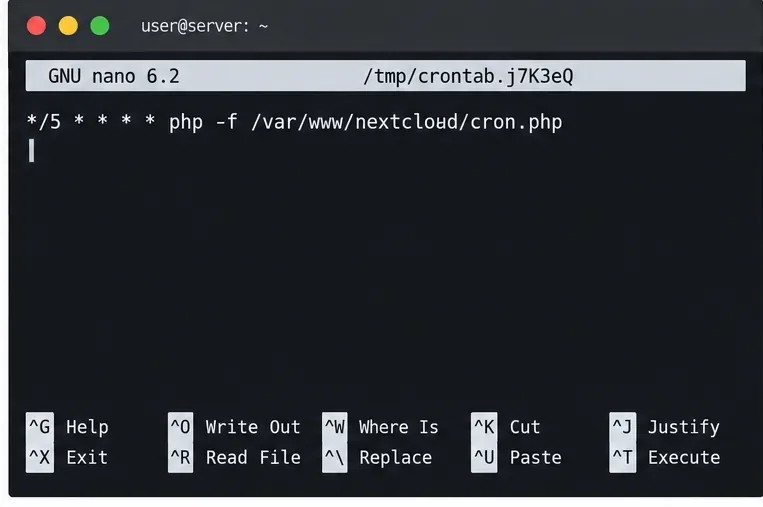
Check Nextcloud’s cron mode, repair its systemd service and timer, and verify that background jobs run after startup and every five minutes.
Enable reliable Nextcloud file locking, choose the right Redis or Valkey backend, and verify the warning clears without risking concurrent file changes.
Fix common Nextcloud scan findings with current updates, HTTPS and HSTS, precise reverse-proxy trust, and checks against the public server.
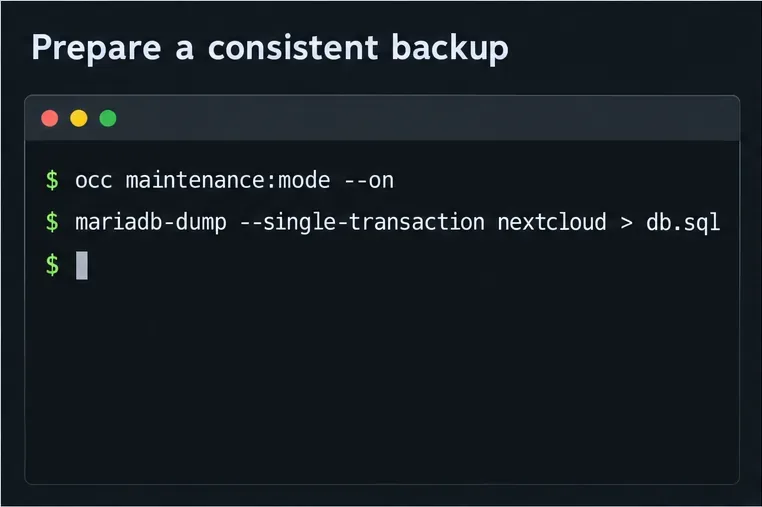
Back up Nextcloud’s files and MariaDB together, schedule encrypted Restic snapshots with cron, and verify recovery without risking the live server.
Configure Nextcloud SSE for the storage that needs it, protect encryption keys, and measure transfer and CPU impact before encrypting existing files.
Connect Nextcloud’s file search to Elasticsearch, index document contents, and choose a setup that fits your server and security needs.
Configure Nextcloud to remove deleted files after a defined retention period, schedule background jobs reliably, and avoid commands that purge every user’s trash.