Home
» Health
»
Plant-Based Diets: Facts, Myths, and How to Get Started
Plant-Based Diets: Facts, Myths, and How to Get Started
“Plant-based” can sound like a single diet, but it is better understood as a spectrum. One person may simply make vegetables, beans, whole grains, nuts, seeds, and fruit the center of most meals while still eating eggs, dairy, fish, or meat. Another may be vegetarian. Someone else may be fully vegan. Those patterns share a greater emphasis on plant foods, but their nutritional tradeoffs are not identical.
That distinction matters because the most useful question is not “Is a plant-based diet good or bad?” It is “What version fits your goals, preferences, budget, health needs, and willingness to plan?” The current Dietary Guidelines for Americans, 2025–2030, released in January 2026, emphasizes whole, nutrient-dense foods and includes plant-sourced protein foods such as beans, peas, lentils, nuts, seeds, and soy alongside animal-source options.
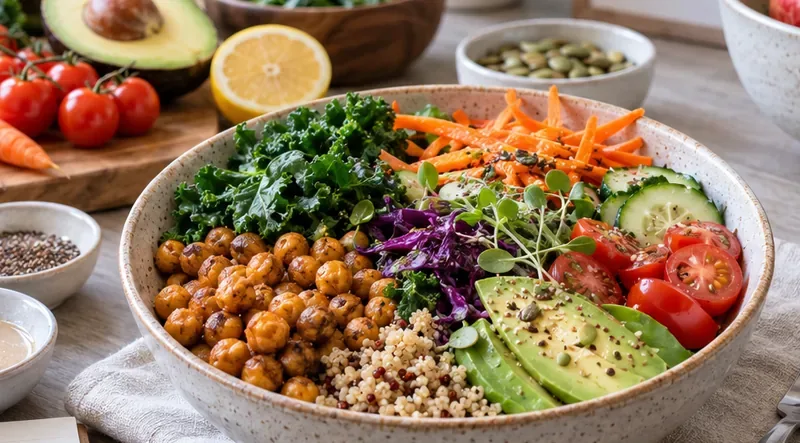
A balanced plant-forward meal can combine legumes, whole grains, vegetables, healthy fats, and seeds in one practical dish.
What does “plant-based” actually mean?
There is no single legally standardized menu that everyone means by “plant-based.” In everyday nutrition, the term usually means that plant foods make up a large share of the diet. It does not automatically mean vegan.
Pattern
Typical approach
Main tradeoff
Plant-forward or flexitarian
Mostly plant foods, with some meat, fish, eggs, or dairy
Easy transition and fewer nutrient gaps, but still requires attention to food quality
Vegetarian
No meat or fish; may include eggs and/or dairy
More restrictive, but vitamin B12, calcium, protein, and iodine may be easier to obtain than on a vegan diet
Vegan
No animal-derived foods
Can be nutritionally adequate, but vitamin B12 and several other nutrients require deliberate planning
If your goal is simply to eat more plants, there is no nutritional requirement to jump directly to the strictest version. A gradual shift can be easier to sustain and lets you learn which meals keep you satisfied.
Is a plant-based diet automatically healthier?
No. “Plant-based” describes where foods come from, not necessarily their nutritional quality. A diet built around lentils, vegetables, fruit, oats, tofu, nuts, seeds, and whole grains is very different from one built mostly around fries, sugary cereal, refined snacks, and highly processed meat substitutes—even though both could technically exclude animal foods.
This is one reason the 2025–2030 federal guidance focuses on whole, nutrient-dense foods rather than treating any one eating label as a guarantee of health. A useful rule is to make minimally processed staples the foundation and treat highly processed substitutes as optional convenience foods rather than nutritional insurance.
Will you get enough protein without meat?
Most healthy adults can meet protein needs with plant foods if they eat enough total food and include protein-rich choices regularly. USDA’s Protein Foods guidance lists beans, peas, lentils, nuts, seeds, and soy foods as vegetarian protein options.
Practical high-protein plant foods include tofu, tempeh, edamame, lentils, chickpeas, beans, seitan, peanuts, peanut butter, nuts, seeds, and higher-protein grains. Soy foods are especially useful because they provide substantial protein in familiar forms such as tofu, tempeh, edamame, and fortified soy milk.
Myth: You must combine “complementary proteins” at every meal
You do not need to pair specific plant proteins at every sitting. MedlinePlus notes that plant protein foods do not have to be combined at the same meal. In practice, variety across the day matters more than trying to engineer a perfect amino-acid combination every time you eat.
There is an important nuance, however. Older adults, competitive athletes, people recovering from illness, and anyone eating very few calories may benefit from being more deliberate about both the amount and distribution of protein. For those groups, it can make sense to include a substantial protein source at each meal instead of assuming vegetables and grains alone will add up.
Which nutrients deserve the most attention?
A well-planned plant-based diet is not about chasing every vitamin individually. The goal is to know which nutrients become harder to obtain as animal foods decrease, then build simple routines around them.
Vitamin B12: the non-negotiable issue for vegans
Vitamin B12 is naturally present in animal foods, while unfortified plant foods do not provide reliable B12. The NIH Office of Dietary Supplements specifically identifies vegetarians and vegans as groups that may not get enough and points to fortified foods and supplements as sources.
If you eat a fully vegan diet, do not rely on spirulina, fermented foods, seaweed, or “natural” plant products as your sole B12 strategy. Check labels on fortified foods, or discuss an appropriate supplement schedule with a clinician or registered dietitian. B12 deficiency can take time to become obvious, so waiting for symptoms is a poor monitoring strategy.
Iron: available from plants, but absorbed differently
Lentils, white beans, kidney beans, tofu, fortified cereals, spinach, nuts, and seeds can all contribute iron. The tradeoff is absorption. Plant foods contain nonheme iron, which the body absorbs less efficiently than heme iron from animal foods. NIH states that people following vegetarian diets need about 1.8 times as much iron as the standard listed amounts because of this lower bioavailability. See the NIH iron fact sheet.
One practical way to improve absorption is to eat iron-rich plant foods with vitamin C sources such as bell peppers, citrus, strawberries, tomatoes, or broccoli. If you have heavy menstrual bleeding, a history of iron deficiency, pregnancy, unusual fatigue, or known anemia, do not self-prescribe high-dose iron; testing and individualized advice are safer.
Calcium and vitamin D: check the label, not the front of the carton
Plant milks vary widely. Many are fortified with calcium and vitamin D, but not all are, and protein content also differs. The NIH vitamin D fact sheet notes that many soy, almond, and oat beverages are fortified, while naturally vitamin-D-rich foods are limited.
For calcium, fortified plant milk, calcium-set tofu, bok choy, kale, broccoli, tahini, and some beans can help. Absorption differs among foods; for example, calcium from spinach is poorly absorbed because of oxalates, while calcium from lower-oxalate greens is more available. If plant milk is a major nutritional substitute for dairy, fortified soy milk is often a particularly practical choice because it combines useful protein with fortification—but the Nutrition Facts label still decides whether a specific product fits your needs.
Omega-3 fats: ALA is easy; EPA and DHA take more thought
Chia seeds, ground flaxseed, walnuts, soybean oil, and canola oil provide alpha-linolenic acid (ALA), an essential omega-3 fat. But the body converts only a limited amount of ALA to the longer-chain omega-3s EPA and DHA. The NIH omega-3 fact sheet lists algal oil as a vegetarian source of EPA/DHA supplements.
If you eat fish, this issue is simpler. If you are vegan and want a direct source of DHA or EPA—especially during pregnancy or breastfeeding—ask your health professional whether an algae-derived supplement is appropriate for you.
Iodine and zinc: easy to overlook
Iodine deserves attention when you remove seafood, dairy, and eggs. NIH identifies vegans as a group that may have lower iodine intake. Iodized table salt can be a reliable source, while many specialty salts are not iodized and the iodine content of seaweed can vary dramatically. See the NIH iodine guidance.
Zinc is available in beans, nuts, seeds, and whole grains, but phytates in plant foods can reduce absorption. The NIH zinc fact sheet notes that soaking, cooking, and fermentation can improve zinc bioavailability in plant-based diets.
Are plant-based meat and dairy substitutes a good idea?
Sometimes. They solve real problems: convenience, familiar flavor, higher protein in some products, and an easier transition away from animal foods. But they are not nutritionally interchangeable with the foods they imitate.
Compare products using a few concrete criteria:
Protein: Does the product provide enough to play the same role in your meal?
Fortification: If it replaces dairy, does it contain calcium, vitamin D, and perhaps B12?
Sodium: Meat substitutes, sauces, frozen meals, and snack foods can be high in sodium.
Saturated fat: Some products use coconut oil, which can raise saturated fat substantially.
Added sugar: Sweetened plant milks and yogurts can add more sugar than expected.
Cost: Beans, lentils, tofu, oats, peanut butter, and frozen vegetables are often cheaper than branded substitutes.
In other words, use substitutes strategically. A burger alternative may help at a barbecue; it does not need to become the centerpiece of every dinner.
What is the easiest way to start?
Start by replacing meals, not identities. You do not need a new label on day one. Pick two or three meals you already like and make them more plant-forward.
Choose a protein anchor. Lentils, beans, tofu, tempeh, edamame, chickpeas, or a familiar meat substitute.
Add a whole-food carbohydrate. Brown rice, quinoa, oats, whole-grain bread, corn, potatoes, or another staple you enjoy.
Add at least two vegetables or a vegetable plus fruit. Frozen produce is fine and often reduces cost and waste.
Add a source of fat and flavor. Nuts, seeds, avocado, tahini, olive oil, herbs, spices, salsa, or a simple dressing.
Check the nutrient gaps created by what you removed. If dairy disappears, look at calcium and vitamin D. If all animal foods disappear, make a B12 plan immediately.
A simple transition example
Suppose your normal dinner is ground beef tacos. The lowest-friction first step may be half beef and half black beans. Next, try fully bean-based tacos with avocado, cabbage, salsa, and a whole-grain or corn tortilla. If you later move toward vegan eating, check whether any cheese or sour-cream replacement adds meaningful nutrition—or whether guacamole, salsa, and beans already make the meal satisfying.
This gradual approach is useful because it separates two questions: “Do I enjoy this meal?” and “Does this meal meet my nutritional needs?” Both matter for long-term success.
Myth: A plant-based diet is expensive
It can be, but it does not have to be. Premium meat alternatives, protein bars, specialty powders, and prepared vegan meals can raise the grocery bill quickly. The least expensive plant-based staples are often ordinary foods: dried or canned beans, lentils, oats, rice, potatoes, peanut butter, seasonal produce, and frozen vegetables.
If budget is the priority, build meals around those staples and use convenience products selectively. If time is the priority, canned beans, frozen grains, pre-cut vegetables, and fortified plant milk may be worth paying more for. There is no single optimal tradeoff; the best plan is the one you can repeat.
Myth: Going plant-based means you must give up every animal food
Not unless that is your goal. Some people choose veganism for ethical or environmental reasons, which makes complete avoidance central to the decision. Others are focused mainly on adding more legumes, whole grains, vegetables, nuts, and seeds for health or variety. For them, a flexitarian or vegetarian pattern may be more practical.
Nutrition does not require an all-or-nothing identity. A person who moves from one serving of vegetables a day to several, eats beans four times a week, replaces refined grains with whole grains, and reduces processed meat has made a meaningful dietary shift even if they still eat animal foods.
Who should get individualized advice before making a major change?
Most adults can experiment safely with eating more plant foods, but a highly restrictive diet deserves extra planning if you are pregnant or breastfeeding, feeding a child or teen, an older adult with low appetite or muscle loss, an athlete with high energy needs, or living with kidney disease, digestive disease, anemia, food allergies, or a history of an eating disorder.
In those situations, a registered dietitian or qualified clinician can help you avoid accidental shortfalls and decide whether blood testing or supplements are appropriate. A supplement should solve a defined need, not compensate for a poorly structured diet.
So, should you try a plant-based diet?
If you want to eat more plants, you do not need to wait for the perfect plan. Begin with one repeatable change: add beans to lunch, make tofu your dinner protein twice a week, switch one refined grain to a whole grain, or make half your plate vegetables more often.
The strongest version of a plant-based diet is not the strictest one. It is the version that gives you enough protein and energy, covers B12 and other harder-to-get nutrients, fits your budget and culture, and relies mostly on foods you genuinely enjoy. For some people that will be vegan. For others it will be vegetarian or simply plant-forward. The label matters less than the pattern you can sustain.