Home
» Health
»
The Science of Sleep: How to Optimize Rest Without Chasing Perfect Sleep
The Science of Sleep: How to Optimize Rest Without Chasing Perfect Sleep
Imagine Alex, a fictional 35-year-old knowledge worker. Alex usually sleeps about six and a half hours on work nights, sleeps much later on weekends, drinks coffee around 4 p.m., and scrolls in bed because it feels like the easiest way to wind down. By morning, Alex is functional but rarely refreshed.
This is only an illustrative example, not a real patient story or a test result. It is useful because it captures a common mistake: treating sleep as a single number. The science is broader. Healthy sleep depends on duration, quality, timing, regularity, and the absence of an untreated sleep disorder. Optimizing rest means improving that whole system rather than hunting for one hack.
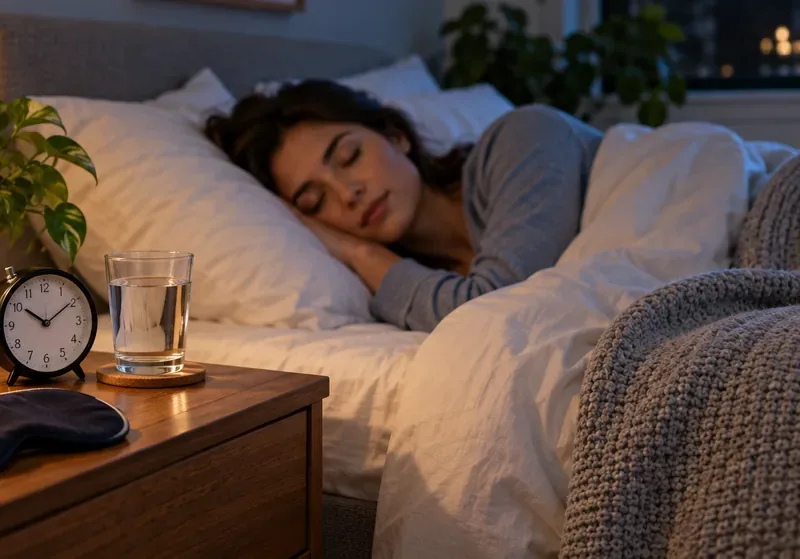
A sleep-friendly setup supports the basics: enough time in bed, a dark and quiet environment, and a routine that makes sleep easier rather than forcing it.
What actually controls sleep?
Two biological processes help explain why Alex can feel exhausted at 3 p.m. yet oddly alert at midnight.
Sleep pressure builds while you are awake
The longer you stay awake, the stronger the body's drive for sleep becomes. The National Institute on Aging describes this sleep-wake homeostasis as a pressure that increases with time awake. Adenosine is one of the chemicals involved: it accumulates during waking hours and is broken down during sleep. This is one reason a long late-afternoon nap can make bedtime harder—it reduces some of the sleep pressure you had built up.
Your circadian clock decides when sleep is biologically easier
Your circadian rhythm is the internal timing system that helps organize sleep and wakefulness across roughly a 24-hour day. Light is one of its strongest environmental signals. Exposure to light during the day, especially earlier in your waking period, helps anchor the clock; bright light late at night can push the system toward wakefulness. The National Institute of Neurological Disorders and Stroke notes that retinal light signals help the brain determine whether it is day or night. See the official NINDS Understanding Sleep guide.
For Alex, this means “being tired” and “being ready to sleep” are not always the same thing. A late weekend schedule, evening light, and late caffeine can all pull in different directions.
Sleep is not one uniform state
During a normal night, the brain cycles through non-REM and REM sleep. NHLBI describes sleep cycles of roughly 80 to 100 minutes, typically repeating four to six times per night. Non-REM sleep includes three stages, with stage 3 representing deep or slow-wave sleep. REM sleep features brain activity closer to waking levels. The amount of each stage changes across the night, with more deep sleep earlier and longer REM periods later. See the official NHLBI sleep stages overview.
This matters because simply “getting some sleep” is not the same as allowing enough time for multiple cycles. Repeatedly shortening the night can reduce total opportunity for the full pattern of sleep stages. Consumer wearables may estimate stages, but the practical target for most people is not to micromanage a nightly REM percentage. It is to create enough sleep opportunity and a stable schedule, then judge the result by daytime function and how refreshed you feel.
Step one for Alex: protect enough sleep opportunity
For most adults, the useful starting target is not six hours. NHLBI states that experts generally recommend 7 to 9 hours of sleep per night for adults, while the American Academy of Sleep Medicine and Sleep Research Society consensus recommends at least seven hours on a regular basis for healthy adults. Individual needs vary, and some people may need more, especially when recovering from sleep loss or illness. See the official NHLBI sleep duration guidance and AASM adult sleep duration advisory.
Alex's first change is therefore boring but important: reserve enough time for sleep before trying supplements, gadgets, or elaborate routines. If Alex must wake at 6:30 a.m., a midnight bedtime leaves only six and a half hours in bed before even accounting for time spent falling asleep or waking during the night. A realistic optimization plan has to begin with the schedule.
Step two: make wake time more consistent
NHLBI recommends going to bed and waking at about the same time each day and limiting large weekend shifts because irregular schedules can disrupt the sleep-wake rhythm. Consistency does not mean living by the minute. It means avoiding a pattern where workdays and weekends operate like different time zones.
For Alex, a practical target might be keeping wake time within roughly an hour most days rather than sleeping several hours later every weekend. That gives the circadian system a more stable morning anchor. If Alex has accumulated sleep debt, the answer is not to deprive sleep for the sake of a perfect schedule; the broader goal is to create enough nightly sleep opportunity so large weekend catch-up becomes less necessary.
Step three: use light deliberately
Light is one of the most powerful timing signals available without medication. NHLBI notes that managing light exposure can help reset the sleep-wake cycle, with more light during the day and less artificial light at night. Alex therefore moves bright outdoor light earlier in the day when possible and dims the environment before bed rather than treating the phone screen as the only issue.
That distinction matters. “Blue light” is often marketed as if it were the entire sleep problem, but timing, brightness, duration, and what you are doing on the device also matter. A stimulating work email in a dim screen mode can still keep the mind activated. The more useful question is whether your last hour supports wakefulness or winding down.
Step four: move caffeine earlier
Caffeine works partly by blocking adenosine signaling, which can reduce the feeling of sleep pressure. NHLBI warns that caffeine's effects can last up to eight hours. NIH's sleep guidance also notes that caffeine may take six to eight hours to wear off completely. See the official NHLBI healthy sleep habits.
Alex's 4 p.m. coffee is therefore a high-value variable to test. Instead of assuming coffee is harmless because falling asleep is eventually possible, Alex moves the last caffeinated drink earlier and watches whether sleep onset, nighttime awakenings, and morning alertness improve over one to two weeks.
There is no universal caffeine cutoff that fits every metabolism and bedtime. The point is to give the experiment enough margin to reveal whether late caffeine is contributing.
Step five: do not use alcohol as a sleep tool
Alcohol can make some people feel sleepy, but sedation is not the same as healthy sleep. NHLBI notes that alcohol may make it easier to fall asleep while producing lighter sleep and more nighttime waking. Alex therefore treats an evening drink as a lifestyle choice rather than a sleep aid.
If removing late alcohol noticeably improves continuity or morning freshness, that is useful personal evidence. If it makes no difference, Alex still avoids concluding that alcohol is “good for sleep”; individual perception does not override the known effects on sleep architecture and fragmentation.
Step six: build a bedroom that removes friction
The bedroom does not need to look like a wellness retreat. NHLBI's practical advice is simpler: keep it quiet, cool, and dark. Alex removes unnecessary light sources, reduces noise, keeps the room at a comfortable cooler temperature, and moves work tasks out of bed when possible.
The purpose is conditioning. If the bed becomes the place for spreadsheets, messaging, movies, and worrying about tomorrow, the brain gets fewer cues that bed means sleep. A predictable wind-down routine—reading, a warm shower, quiet music, or another low-stimulation activity—can make the transition easier.
Step seven: exercise during the day, but do not turn timing into dogma
Regular physical activity is part of healthy sleep guidance from NIH. Older NHLBI guidance suggests avoiding intense exercise close to bedtime when it makes falling asleep harder. In practice, response varies. Some people can exercise in the evening without a problem; others feel activated for hours.
Alex keeps exercise regular and tests timing instead of assuming there is one correct clock time. The useful signal is whether a workout leaves enough physiological and mental room to settle before the planned bedtime.
What about naps?
Naps can improve alertness, but they can also reduce nighttime sleep pressure. NHLBI suggests that adults who have trouble falling asleep at night limit naps, take them earlier in the afternoon, and keep them short—about 20 minutes. Alex stops using a long 5 p.m. nap as compensation for short weekday nights and instead focuses on protecting nighttime sleep.
That does not make naps “bad.” Shift workers, people recovering from acute sleep loss, and people with different schedules may use them differently. The key is whether the nap supports or competes with the main sleep period.
How Alex measures progress without obsessing over a sleep score
Instead of judging each night, Alex keeps a simple two-week sleep diary. NHLBI specifically uses sleep diaries to help evaluate sleep problems. The diary tracks:
bedtime and estimated time of falling asleep;
wake time and time out of bed;
nighttime awakenings;
naps;
caffeine and alcohol timing;
exercise timing;
morning refreshment and daytime sleepiness.
What Alex wants to see is not perfection. Success means enough sleep on most nights, less variation across the week, easier sleep onset, fewer disruptive awakenings, and better daytime alertness. One bad night is noise; a two-week pattern is more informative.
When healthy habits are not enough
This is the most important limit of self-optimization. “Sleep hygiene” is a foundation, not a universal treatment.
NHLBI defines chronic insomnia as difficulty falling asleep, staying asleep, or obtaining good-quality sleep at least three nights per week for more than three months despite having adequate opportunity for sleep. For chronic insomnia, the American College of Physicians recommends cognitive behavioral therapy for insomnia (CBT-I) as the initial treatment. CBT-I combines cognitive and behavioral methods such as stimulus control and sleep restriction with education; it is more structured than a list of bedtime tips. See the official ACP CBT-I guideline summary.
Melatonin should also not be treated as the default answer to persistent insomnia. The National Center for Complementary and Integrative Health notes that evidence does not support recommending melatonin for chronic insomnia and that long-term safety is not established. It may have roles in certain circadian problems such as jet lag, but those are different questions. See the official NCCIH melatonin guidance.
Know the signs that call for medical evaluation
Alex should not keep “optimizing” indefinitely if the problem may be a sleep disorder. NHLBI lists breathing that starts and stops during sleep, frequent loud snoring, gasping for air, and significant daytime sleepiness among common sleep apnea symptoms. Persistent unrefreshing sleep despite adequate time in bed, difficulty staying awake during the day, or sleepiness that affects driving or work also deserves attention. See the official NHLBI sleep apnea symptoms and the updated NHLBI sleep deficiency diagnosis guidance.
If those symptoms are present, the goal shifts from lifestyle experimentation to diagnosis. A clinician may review medicines, health conditions, breathing symptoms, circadian issues, or recommend a formal sleep study.
A practical sleep optimization checklist
Question
Good sign
Reason to change approach
Am I allowing enough time to sleep?
Usually at least 7 hours of actual sleep opportunity, often closer to 7–9
Bedtime makes adequate sleep mathematically impossible
Is my schedule reasonably consistent?
Wake and sleep times do not swing dramatically across the week
Weekends repeatedly shift by several hours
Is light working with my schedule?
Daylight earlier; dimmer environment near bedtime
Bright evenings and little daytime light
Is caffeine interfering?
Last dose is early enough that sleep is unaffected
Late caffeine coincides with delayed sleep or lighter rest
Is the bedroom supporting sleep?
Quiet, dark, comfortable, and associated mainly with rest
Work, entertainment, noise, or heat dominate the space
Am I improving after 1–2 weeks?
Better daytime alertness and more stable sleep
Persistent insomnia, severe sleepiness, snoring, or gasping
Bottom line
For fictional Alex, the biggest gains do not come from buying a sleep tracker or chasing a perfect deep-sleep percentage. They come from giving sleep enough time, stabilizing the schedule, using light and caffeine more intelligently, keeping the bedroom sleep-friendly, and measuring progress across weeks rather than nights.
The science of sleep is reassuringly unglamorous: your body already knows how to sleep. Optimization is mostly about removing conflicts between biology and schedule. When those conflicts are addressed and sleep still remains poor, that is useful information too—it is a reason to look for insomnia, sleep apnea, circadian disorders, medication effects, or another medical cause rather than trying harder to relax.
This article provides general educational information, not individualized medical advice. Sleep needs vary, and persistent sleep problems, breathing pauses, severe daytime sleepiness, or safety concerns should be discussed with a qualified healthcare professional. Source guidance was checked in September 2026.