How to Configure a WireGuard Point-to-Site VPN on Debian 12
Set up a Debian 12 WireGuard VPN server for one remote client. Configure keys, IPv4 forwarding, nftables NAT, firewall access, and connection checks.
Typically, to be able to type Vietnamese on the computer, it is imperative that we have to use Vietnamese keyboards such as UniKey , Vietkey , GoTiengViet or FVIK . .. However, if the computer has installed one of them and still cannot type Vietnamese, or for some reason, UniKey does not work on the computer, while we are urgently in need of use here?
If you are also in that situation, or at least want to avoid the worst case then, learn immediately how to type Vietnamese without Vietnamese percussion below.
This is the way you can do it and do not need any support or install any other third-party software or applications.
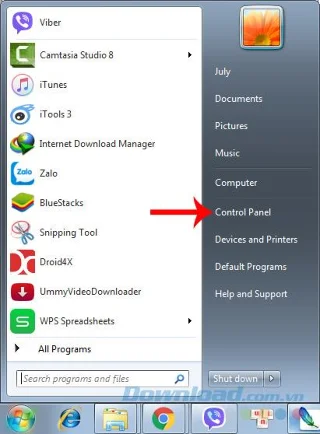
Step 1: From the main interface of the computer, you left-click on the Windows icon at the bottom, left corner of the screen and then select Control Panel.
Step 2: The All Control Panel Items window appears. Look in the upper right corner, there is the View by section , you click on it and change the current display to Category , and if this mode is already alone then.
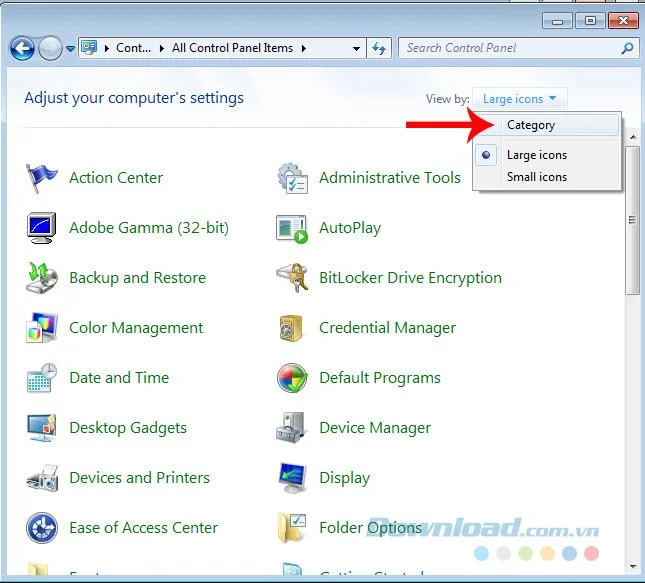
Change the display mode of All Control Panel Items
Step 3: Click on Clock, Language, and Region .
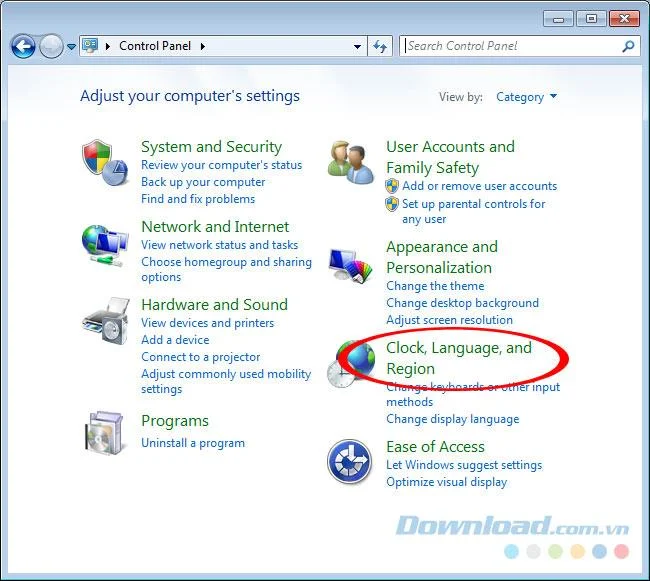
Continue to select Regional and Language section.
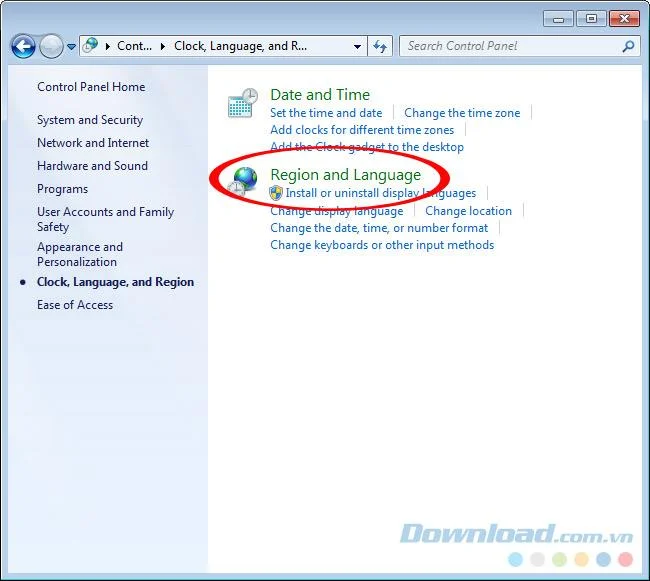
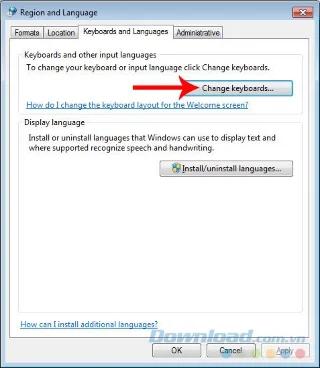
Step 4: A new window appears as below, we select tab Keyboards and Languages / Change keyboards ...
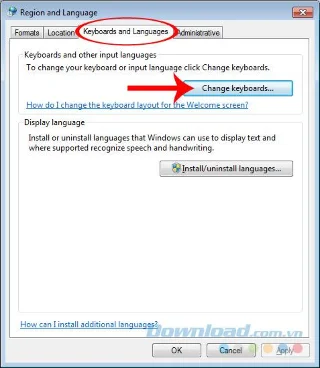
Click on Change keyboards to add a new language
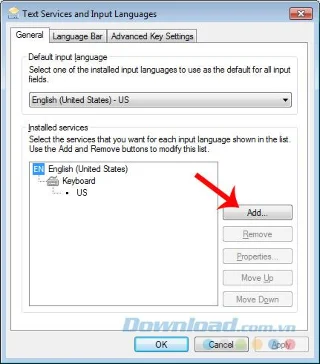
Step 5: You will see the Text Services and Input Languages dialog box appear, in this is the default language of the computer (English only), from here, we can add any other languages for the machine. Feature for use without software support.
Specifically, we need to type Vietnamese, so we left click on the item Add ...
Scroll down, find the Vietnamese language pack and in turn:
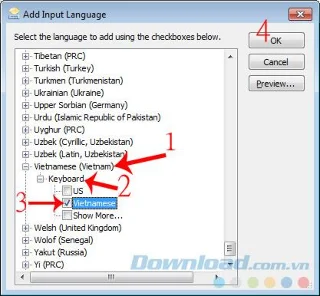
Step 6: Select will see the Vietnamese language appear more Installed services frame . Click Apply / OK to save this operation.
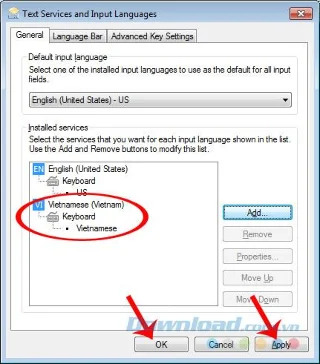 More successful Vietnamese
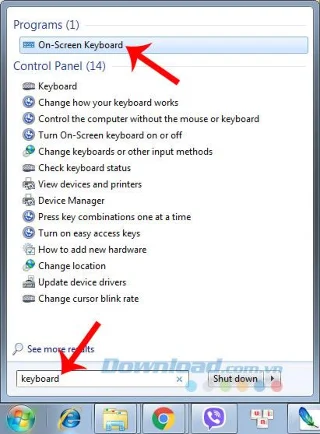
Step 7: Go back to the desktop, continue to click on the window icon and enter the keyword " keyboard " into the search box and select the On-Screen Keyboard (image below).
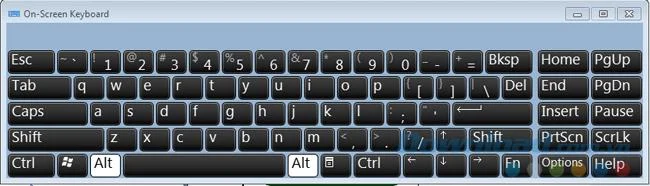
This is the interface of the virtual keyboard that we just opened.
Step 8: If you notice, you will see on the taskbar (taskbar) has an EN - English (United States) icon . That is the Language bar that we will left-click and choose to change to the new language to use (Vietnamese just added earlier).
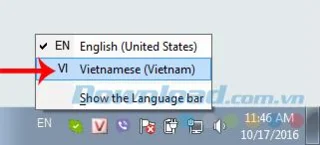
At this time, the virtual keyboard interface will also automatically change to be suitable for users to use. Specifically:
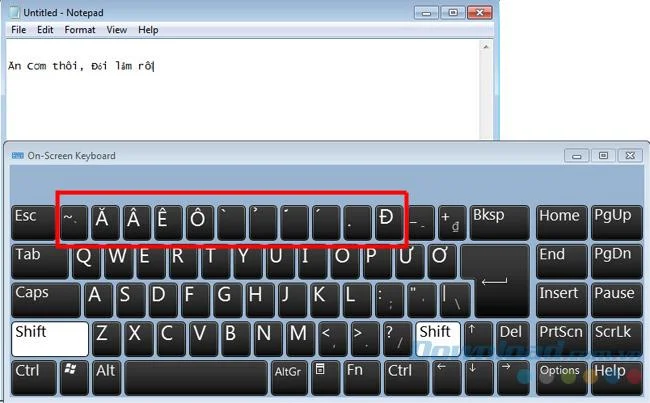
That is the case the computer displays Language Bar available, but if your computer does not have? Not really, but you have set up this feature to not display with the computer, or turned it off without knowing. Now, before setting up more languages, we must activate to make the Language Bar display first.
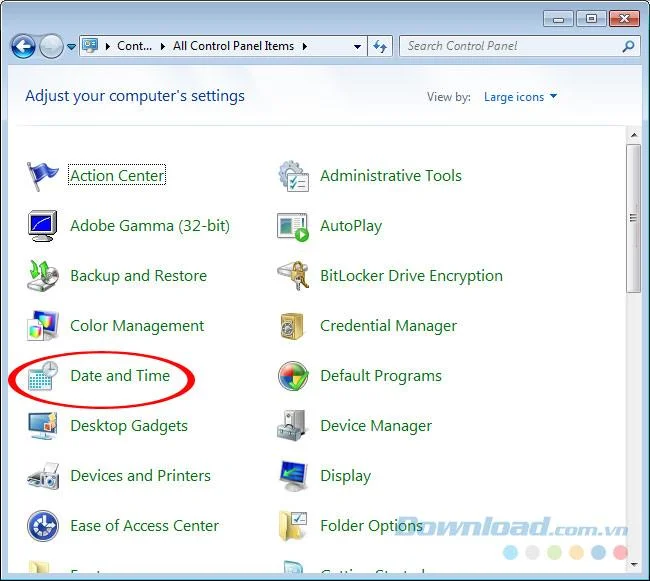
Step 1: Access to Control Panel / Date and Time.
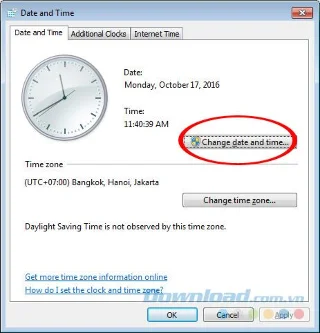
Step 2: Select the item Change date and time ...
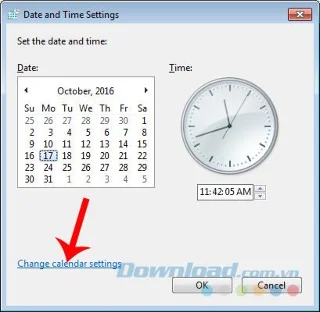
Step 3: Click Change calendar settings .
Step 4: Now there will be two interfaces appear, you OK or Cancel the first interface is Customize Format go.
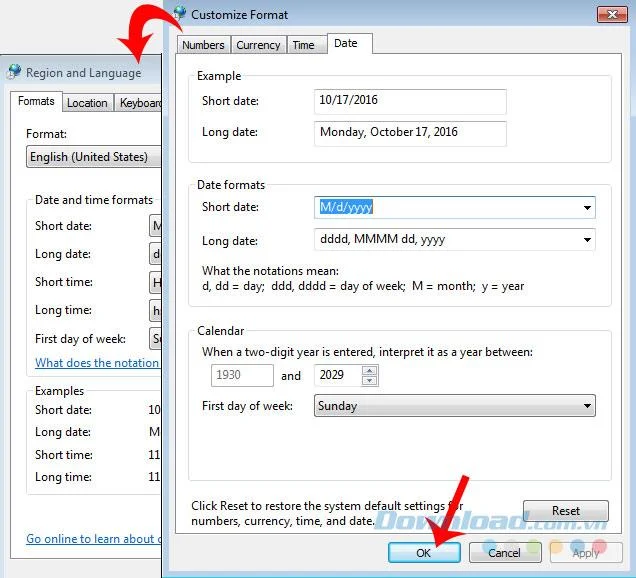
OK or Cancel to exit the first dialog box
And left click select the Keyboards and Languages / Change keyboards tab ...
Step 5: Select the Language Bar in the dialog box that appears, tick the Docked in the taskbar . Then Apply / OK to save.
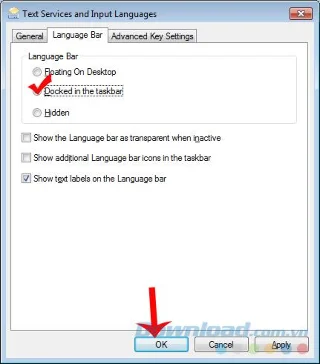
Activate Language Bar
Immediately this item will appear under the taskbar as shown below. At this point you follow the instructions above to perform.
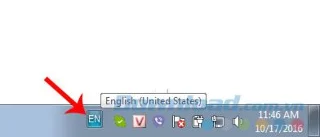
In special cases, if this item appears directly on the desktop, we can simply left click on the down arrow icon and go to Settings ...
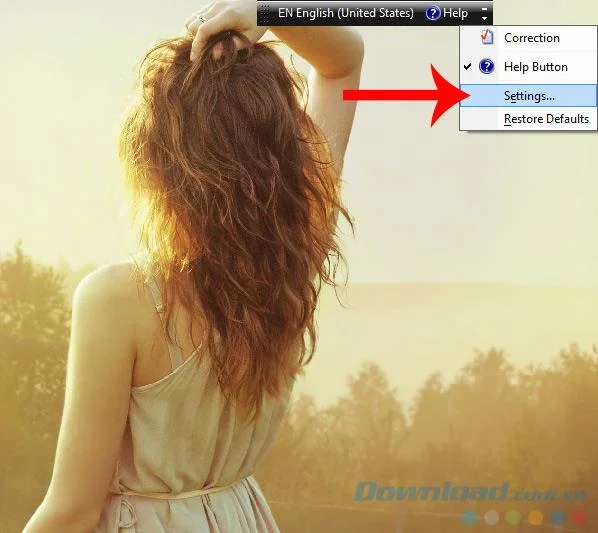
The Text Services and Input Language window will appear and we can perform additional languages without going through the above steps.
ATTENTION:
This way, we can still type Vietnamese without UniKey or have installed it but it fails. While not quite as efficient and completely convenient, it's a great way to use it in emergencies.
Set up a Debian 12 WireGuard VPN server for one remote client. Configure keys, IPv4 forwarding, nftables NAT, firewall access, and connection checks.
Harden a Debian 12 workstation with a careful CIS Benchmark workflow: select the right profile, patch safely, review services and access, configure nftables, and document evidence.
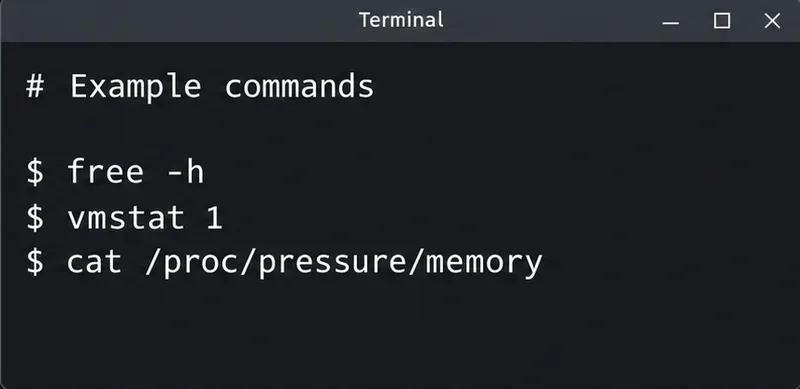
Diagnose MySQL OOM kills on Debian 12, check VPS memory limits, configure swap, and tune database memory and concurrency without promising a universal fix.
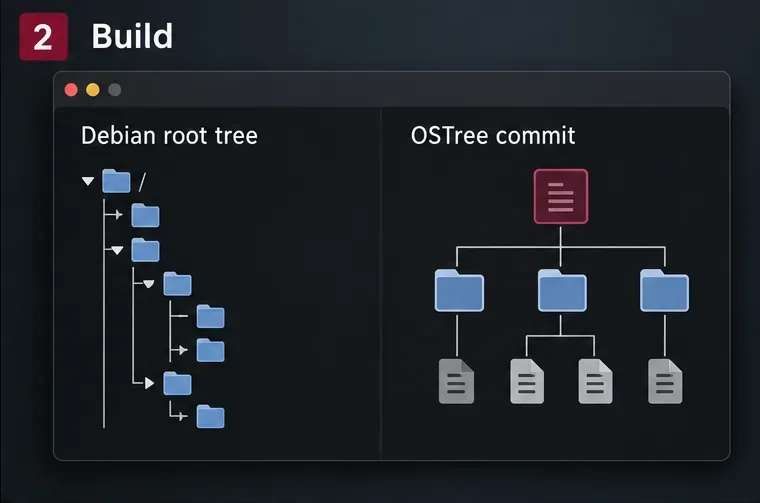
Learn how to create and test a Debian-derived OSTree desktop in a VM, including system-tree preparation, boot integration, deployment checks, and rollback.
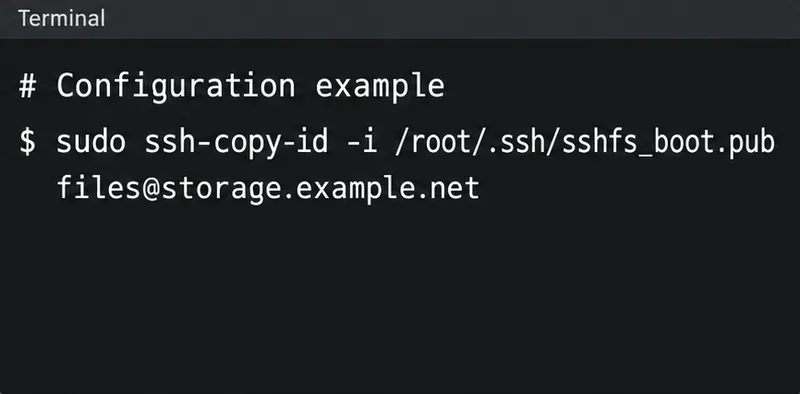
Configure an SSHFS boot mount in Debian with SSH keys, fstab, and systemd automount. Includes reboot checks, permissions, timeouts, and troubleshooting.
A practical October 2026 Chicago and Illinois home-maintenance checklist covering first frost, heating safety, gutters, leaves, pipes, renters, and winter-storm preparation.
Plan Chicago’s October garden with Illinois Extension advice on garlic, bulbs, indoor herbs, microgreens, frost protection, and a week-by-week checklist—using climate normals separately from the live forecast.
National Voter Registration Day is September 15, 2026. Learn how to register online, by mail, or in person and verify your voter status.
New to podcasting? Learn the 2026 trends shaping video, discovery, transcripts, AI, analytics, monetization, and a practical launch plan.
A practical UGC masterclass for sourcing, permissioning, briefing, publishing, and measuring customer and creator content without losing authenticity.