Home
» Technology
»
Where Should You Study Urban Air Traffic Management (UTM)? A Practical 2026 Guide
Where Should You Study Urban Air Traffic Management (UTM)? A Practical 2026 Guide
The best place to study urban air traffic management depends less on the school name than on the job you want afterward. If you already work in aviation or software and need direct UTM knowledge, a focused professional course can be more useful than another full degree. If you are starting from undergraduate level, choose a program that combines uncrewed aircraft, airspace integration, regulation, software, safety, and hands-on operations. If you want to design the algorithms, standards, or architectures behind future airspace systems, a research-focused aerospace or air-navigation program is usually the better route.
One terminology note matters before comparing programs. In the United States, the FAA uses UAS Traffic Management (UTM) for a collaborative ecosystem that manages low-altitude uncrewed-aircraft operations and is separate from, but complementary to, traditional air traffic services. In Europe, the closely related operational framework is called U-space. Universities also place the same subject matter under Advanced Air Mobility (AAM), Urban Air Mobility (UAM), air traffic management (ATM), autonomous systems, or drone engineering. The FAA UTM overview and EASA U-space overview are useful reference points for what these systems actually do.
Illustrative example: imagine Maya, a software engineer who wants to move into systems that coordinate high volumes of delivery drones and future air taxis over cities. This is a hypothetical case, not a student testimonial. Maya does not primarily want to become a remote pilot. She wants to understand flight authorization, strategic deconfliction, airspace constraints, service-provider APIs, surveillance data, safety cases, and how uncrewed traffic connects to conventional aviation. We will use her decision throughout this guide.
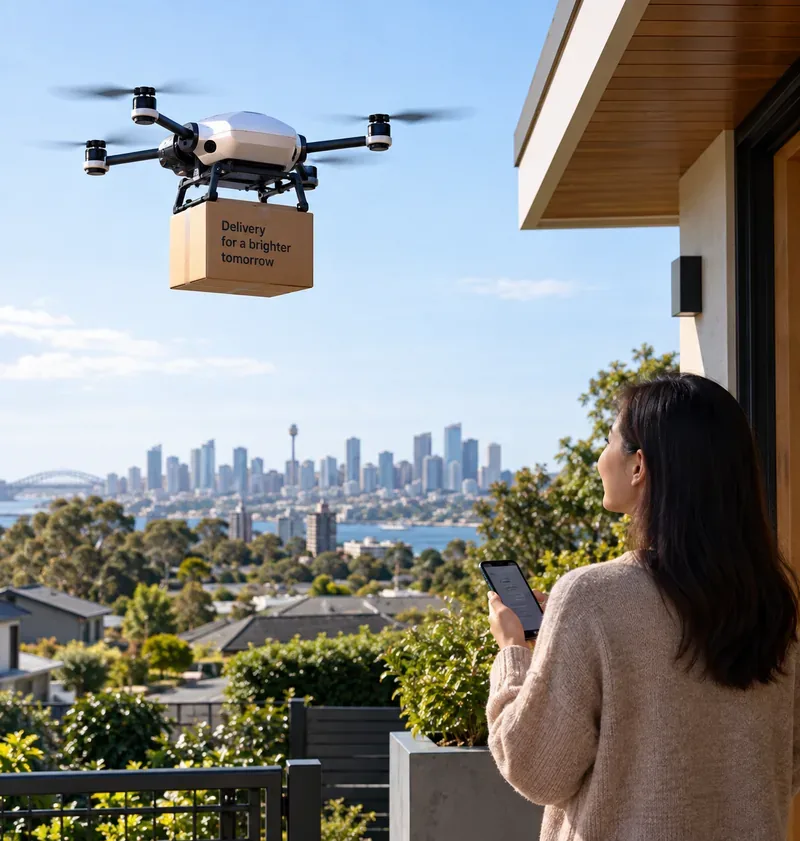
Low-altitude urban aviation may involve drones and larger electric vertical-takeoff aircraft sharing complex airspace near buildings and conventional aviation infrastructure.
What should a good UTM program actually teach?
UTM is not simply “drone piloting at scale.” The FAA describes a distributed, highly automated environment in which operators, service suppliers, and the regulator exchange information digitally rather than relying mainly on controller-to-pilot voice communications. The current FAA vision emphasizes services such as flight planning, authorization, surveillance, strategic coordination, and risk mitigation for increasingly complex operations, including beyond visual line of sight (BVLOS).
Europe makes the service model especially concrete. EASA identifies four mandatory U-space services: UAS flight authorization, geo-awareness, network identification, and traffic information. Its framework also defines roles for U-space service providers, common information service providers, operators, regulators, and crewed aviation. That means a serious UTM education should cross several disciplines rather than stay inside one narrow engineering specialty.
For Maya, a strong curriculum would cover airspace and ATM fundamentals; UAS operations and BVLOS concepts; distributed systems, APIs, and interoperability; communications, navigation, and surveillance; conflict detection and trajectory planning; weather and geospatial data; safety engineering and risk assessment; cybersecurity; human factors; regulation; and enough software, simulation, or operations research to evaluate a real system.
Cybersecurity is increasingly difficult to treat as an optional extra. EASA's Easy Access Rules for U-space note the amendment concerning information-security risks with potential aviation-safety impact, applicable from February 22, 2026. A program aimed at future UTM service providers should therefore address security alongside safety and interoperability.
Where should you study UTM in 2026?
Study option
Format
Best fit
Main limitation
Cranfield University
5-day professional UTM course
Direct, concentrated UTM upskilling
Not a full degree
Autonomous University of Barcelona (UAB)
6-ECTS course in Aeronautical Management
European U-space operations and management
Course sits inside a broader degree
University of Applied Sciences Kufstein Tirol (HOK)
6-semester BSc in Drone Engineering
Students starting from undergraduate level
UTM is one component of a broad drone-engineering degree
Embry-Riddle Aeronautical University
BS and MS pathways in uncrewed/autonomous systems
Broad UAS career preparation in the U.S.
Degree is wider than traffic management alone
University of Arkansas
6-credit graduate microcertificate
Working professionals seeking AAM/autonomous-operations credit
More operations-focused than UTM-architecture focused
ENAC
Advanced Master in Air Navigation Systems Engineering and Operations
UTM-to-ATM integration and air-navigation systems
Not a drone-specific UTM degree
Virginia Tech
MS/PhD aerospace research route plus MAAP ecosystem
Research, testing, safety cases, and UTM experimentation
No packaged “UTM degree”
Cranfield University: strongest fit for direct professional UTM study
For someone like Maya who already has a technical degree and wants targeted domain knowledge, Cranfield University's Uncrewed Traffic Management course is one of the most direct current options. The university describes a five-day, campus-based course covering the advanced-air-mobility ecosystem, UTM and UAM architectures, algorithms, regulatory and technical context, and tools for developing and evaluating automated airspace-management systems.
This is a good fit when the goal is to add aviation-domain knowledge to an existing background in software, aerospace, systems engineering, regulation, or operations. It is less suitable if you need a full academic credential, a long research thesis, or a first degree. Also be careful with old search results: Cranfield's former Advanced Air Mobility Systems MSc is explicitly listed by the university as no longer available. That is exactly why current course pages should be checked before applying.
Autonomous University of Barcelona: a strong European U-space course inside Aeronautical Management
For the 2026/2027 academic year, UAB lists Uncrewed Aviation Operations and Management as a 6-ECTS course in its Aeronautical Management degree. Its stated objective is unusually close to the UTM topic itself: U-space and UTM foundations, European U-space services, operational risk assessment, strategic and tactical deconfliction, contingency management, and performance evaluation.
For Maya, UAB would be attractive if she were already entering or enrolled in a broader aeronautical-management program and wanted European regulatory depth. It is not the same as enrolling in a standalone UTM master's degree, so applicants should evaluate the full degree curriculum rather than judging it from this single course alone.
University of Applied Sciences Kufstein Tirol: best undergraduate route if you want UTM inside drone engineering
Students who have not yet completed a bachelor's degree should look differently at the problem. The Drone Engineering BSc at the University of Applied Sciences Kufstein Tirol in Austria is a six-semester, English-taught program covering drone design, programming, control, sensors, data analysis, licensing, flight testing, an exchange semester, and an internship. Importantly for this topic, its curriculum includes a dedicated 5-ECTS U-Space / UTM course.
That named course covers U-space services, regulation, drone registration and electronic identification, airspace management, conflict resolution, tracking, and integration with crewed aviation. For a student starting from scratch, this is a clearer UTM signal than choosing a generic aerospace degree and hoping to assemble relevant electives later.
If Maya were 18 and choosing her first degree rather than changing careers, this route would be more logical than a five-day professional course because she would also need the engineering, programming, systems, and operational foundations underneath UTM.
Embry-Riddle: broad U.S. degree pathways for uncrewed and autonomous systems
Embry-Riddle's M.S. in Uncrewed and Autonomous Systems is a 30-credit online master's covering technology, policy, design, ethics, and systems management, with specializations in small UAS, research, or technical development and support. The university also offers bachelor's pathways in uncrewed and autonomous systems, with coursework spanning airspace integration, regulation, mission planning, computer science, GIS, safety, and advanced or urban air mobility.
This is a strong choice if you want a broad UAS career rather than a narrowly defined UTM role. It can suit operators, program managers, technical specialists, and policy-oriented students. For Maya, it would make sense if she wants a full graduate degree while staying employed and is comfortable building a UTM-focused portfolio through electives, projects, or research rather than expecting the degree title itself to say “traffic management.”
University of Arkansas: compact graduate study for AAM and autonomous operations
This is useful for a professional who wants an academic credential smaller than a master's and is interested in mission planning, operational models, and autonomous operations. It is less obviously suited to someone whose primary goal is to design UTM network protocols, conflict-resolution algorithms, or certification frameworks. For Maya, it would be a pragmatic bridge if her near-term job target were UAS operations or program management.
ENAC: best fit when your UTM interest is really air-navigation systems integration
The French civil aviation university ENAC offers an Advanced Master in Air Navigation System Engineering and Operations (ANSEO). The program uses a systems approach and offers options in ATM, CNS/GNSS, and avionics. Its common curriculum includes regulatory frameworks, safety, project management, and systems engineering, while the ATM option includes airspace design, advanced ATM, and operational topics.
This is especially relevant if you want to solve the boundary problem between future UTM/U-space services and conventional air navigation. ENAC also lists a Drone and UTM research chair on its research pages, which strengthens its relevance as an air-navigation institution even though ANSEO itself is not a drone-only program.
For Maya, ENAC becomes attractive if she decides that her long-term role should be systems architect, air-navigation engineer, or regulator working across crewed and uncrewed traffic rather than a product engineer focused only on drones.
Virginia Tech: strongest option here for a research-first UTM path
Virginia Tech's Mid-Atlantic Aviation Partnership (MAAP) has been involved in UTM research since 2016 and participated in NASA UTM testing and both iterations of the FAA follow-on UTM Pilot Program. The university's aerospace graduate offerings include research degrees, while its aerospace department highlights autonomy, control, cyberphysical security, navigation, and related areas.
This route is different from buying a defined UTM curriculum. A prospective student would need to identify a suitable faculty advisor, research project, and thesis direction. But if the goal is to publish, test real systems, work on safety cases, or participate in research connected to an FAA-designated UAS test site, that research ecosystem can matter more than whether “UTM” appears in the degree name.
How should you choose among these routes?
Return to Maya's hypothetical goal: build software and system architecture for high-density urban drone operations. She can narrow the field with five questions.
Do you need a new degree or domain conversion? If you already have a strong technical degree, Cranfield's direct UTM course or a graduate microcredential may be more efficient. If you need foundational engineering education, HOK or a broader bachelor's program is more appropriate.
Which regulatory environment do you want to work in? U.S.-focused careers should include FAA UTM, Part 107, BVLOS pathways, and U.S. airspace integration. European careers should include U-space, EASA rules, SORA, USSP concepts, and European information-security obligations.
Are you an operator, engineer, researcher, or regulator? Operations programs emphasize mission planning and implementation. Engineering programs should add software, communications, navigation, optimization, autonomy, and verification. Research routes need strong faculty and test infrastructure. Regulatory roles need safety, certification, policy, and airspace design.
Can you produce evidence of applied skill? A good program should let you leave with more than lecture notes: a simulation, safety case, system architecture, traffic-management algorithm, test report, software prototype, or thesis.
Does the current curriculum explicitly mention the concepts you need? Do not rely on a university's marketing page alone. Check the 2026/2027 catalog, module descriptions, laboratories, faculty projects, and whether the relevant course is actually being offered.
A practical curriculum checklist
Before paying tuition, compare the actual syllabus against the work UTM teams perform. A strong program does not need every item, but the gaps should match your existing background rather than create new ones.
UAS operations, BVLOS concepts, and operational risk assessment
Airspace structure, ATM, and integration with crewed aviation
Flight authorization, geo-awareness, identification, and traffic information
Strategic deconfliction, tactical conflict management, routing, and capacity
Communications, navigation, surveillance, remote identification, and tracking
APIs, distributed systems, interoperability, data models, and service architectures
Safety engineering, assurance, contingency management, and human factors
Cybersecurity and information-security risk management
Simulation, optimization, geospatial analysis, and data science
Regulation and standards in the country or region where you plan to work
Hands-on projects, test facilities, internships, or research with real operational constraints
What would the illustrative student choose?
If Maya wants to change roles within a year while keeping her software job, the most efficient route would be a direct UTM course such as Cranfield's, followed by a portfolio project that implements a simplified strategic deconfliction or flight-authorization service using public airspace and geospatial data. If she later needs deeper aviation credentials, she could add a broader master's.
If her goal changes to European U-space operations and regulation, UAB's 2026/2027 course becomes more relevant. If she wants a complete graduate education around uncrewed systems while studying online in the United States, Embry-Riddle is a better structural fit. If she decides she wants to research new UTM algorithms and validate them in realistic flight environments, she should prioritize an advisor and research ecosystem such as Virginia Tech's rather than choose by course title alone. If her ambition is to connect UTM with the wider air-navigation system, ENAC's systems-and-ATM route becomes more compelling.
Bottom line
There is no single universally best “urban air traffic management degree” in 2026, because UTM is an interdisciplinary system and universities package it differently. The clearest direct professional option in this comparison is Cranfield's dedicated Uncrewed Traffic Management short course. HOK offers one of the clearest undergraduate paths because U-Space/UTM is a named course inside a drone-engineering degree. UAB provides focused European U-space study within Aeronautical Management. Embry-Riddle and the University of Arkansas offer broader U.S. pathways around uncrewed systems and advanced air mobility. ENAC is stronger for air-navigation-system integration, while Virginia Tech stands out when research and flight-test ecosystem matter most.
The right choice is the one that closes your skill gaps. For a software engineer, that usually means aviation regulation, safety, airspace, and operational context. For an aviation professional, it may mean APIs, automation, optimization, and autonomy. For a new student, it means building both foundations at the same time.
Verification note: Program and regulatory details above were checked against official institutional and regulator pages in September 2026. Course availability, fees, admissions rules, and curricula can change, so verify the current catalog and application page before enrolling.