Anonymous structures and fields in Golang
Anonymous structs in Golang are temporary structures with no names used for one-time purposes, while anonymous fields allow embedding of unnamed fields.
Anonymous structs in Golang are temporary structures with no names used for one-time purposes, while anonymous fields allow embedding of unnamed fields.
Go language allows nested structures. A structure that is a field of another structure is called Nested Structure.

Golang allows creating two or more methods with the same name in the same package, but the receivers of these methods must be of different types.

Methods in Golang are like functions but with one major difference: they have a receiver argument, which allows access to the properties of the receiver.

In Go, defer statements delay execution of a function or method or an anonymous method until the nearby functions return.
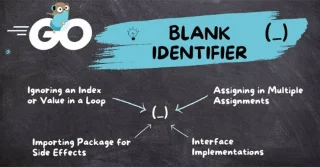
_(underscore) in Golang is called Blank Identifier. Identifier is a user-defined name of program elements used for identification purposes.
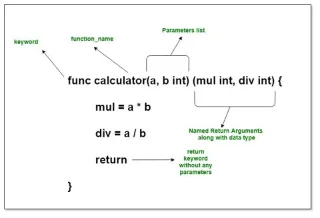
In Golang, named return parameters are often referred to as named parameters. Golang allows naming the return parameters or results of functions in the function signature or definition.

In Go language, you are allowed to return multiple values from a function, using the return statement. In other words, in a function, a return statement can return multiple values.
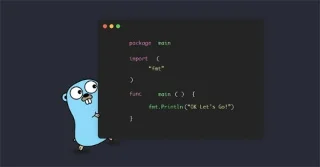
Go supports two main ways to pass arguments: Pass by Value and Pass by Reference. Go uses pass by value by default.
In Go, functions are blocks of code that perform specific tasks, which can be reused throughout the program to save memory, improve readability, and save time.

In this article, we will learn how to use default case to avoid deadlock. But first, we will learn what is deadlock case when using select command in Golang?
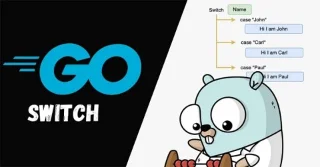
Golang like most other programming languages has switch statement. Here is how to use switch statement in Golang.
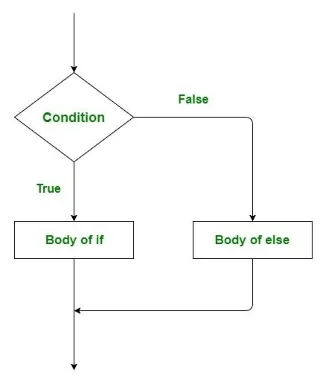
What conditional statements does Golang have? How to use conditional statements in Go programming? Let's find out together!

The scope of a variable in Golang determines which part of the program the variable is accessible to. In Go, all identifiers have a lexical scope that is determined at compile time.

Operators allow us to perform different types of operations on operands. In Go language, operators can be classified based on their different functions.
In Go language, Identifier can be a variable name, function name, constant, statement label, package name or type. Here is what you need to know about using Identifier in Golang.