Pop Culture Costume Ideas That Will Dominate Halloween 2026

Plan a recognizable Halloween 2026 look with pop culture costumes inspired by Spider-Man, Supergirl, Toy Story 5, Moana, Mario, and Wednesday.
Golang like most other programming languages has the switch statement . The switch statement in Golang allows you to evaluate a variable or expression in multiple cases and is often used when writing multiple if-else statements makes the code look ugly and repetitive.
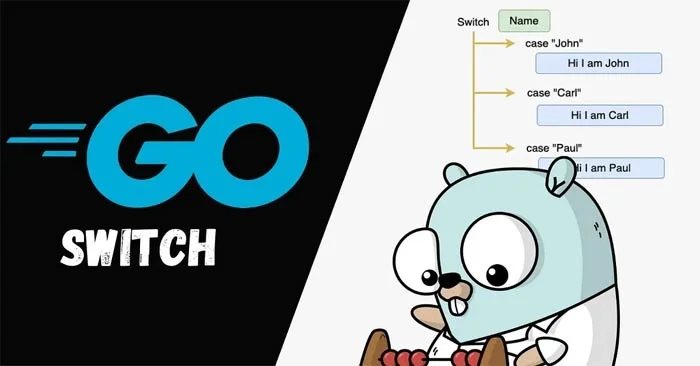
In Go, a switch statement is a multi-directional branching statement that effectively directs execution based on the value (or type) of an expression. There are two main types of switch statements in Go :
For example:
package main
import "fmt"

func main() {
    day := 4
    switch day {
    case 1:
        fmt.Println("Monday")
    case 2:
        fmt.Println("Tuesday")
    case 3:
        fmt.Println("Wednesday")
    case 4:
        fmt.Println("Thursday")
    case 5:
        fmt.Println("Friday")
    default:
        fmt.Println("Invalid day")
    }
}
Switch statement syntax in Golang
switch optstatement; optexpression {
case expression1:
    // Khối code
case expression2:                                                          # Expression Switch
    // Khối code
default:
    // Khối code
}

switch var := interfaceValue.(type) {
case type1:
    // Khối code
case type2:                                                                    # Type Switch
    // Khối code
default:
    // Khối code
}
Expression Switch
Expression Switch evaluates an expression and switches to a case based on the value of that expression. If no expression is provided, switch defaults to true .
Syntax
switch optstatement; optexpression {
case expression1:
    // Khối code
case expression2:
    // Khối code
default:
    // Khối code
}
optstatement: Optional statement (e.g. variable declaration).
optexpression: Optional expression (if omitted, defaults to true ).
Example with optional command
Here we introduce an optional statement that declares a variable day . The switch statement then evaluates day under various cases.
package main
import "fmt"
func main() {
    switch day := 4; day {
    case 1:
        fmt.Println("Monday")
    case 2:
        fmt.Println("Tuesday")
    case 3:
        fmt.Println("Wednesday")
    case 4:
        fmt.Println("Thursday")
    case 5:
        fmt.Println("Friday")
    default:
        fmt.Println("Invalid day")
    }
}
Result:
ThursdayExample with optional Expression
If no expression is specified, the switch statement in Golang will assume the expression is true. This allows us to use boolean conditions in case statements.
package main
import "fmt"

func main() {
    day := 4

    switch {
    case day == 1:
        fmt.Println("Monday")
    case day == 4:
        fmt.Println("Thursday")
    case day > 5:
        fmt.Println("Weekend")
    default:
        fmt.Println("Invalid day")
    }
}
Result
ThursdayType Switch
Type Switch is used to branch on the type of an interface value, rather than its value. This is especially useful when dealing with variables of unknown type.
Syntax
switch var := interfaceValue.(type) {
case type1:
    // Khối code
case type2:
    // Khối code
default:
    // Khối code
}
For example:
This example uses the same day variable but wrapped in interface{} to illustrate type casting.
package main
import "fmt"
func main() {
    var day interface{} = 4
    switch v := day.(type) {
    case int:
        switch v {
        case 1:
            fmt.Println("Monday")
        case 2:
            fmt.Println("Tuesday")
        case 3:
            fmt.Println("Wednesday")
        case 4:
            fmt.Println("Thursday")
        case 5:
            fmt.Println("Friday")
        default:
            fmt.Println("Invalid day")
        }
    default:
        fmt.Printf("Unknown type: %T\n", v)
    }
}
Result:
ThursdayPlan a recognizable Halloween 2026 look with pop culture costumes inspired by Spider-Man, Supergirl, Toy Story 5, Moana, Mario, and Wednesday.
Sort leftover Halloween candy safely, share or repurpose sealed treats, and choose food use or compost for pumpkins based on their condition.
Compare workplace Halloween costume choices by respect, dress code, mobility, and safety—and learn when a subtle accessory or a policy check is the better option.
Find a couples costume that fits your style, budget, and comfort level, from Addams Family classics to original inside-joke duos.
Need a last-minute high school Halloween costume? Compare 10 easy closet-based ideas by prep time, comfort, school-day practicality, and simple safety checks.
Use a simple 2026 Halloween decorating timeline for indoor décor, outdoor displays, and fresh pumpkins, with practical adjustments for weather and events.
Mix five vivid, approachable Halloween cocktails with measured recipes, simple prep tips, and an alcohol-free option for your party guests.
Find 15 office-friendly Halloween costume ideas for 2026, with practical checks for dress codes, respectful themes, comfort, and workplace safety.
Plan a fun elementary school Halloween party with easy crafts, games, inclusive treats, costume tips, and a sample 75-minute classroom schedule.
Compare realistic side hustles for 2026 by startup cost, fees, flexibility, and income control, with current tax and scam guidance from official sources.