When to Start Decorating for Halloween in 2026

Use a simple 2026 Halloween decorating timeline for indoor décor, outdoor displays, and fresh pumpkins, with practical adjustments for weather and events.
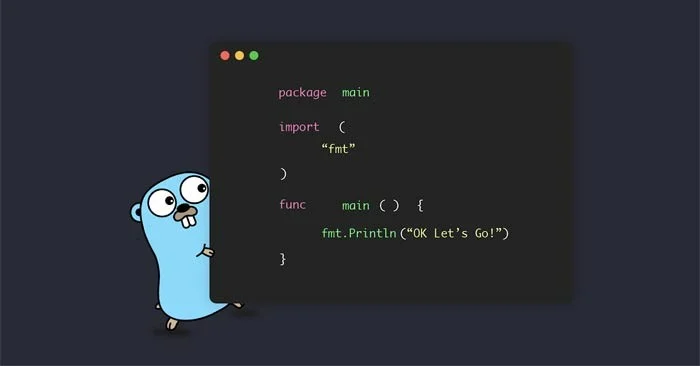
In Golang , named return parameters are commonly known as named parameters. Golang allows naming the return parameters or results of functions in the function signature or definition. Or you can say it is the explicit naming of return variables in the function definition. It basically removes the need to mention the variable name with the return statement. By using named return parameters or named parameters, one can simply use the return keyword at the end of the function to return the result to the caller. This concept is commonly used when a function has to return multiple values. So, for the convenience of the users and to increase the readability of the code, Golang provides this facility.
Declare named return parameters
To declare a named result or return parameter, simply use the return type part of the function signature. Here is the general syntax for declaring a function in Golang. The syntax for declaring a function without a named return parameter is:
func function_name(Parameter-list)(Return_type){
    // function body.....
}
Here, Return_Type is optional and it contains the type of value that the function returns. If you are using Return_Type in your function, then you need to use the return statement in your function.
The syntax to declare a function with a named return argument is:
func function_name(Parameter-list)(result_parameter1 data-_type, result_parameter2 data_type, ….){
// function body…..
return
}
Here, (result_parameter1 data-_type, result_parameter2 data_type, ….) is the list of named return arguments along with their types. You can declare n number of named return parameters.
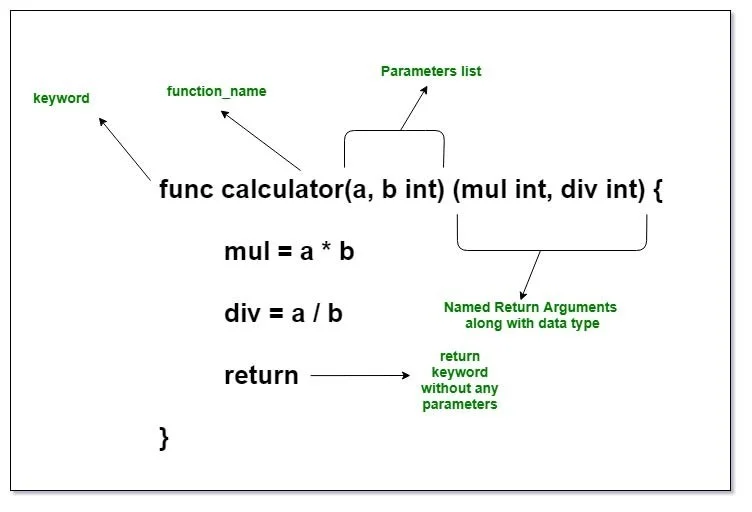
Example: Example: In the program below, the line func calculator(a, b int) (mul int, div int) contains named return arguments. The return statement at the end of the function does not contain any parameters. The Go compiler will automatically return the parameters.
// Chương trình Go mình họa
// cách dùng đối số trả về được đặt tên

package main

import "fmt"

// Phương thức chính
func main() {

	// tại đây gọi hàm này
	// hàm trả về hai giá trị
	m, d := calculator(105, 7)

	fmt.Println("105 x 7 = ", m)
	fmt.Println("105 / 7 = ", d)
}

// hàm có các đối số được đặt tên
func calculator(a, b int) (mul int, div int) {

	// tại đây phép gán đơn giản sẽ
	// khởi tạo giá trị cho nó
	mul = a * b
	div = a / b

	// tại đây bạn sẽ có từ khóa return
	// không có bất kỳ tham số kết quả nào
	return
}
Result:
105 x 7 =  735
105 / 7 =  15
Important Note:
// hàm có đối số đã được đặt tên
func calculator(a, b int) (mul, div int) {// hàm có đối số được đặt tên
func calculator(a, b int) (mul int, div int) {
// tại đây, nó sẽ báo lỗi
// dưới dạng tham số đã được xác định
// trong chữ ký hàm
mul := a * b
div := a / b
// tại đây bạn có từ khóa return
// không có bất kỳ tham số kết quả nào
return
}Use a simple 2026 Halloween decorating timeline for indoor décor, outdoor displays, and fresh pumpkins, with practical adjustments for weather and events.
Mix five vivid, approachable Halloween cocktails with measured recipes, simple prep tips, and an alcohol-free option for your party guests.
Find 15 office-friendly Halloween costume ideas for 2026, with practical checks for dress codes, respectful themes, comfort, and workplace safety.
Plan a fun elementary school Halloween party with easy crafts, games, inclusive treats, costume tips, and a sample 75-minute classroom schedule.
Compare realistic side hustles for 2026 by startup cost, fees, flexibility, and income control, with current tax and scam guidance from official sources.
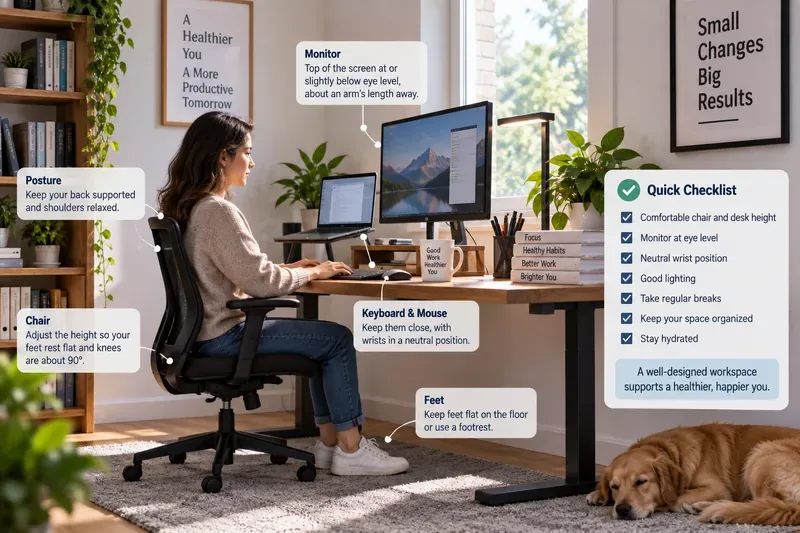
Upgrade your home office ergonomics with current OSHA and NIOSH guidance on chair fit, monitor height, laptop setup, lighting, and movement.
Learn why emotional intelligence matters in leadership, where it helps most, how to strengthen it, and how to tell whether your approach is working.
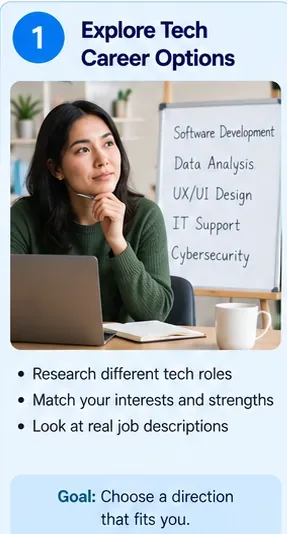
A practical roadmap for moving into tech without a degree: choose an accessible role, build job-ready skills, prove them with projects, and use hiring feedback to improve.
Build a credible LinkedIn personal brand in 2026 with current profile, content, newsletter, analytics, verification, and visibility guidance from LinkedIn.
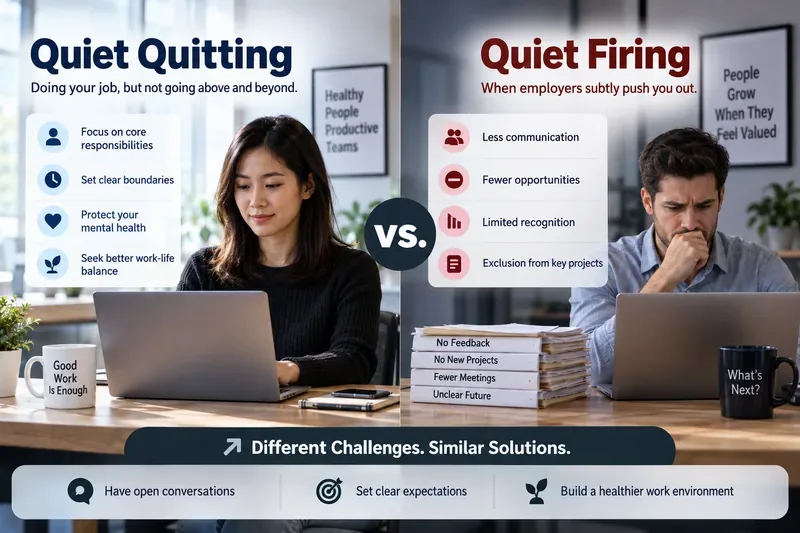
Quiet quitting and quiet firing are catchy labels, not diagnoses. Learn what is verified, what depends on context, and what employees and managers can do next.