Home
» Wiki
»
6 reasons to switch from Google Chrome to Mozilla Firefox
6 reasons to switch from Google Chrome to Mozilla Firefox
Google Chrome may still have a large share of the desktop web browser market, but that doesn't mean it's the right browser for you. You may have once believed Chrome was the best browser, but now you might be happier with another browser.
Mozilla Firefox remains one of the most popular competitors to Chrome. Here are some reasons why you should switch from Chrome to Firefox.
1. Firefox uses less memory than Chrome
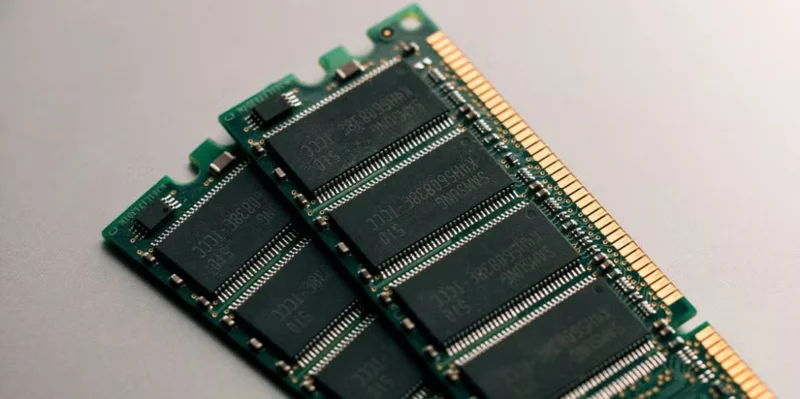
Are you guilty of keeping too many tabs open? Luckily, with Firefox, you don't have to worry about your computer slowing down because of too many tabs. Google Chrome uses a large amount of your computer's RAM, which can lead to a slowdown in PC performance.
Computer RAM Hardware
Chrome creates additional processes for each page you open, each with its own memory and copy. Firefox, on the other hand, uses four content processes at any given time. That means if you have 20 tabs open in Chrome, Chrome will use 20 processes and Firefox will only use four. While Chrome’s processes are designed to maximize performance, they also use a lot of memory and battery life.
Firefox, on the other hand, uses the first four tabs along with those four processes, and any additional tabs are shared among those processes, rather than each tab creating its own process. If your PC can't keep up with Google Chrome's memory usage, Firefox is the better browsing choice for you.
2. Firefox adopts open source thinking
Mozilla Firefox is open source, which ensures that it is compatible with other browsers and is committed to the open web. Firefox has made the code that powers its browser open so that anyone can modify and use it as long as it complies with its licensing policies. Developers and anyone else who understands the code can test the Firefox code for free.
Firefox has a complete public roadmap influenced by contributors and community members. That community collaboration is what true open source development is all about.
3. Firefox cares about user privacy
If you want a browser that gives you more control over how your data is used, Firefox is a great choice. With regular updates to improve user privacy online, you can rest assured that privacy is a top priority. Firefox works hard to ensure you have the best user experience.
Firefox has built-in tracker blocking features to block trackers and scripts like social media trackers, cross-site tracking cookies, fingerprinting, and cryptocurrency miners. The browser also lets you add tweaks to maximize your online privacy.
4. Firefox allows more customization
The level of customization is a big difference between Firefox and Chrome. Every Chrome browser has a nearly identical interface, even across different operating systems and devices. Other than hiding some toolbars or removing a few icons next to the address bar, the most you can do is change the appearance of the title bar and tabs.
Firefox can do more! Have you ever wished for a browser that let you express your creative side? In addition to moving things around and changing the overall look, you can use Firefox Color. Firefox Color is an add-on that lets you create beautiful themes for your Firefox browser.
5. Firefox boasts unique extensions
Chrome has a much larger collection of extensions, but Firefox has some unique extensions that Chrome users don't have. Some of these extensions are so good that you won't want to leave Firefox after trying them.
The best example is the Multi-Account Containers feature. This extension allows you to use a website while logged into multiple accounts on the same browser at the same time. For example, if you have multiple Twitter accounts and want to log into multiple accounts at the same time, it would normally be a hassle.
Multi-Account Containers, however, allows you to have different containers inside different tabs. You can have two separate accounts in the same Firefox window, right next to each other. This way, you can save the time and energy you would have spent logging in and out of different Twitter accounts or through other time-consuming methods.
6. Firefox can do (most of) what Chrome can do
Ultimately, the differences between Firefox and Chrome are relatively small. One browser might be a little faster or consume less battery power, but in terms of usability, they’re both great. In other words, anything you can do in Chrome, you can do in Firefox.
Want to sync tabs, bookmarks, profiles, etc. across devices? Need to develop websites with the help of the element inspector and console? What about sandbox security to prevent malware infections? Or a task manager to identify performance issues? Chrome can do these things, and so can Firefox. If you don't want to leave Chrome, remember that the two browsers are more similar than different.