Features backup, restore introductory messages to Android users for a while, then update for iOS users. However, Android users can also back up photos sent and received to Google Drive , and iOS has not done that.
Download Zalo for iOS
Zalo message backup feature is extremely useful when you want to change your new phone, reinstall the old machine and still keep all the messages. After performing the backup, simply log in Zalo on the new device, then restore the message is done. The implementation is quite simple, please refer to the following article:
Instructions to backup Zalo messages on iPhone
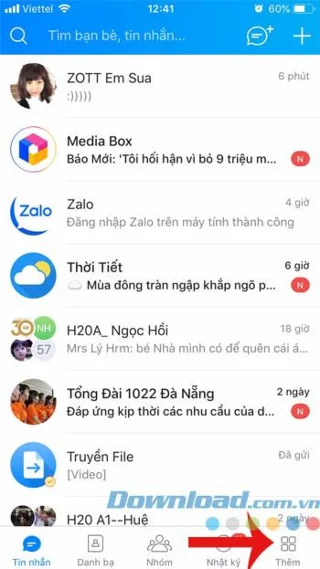
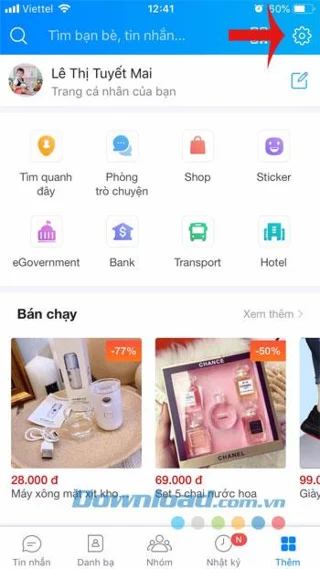
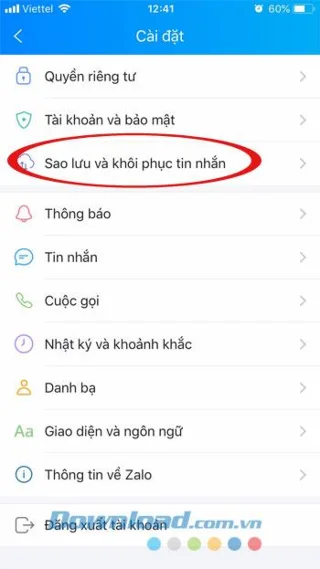
Step 1: At the main interface of Zalo for iOS, click the Add icon in the bottom right corner, then click the gear icon in the top right corner to access the Settings . Here, click Backup and restore messages.
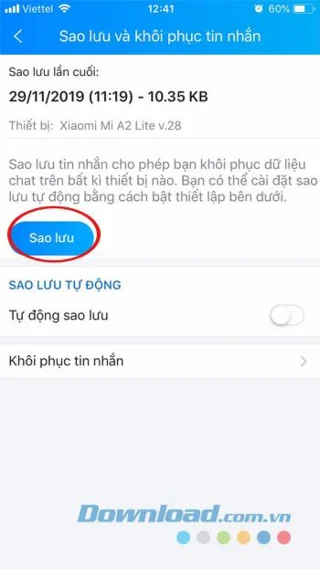
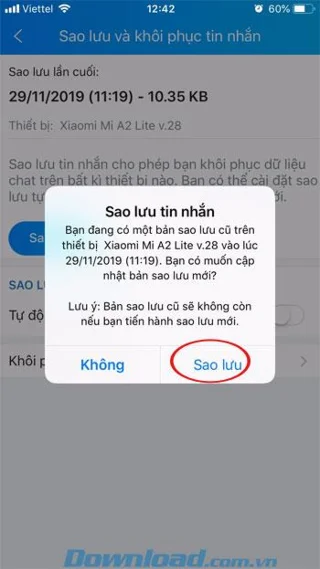
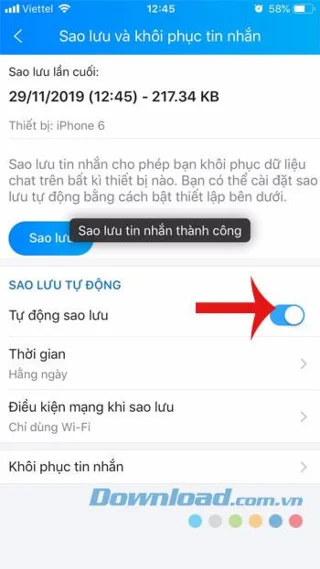
Step 2: Interface Backup and restore messages appear, you will see the last time the backup was on, on which device and the total amount of storage. When click Backup appears the confirmation dialog box Backup message , click Backup and wait a while until the appearance notice "Backup successful message" is finished.
Note: The old backup will not be available if a new backup is performed.
To help you not to lose messages due to forgotten backups, Zalo also provides additional settings to allow periodic automatic backup. Just slide the slider in Auto Backup to the right, choose a schedule like: Daily, weekly, monthly. Then select the network condition when backup is WiFi or 3G.
Instructions to restore Zalo messages on iOS
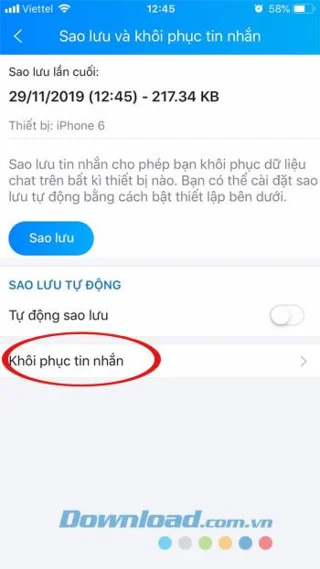
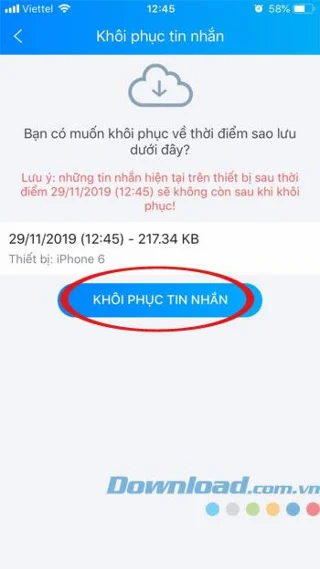
Step 1: If you want to restore the message to the latest backup time, click on Restore message . Message Recovery interface appears, click the Restore message button .
Note: Only backup messages can be restored, and messages that have not been backed up cannot be restored.
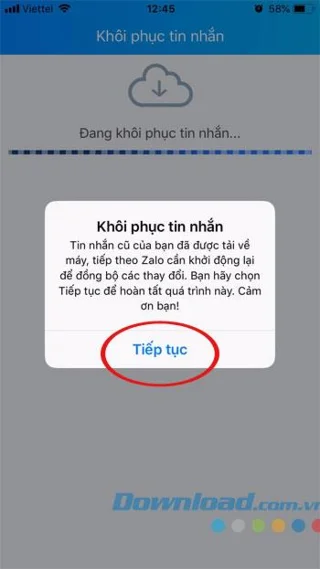
Step 2: The process of recovering messages takes place, you wait a moment and it's done. When the successful message recovery, Zalo will ask you to restart Zalo to complete the recovery, click Continue is done.
Video tutorial to backup and restore Zalo messages on iPhone
So now you can backup and restore messages Zalo extremely convenient already. Pretty simple, isn't it?
I wish you successful implementation!