Home
» Today
»
Citroën 2CV Electric: What We Know About the New EV Revival
Citroën 2CV Electric: What We Know About the New EV Revival
Citroën has now shown the first 2 CV-inspired electric concept, turning the long-running revival talk into a real design preview. The reveal is significant, but it does not mean a production car is ready to order. As of October 12, 2026, Citroën has published a concept, a few targets, and a general timetable. It has not published the battery size, EPA or WLTP range, charging speed, final price, or confirmed availability in the United States.
That distinction matters if you are deciding whether to wait for the Citroën 2CV Electric or choose another EV. The concept may suit drivers who want a compact, characterful car for everyday trips and have time to wait. Buyers who need a vehicle now, travel regularly on highways, or need a confirmed range and warranty should compare it with production EVs currently sold in their market.
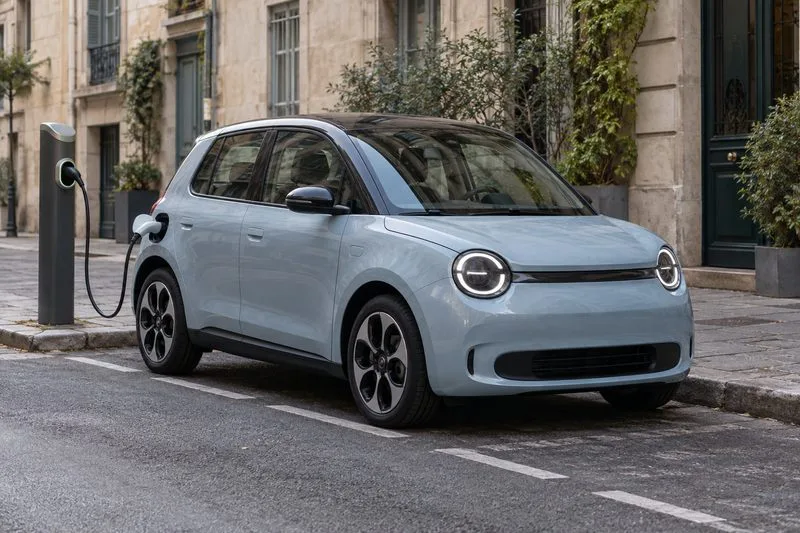
A compact electric car beside a street charger illustrates the urban use case discussed here; this is not the Citroën 2 CV Concept.
What Citroën has actually announced
Citroën unveiled the 2 CV Concept on October 11, ahead of the 2026 Paris Motor Show. The company says it previews a future model intended to join the Citroën lineup by 2028. The concept is electric, designed and planned for manufacture in Europe, and aims for a starting price of around €15,000. Citroën also says the future model is intended to comply with upcoming European E-Car regulations.
The concept measures 3.76 meters long, about 12.3 feet. Citroën describes a weight target of roughly one metric ton, not a certified production figure. Its stated idea is to keep the car compact and relatively light, using a battery sized for everyday use rather than chasing the longest possible range. These are company goals, not independently confirmed performance results.
The design preview carries familiar 2CV cues, including round headlights, a tall, upright cabin, and a simple, practical interior. The show car also includes concept-specific details such as an 8-inch touchscreen, a detachable radio called “Radioën,” and unusual storage and seat arrangements. Those features show the design direction; Citroën has not confirmed that they will all appear on the production car.
The original 2CV was introduced in 1948 and production ended in 1990. Citroën says the new project is meant to reinterpret the original car’s accessible, lightweight and practical idea rather than reproduce the old vehicle. That is a more useful way to assess the revival: look for a small and usable EV, not a modern replica with the same name.
Read the October 11 Citroën 2 CV Concept announcement for the company’s current description and targets. Citroën’s May 22 announcement first confirmed a future 2CV-inspired electric model; the October concept release adds the dimensions and current price and timing targets.
Confirmed details versus open questions
Topic
What is public now
What a buyer still needs
Vehicle status
2 CV Concept shown October 11, 2026
Final production design, trims, and order date
Timing
Citroën says the future model is expected to join the lineup by 2028
Exact launch, delivery, and market-by-market timing
Price
Target starting price around €15,000
Final MSRP, taxes, options, incentives, and U.S. price, if offered
Size and weight
Concept length of 3.76 meters; weight target around one metric ton
Production dimensions, curb weight, passenger and cargo measurements
Electric performance
Citroën describes an all-electric car aimed at everyday trips
Battery capacity, EPA or WLTP range, motor output, charging rates, and charging times
Availability
European manufacture is planned
Confirmed sales countries, dealer network, warranty, and service support
So far, the most important missing numbers are the range and charging specifications. Without a certified range, buyers cannot compare trip planning or cold-weather performance. Without charging details, they cannot know whether the car will work well for apartment dwellers relying on public chargers or for people who need quick highway stops. A low target price is useful context, but it does not answer those ownership questions.
How the 2 CV revival compares with practical alternatives
Wait for the 2 CV if you can delay a purchase
The concept is worth watching if your driving is mostly local, a compact footprint matters, you can charge at home or work, and your current vehicle can last until production details arrive. The announced length suggests a small-car format, while the price target signals an attempt to sit below many larger EVs. But treat €15,000 as a goal, not a quote. The final price can change with specification, taxes, local equipment, and market conditions.
Choose an available production EV if you need predictable transport now
A production car offers facts the 2 CV does not yet have: a final trim list, a certified range, a warranty, delivery terms, and a service network. As one European-market reference, Citroën UK currently lists the ë-C3 with a 113-horsepower motor and up to 202 miles of WLTP range. That is not a direct forecast for the 2 CV, and WLTP figures should not be treated as U.S. EPA ratings. It simply shows the kind of verified information a shopper can use today. Check the current Citroën ë-C3 specifications and compare them with vehicles actually sold where you live.
Consider a microcar only for very limited, low-speed trips
Citroën’s Ami is a separate type of product. In the UK, Citroën classifies it as a light quadricycle, with a stated top speed of 28 mph and a range of 46 miles under the WMTC cycle. It can make sense for short, low-speed urban journeys where local rules and road conditions allow it. It is not an equivalent substitute for a regular passenger car on faster roads or longer trips. Specifications and legal classifications vary by country, so confirm local rules on the Citroën Ami page.
Look elsewhere if you need highway range, cargo space, or a firm budget
If your household regularly carries several passengers, luggage, or child seats, do not assume the concept’s retro proportions reveal its final interior space. If your commute includes frequent high-speed roads, wait for certified range and charging data before treating it as a candidate. If the purchase must stay under a strict amount, compare the complete out-the-door cost of available cars, including destination charges, taxes, home charging equipment, insurance, and any incentives. The announced €15,000 figure is a starting-price target in euros, not a confirmed U.S. transaction price.
What to check when production specifications arrive
Once Citroën releases production details, use the same checklist you would for any EV. It helps separate a promising concept from a practical match.
Range under your conditions: Compare the official EPA rating in the United States or the relevant local test-cycle rating elsewhere. Then consider highway speed, temperature, heating or air-conditioning use, and the daily reserve you want. Do not compare test-cycle figures from different regions as if they were identical.
Charging convenience: Confirm AC charging power for home or workplace use, DC fast-charging availability and peak rate, and the time needed to add useful range. A small battery can be inexpensive, but frequent public charging may be inconvenient.
Real passenger and cargo needs: Check rear-seat access, child-seat installation, trunk volume, and whether the car can carry your normal shopping or work equipment. A short exterior length alone does not prove a particular cabin layout.
Safety and class: Look for final crash-test results, standard driver-assistance equipment, and the vehicle’s legal classification in your country. The concept’s reference to future European E-Car rules is not itself a final approval for sale.
Total cost and support: Confirm the final price, warranty coverage, battery warranty, service locations, delivery date, and parts availability. A low advertised starting price can differ from the price of the trim or equipment you actually need.
Is this an electric 2CV you can buy?
Not yet. As of October 12, 2026, Citroën has revealed a 2 CV-inspired electric concept and says a related production model is planned by 2028. The company’s current targets are a European build, a starting price around €15,000, and an approximately one-ton weight goal, alongside the concept’s 3.76-meter length. Battery size, range, power, charging, safety results, final pricing, and U.S. availability remain unannounced.
For an EV shopper, the sensible choice depends on timing and use. Keep the 2 CV on your watch list if you want an affordable, small electric car and can wait for final specifications. Buy an available production EV if you need known range, delivery, and service support now. Consider a quadricycle only when your trips fit its speed, range, and legal limits. The revival is promising as a design direction; whether the production car is the right purchase will depend on the numbers Citroën has not released yet.
Reporting note: Facts and company targets in this article were checked against Citroën’s Stellantis Media release published October 11, 2026, plus current Citroën UK product pages. The concept description is not a road test or a final production specification.