Coffee Culture: How to Brew the Perfect Cup at Home
Fix bitter, sour, or weak coffee at home with a practical guide to beans, grind size, water, ratio, temperature, pour-over technique, and tasting.
If your home coffee tastes bitter one morning, sour the next, and flat on weekends, the problem is usually not that you need a more expensive brewer. The fastest route to a better cup is to control a few variables in the same order every time: coffee dose, water amount, grind size, water quality, temperature, and brew time. Once those are repeatable, you can change one thing at a time and actually learn what improves the taste.
That matters because there is no single “perfect” cup for everyone. Some people want a bright, tea-like pour-over; others prefer the heavier body of a French press or the concentration of espresso. The practical goal is a cup that tastes balanced to you and can be reproduced tomorrow.
Coffee brewing is extraction: water dissolves flavor compounds from roasted coffee. Change the particle size, water temperature, contact time, or coffee-to-water ratio and you change what lands in the cup. The Specialty Coffee Association (SCA) treats strength and extraction as central brewing variables, and its current standards program includes specifications for home brewers and grinders. You can review the current standards catalog on the Specialty Coffee Association standards page.
For home brewers, the most useful lesson is simple: do not change everything at once. If a cup tastes thin, for example, adding more coffee, grinding finer, raising the temperature, and extending the brew all at the same time may improve it—but you will not know why. Change one variable, taste again, and keep notes.
A scale is more useful than measuring coffee by scoops because mass is repeatable. As a practical starting point, SCA home-brewer certification materials use approximately 55 grams of coffee per liter of water and specify water contacting the grounds in the 92–96°C range (about 198–205°F). Those numbers are best treated as a benchmark rather than a rule for personal taste. See the SCA’s published home brewer certification requirements.
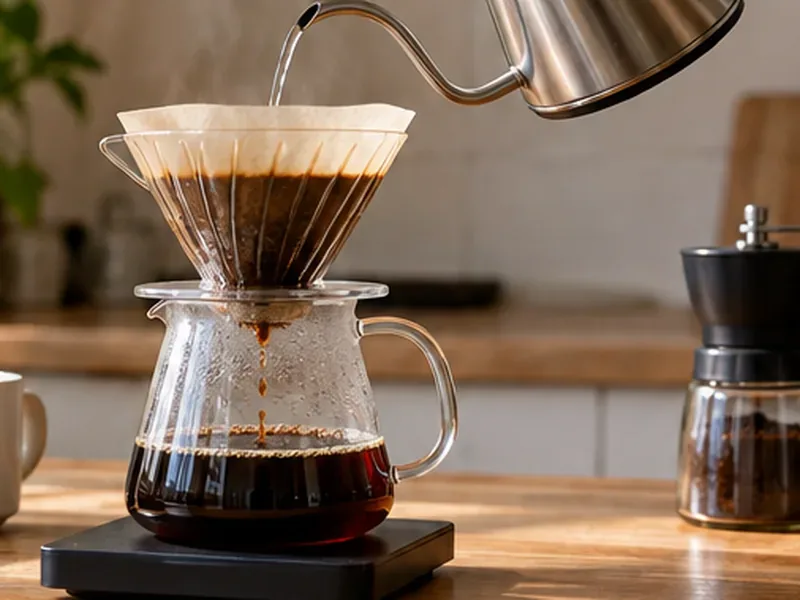
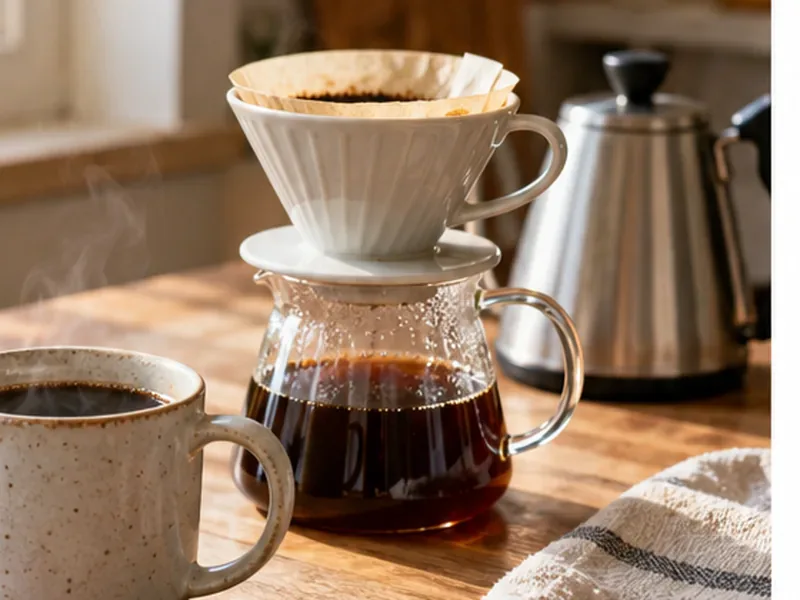
For a single pour-over, another easy baseline is 15 grams of coffee to 250 grams of water. Hario’s official U.S. site publishes a one-cup V60 method using that ratio, medium-fine grounds, a 50-gram bloom, and a drawdown that finishes around three minutes. The full recipe is available on Hario USA’s one-cup V60 technique page.
If your coffee is simply too weak or too strong, the ratio is the easiest variable to correct. Weigh both coffee and water. For example, 15 grams of coffee with 250 grams of water is a 1:16.7 ratio. If the cup is clean but too light for your taste, try 16 grams of coffee with the same 250 grams of water. If it is pleasantly extracted but too intense, go the other direction.
This is different from fixing sourness or bitterness. A stronger ratio can make an under-extracted cup taste more intense without solving the underlying extraction problem. First decide whether the issue is strength or flavor balance.
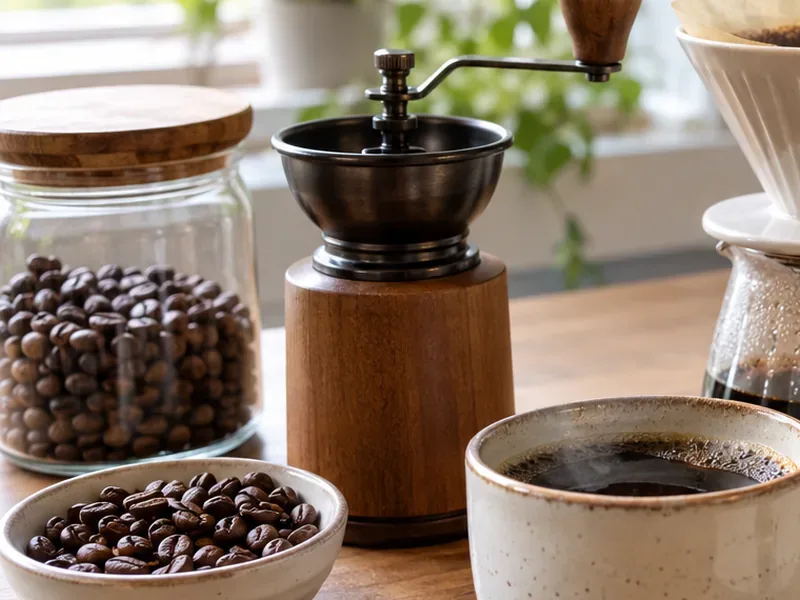
Once the ratio is fixed, grind size is usually the most useful control. Finer grounds create more surface area and generally increase extraction; coarser grounds reduce it. This is why the same coffee can taste completely different when the grinder setting changes.
A burr grinder makes these adjustments easier because it gives you repeatable settings. If you use a blade grinder, aim for consistency in grind time and batch size, but expect more variation from cup to cup.
Coffee is mostly water, so water that tastes unpleasant on its own is unlikely to produce great coffee. The SCA’s brewer testing protocol uses controlled mineral content and neutral-ish pH because mineral composition affects extraction and flavor. For home use, you do not need laboratory water. Start with fresh water that tastes clean and has no obvious chlorine, metallic, or stale flavor.
If your tap water tastes strongly chlorinated, a suitable drinking-water filter can be a practical improvement. If your water is extremely hard and leaves scale quickly in kettles, filtered or appropriately treated water may also help your equipment as well as your coffee. Avoid assuming that completely demineralized water is automatically better; some mineral content contributes to how coffee extracts and tastes.
A good default for hot filter coffee is roughly 92–96°C (198–205°F), which aligns with the SCA brewer certification range. If you do not have a temperature-control kettle, bringing water to a boil and then allowing the most vigorous bubbling to settle before pouring is a practical approach. The exact temperature is less useful than consistency: if you brew one cup with near-boiling water and the next with much cooler water, troubleshooting becomes harder.
Freshly roasted coffee releases carbon dioxide when hot water hits the grounds. In a pour-over, an initial bloom helps wet the bed before the main pour. Hario’s published one-cup V60 recipe uses 50 grams of water for a 15-gram dose and a bloom lasting about 45 seconds, followed by staged pours to a total of 250 grams.
You do not need to copy that exact pouring pattern forever. It is valuable because it gives you a repeatable starting recipe. Once the result is consistent, you can test different pour speeds, bloom lengths, or grind settings and decide whether they make the cup better for your coffee and your palate.
| Method | Main advantage | Main tradeoff | Good fit when |
|---|---|---|---|
| Automatic drip | Convenient and repeatable | Less manual control | You want several cups with minimal attention |
| Pour-over | High control over flow and extraction | More technique-sensitive | You enjoy adjusting grind and pouring |
| French press | Full body and simple equipment | More sediment and cleanup | You like rich texture and immersion brewing |
| Espresso | Concentrated flavor and milk-drink flexibility | Highest equipment and dialing-in demands | You want café-style espresso drinks at home |
There is no need to “graduate” from one method to another. A well-made automatic drip coffee can be better than an inconsistent pour-over, and a French press can be ideal if you prefer body over clarity. Pick the workflow you will actually repeat.
Old coffee oils can become stale and make a clean bean taste dull or rancid. Rinse removable brewing parts after use and follow the manufacturer’s cleaning instructions for deeper maintenance. Paper-filter brewers are easy to rinse; French presses need the mesh cleaned thoroughly; automatic machines and espresso machines may require scheduled descaling or detergent cleaning depending on the model and water hardness.
Do not improvise harsh cleaners inside equipment that was not designed for them. Manufacturer instructions take priority because materials, seals, valves, and coatings vary.
If your cup is disappointing, work from easy fixes to harder ones:
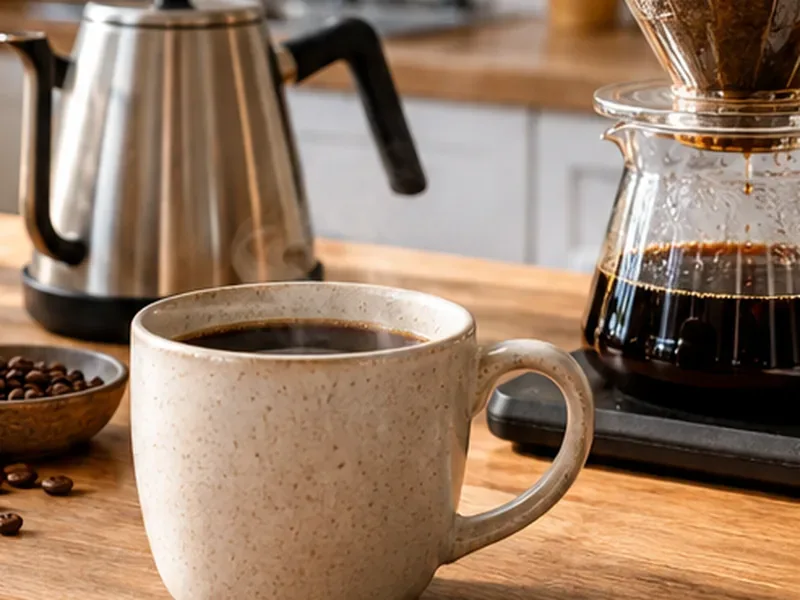
The best self-check is not whether your coffee matches somebody else’s recipe. It is whether you can make a cup you enjoy more than once. Brew the same recipe on two different days. If both cups are similarly balanced, aromatic, and pleasant as they cool, you have a reliable baseline.
Then ask four questions: Is it too weak or too strong? Is it sour or sharp? Is it bitter or drying? Does it have the clarity or body I want? Those answers tell you what to change next. Ratio mainly changes strength; grind and contact time are powerful extraction controls; water and temperature can shift the result further.
One final consideration is caffeine. Brew method, bean, dose, and serving size can make caffeine content vary widely. The U.S. Food and Drug Administration says that for most adults, 400 milligrams of caffeine per day is an amount not generally associated with negative effects, while individual sensitivity varies. See the FDA’s current caffeine guidance. If caffeine affects your sleep, heart rate, anxiety, or stomach, a smaller serving or decaf may be a better “perfect cup” for you.
Fix bitter, sour, or weak coffee at home with a practical guide to beans, grind size, water, ratio, temperature, pour-over technique, and tasting.
Learn beginner-friendly winter houseplant care for light, watering, humidity, temperature, fertilizer, pests, and the mistakes that commonly damage plants.
Declutter your home without chasing perfection. Learn which spaces to tackle first, how clutter may affect stress and attention, and how to keep results manageable.
Discover which smart kitchen gadgets are genuinely useful, what to check before buying, how to set them up, and common beginner mistakes to avoid.
Functional beverages promise energy, hydration, gut support, protein, and more. Learn which benefits have evidence, what labels can hide, and how to choose wisely.
Learn practical zero-waste cooking habits that reduce food waste, stretch groceries, use leftovers safely, and turn edible scraps into useful meals.
Plan a cozy dinner party with the right guest count, make-ahead menu, warm atmosphere, food-safety basics, and a realistic hosting timeline.
Refresh your home for fall 2026 with budget-friendly decor trends, practical tradeoffs, and smart ways to add warmth, texture, and personality.
Compare practical meal-prep methods by time, flexibility, texture, cost, and food safety so you can build a weekday system that actually fits your life.
Make five reliable fall comfort-food recipes with clear doneness cues, troubleshooting tips, storage guidance, and realistic ways to adjust texture and flavor.