Coffee Culture: How to Brew the Perfect Cup at Home
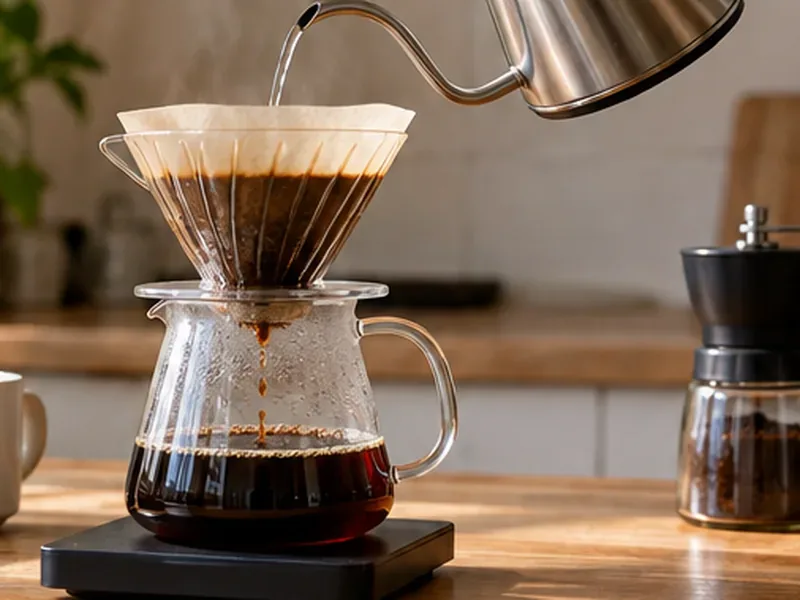
Fix bitter, sour, or weak coffee at home with a practical guide to beans, grind size, water, ratio, temperature, pour-over technique, and tasting.
Zero-waste cooking has a useful new reference point in 2026. The U.S. Environmental Protection Agency updated its Wasted Food Scale on September 9, 2026, and the basic message for home cooks remains clear: preventing food from becoming waste is more environmentally beneficial than managing it after the fact. Composting has value, but eating the food you already bought comes first.
That distinction matters because “zero waste” can sound like a challenge to save every peel, bone, or crumb. A more realistic household goal is to waste less edible food, buy closer to what you can use, store it safely, and give ingredients a second purpose before they spoil. The payoff can be financial as well as environmental. USDA materials currently estimate that an average U.S. family of four loses about $1,500 a year to uneaten food, although any household’s actual savings will depend on what it buys and discards.
The September 2026 EPA update did not turn household food-waste prevention upside down. It refreshed the agency’s current Wasted Food Scale, which ranks pathways for dealing with food that might otherwise be wasted. Prevention, donation, and upcycling sit above options such as composting, anaerobic digestion, landfilling, or incineration because they preserve more of the value already invested in producing food.
For a home cook, the practical interpretation is simple: do not start with a countertop compost bin. Start with the refrigerator. EPA’s current household guidance recommends checking what you already have, planning meals around ingredients that need to be used, shopping with a list, and buying realistic quantities. See the agency’s food-waste prevention guidance for households.
The environmental case is significant. EPA reports that food makes up about 24% of municipal solid waste disposed of in U.S. landfills, while landfilled food was estimated to account for 58% of fugitive methane emissions from municipal solid waste landfills in the agency’s national analysis. The percentages describe the U.S. waste system, not the footprint of any one dinner, but they help explain why preventing edible food from reaching a landfill is prioritized. See EPA’s landfilled food waste methane research.
The cheapest ingredient is often the one already sitting at home. Before making a grocery list, spend five minutes checking the refrigerator, freezer, produce drawer, and pantry. Look specifically for foods with a short remaining window: soft vegetables, opened dairy, cooked grains, herbs, half-used sauces, ripe fruit, and leftovers.
Then plan one or two meals around those ingredients rather than designing a menu from scratch. If you have half a cabbage, cooked chicken, and carrots, the useful question is not “What do I feel like buying?” but “What meal uses these first?” A stir-fry, soup, slaw, tacos, or grain bowl may need only one or two additional ingredients.
Reserve one visible refrigerator shelf or bin for food that should be eaten soon. This reduces the memory problem that causes food to disappear behind newer groceries. It is more useful than an elaborate inventory that nobody updates.
Success looks like: fewer mystery containers, fewer duplicate purchases, and a grocery list that gets shorter after you check the kitchen.
Zero-waste cooking is easier when recipes are flexible. Highly specific recipes can leave behind half a bunch of herbs, a small amount of cheese, or several vegetables that do not fit the next meal. Instead, keep a few “meal frameworks” that accept whatever needs using.
| Meal framework | Base | Good use-up ingredients | Finishing element |
|---|---|---|---|
| Soup | Broth, tomatoes, or blended vegetables | Wilted greens, beans, cooked meat, grains, vegetable stems | Lemon, herbs, yogurt, grated cheese |
| Frittata or egg bake | Eggs | Cooked vegetables, herbs, small cheese portions | Salad or toast |
| Grain bowl | Rice, barley, quinoa, or another cooked grain | Roasted vegetables, beans, leftover protein | Sauce, pickles, seeds, herbs |
| Pasta | Pasta plus a simple sauce | Greens, roasted vegetables, herbs, small meat portions | Cheese, breadcrumbs, citrus zest |
| Toast or flatbread | Bread or flatbread | Roasted produce, spreads, cheese, cooked mushrooms | Fresh herbs or a sharp dressing |
The goal is not to throw random leftovers together. Pair ingredients by flavor and texture, then add something fresh, acidic, salty, or crunchy to make the result feel intentional.
Some of the easiest waste reductions come from changing what you consider a usable ingredient. Broccoli stems can be peeled and sliced for stir-fries. Cauliflower leaves can be roasted when clean and in good condition. Beet greens can be cooked like other leafy greens. Tender herb stems can go into sauces, soups, or chopped garnishes. Stale bread can become breadcrumbs, croutons, French toast, or a savory bread casserole.
USDA agricultural research materials specifically point to repurposing foods such as broccoli stems, hardened bread, and wilted vegetables rather than automatically discarding them. See the USDA Agricultural Research Service article Look at Leftovers to Reduce Food Waste.
There is an important limit: “use the whole plant” is not a universal safety rule. Some plant parts are not commonly eaten or may be unsafe. Do not improvise with unfamiliar leaves, pits, seeds, or wild plants simply to avoid waste. When you are unsure whether a part is edible, verify it with a reliable food-safety or extension source rather than assuming that cooking makes it safe.
The freezer is one of the most useful waste-prevention tools because it buys time. The mistake is treating it as indefinite storage and losing track of what went in.
Freeze food in portions you are likely to use, label it with the item and date, and keep a simple freezer list. Good candidates include bread, ripe bananas for baking or smoothies, cooked beans, portions of soup, cooked meat, grated cheese intended for cooked dishes, and many chopped vegetables that will later be cooked.
USDA’s current consumer materials advise freezing leftovers within three to four days if they will not be eaten soon, while FDA advises refrigerating or freezing perishables promptly and keeping the refrigerator at 40°F or below and the freezer at 0°F. For food-specific storage guidance, USDA’s FoodKeeper resources provide recommended time ranges rather than universal expiration rules.
Review FDA refrigerator and freezer safety guidance and USDA’s FoodKeeper information.
Many people tire of eating the same meal several days in a row. Transforming leftovers can make them easier to finish without requiring a completely new dinner.
Food safety still sets the boundary. FDA recommends refrigerating perishables within two hours—one hour when temperatures are above 90°F—and keeping the refrigerator at or below 40°F. Do not use “zero waste” as a reason to rescue food that has been held unsafely. When safety and waste reduction conflict, safety wins.
Date-label confusion can create avoidable waste. USDA’s Food Safety and Inspection Service explains that, except for infant formula, federal product dates generally indicate quality rather than automatically defining a safety deadline. “Best if Used By” refers to best flavor or quality, while “Sell-By” is primarily for store inventory management.
That does not mean every old product is safe. Storage conditions, the type of food, package integrity, and signs of spoilage still matter. Follow safe storage guidance for perishable foods and discard food when safety is uncertain. For the federal explanation of label terminology, see USDA FSIS’s Food Product Dating guidance.
FDA also notes that misunderstanding date labels contributes to consumer food waste and supports “Best if Used By” as a quality-oriented phrase. See FDA’s guidance on reducing food waste while maintaining food safety.
A useful meal-planning rule is to prioritize ingredients by how quickly they will deteriorate rather than by the order in which you purchased them.
For example, tender herbs and berries may need attention before carrots, cabbage, or unopened pantry foods. A ripe avocado may need to become lunch today, while dry pasta can wait. This sounds obvious, but it changes the rhythm of meal planning: instead of asking “What is Monday’s recipe?” ask “What ingredient will become waste first?”
A simple weekly sequence can look like this:
Actual safe storage times vary, so use this as a planning concept rather than a safety chart.
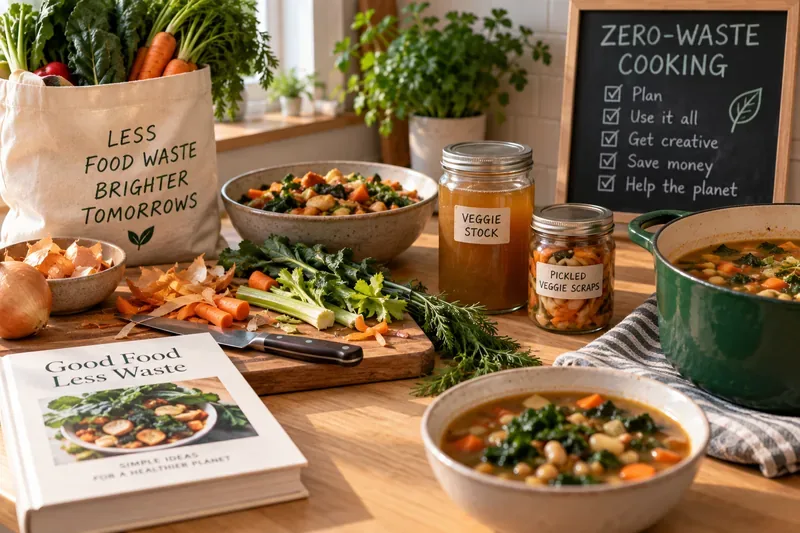
“Make stock from scraps” is common zero-waste advice, but not every trimming belongs in a stockpot. Clean carrot ends, celery leaves, herb stems, leek greens, mushroom stems, and some onion trimmings can contribute flavor. Large amounts of strongly flavored brassicas may make stock bitter, and dirty or spoiled trimmings do not become better because they are boiled.
A better system is to freeze only clean, suitable trimmings in a labeled bag. When there is enough, simmer them with water and aromatics, strain, cool promptly, and refrigerate or freeze the stock safely.
Similar logic applies elsewhere. Stale bread becomes breadcrumbs only if it is dry and sound, not moldy. Overripe fruit can go into sauce or baking if it is still wholesome, but visibly spoiled food is not an ingredient-rescue opportunity.
You do not need a spreadsheet forever. A one-week waste audit is often enough to reveal where money is leaking.
Write down edible food you discard and the reason:
The reason matters more than the weight. If salad greens are repeatedly discarded, buying a bigger “value” package is not actually economical. If cooked rice is consistently left over, reduce the batch size. If fresh herbs are wasted every week, choose recipes that share the same herb or buy smaller quantities.
Composting is useful for unavoidable food scraps, but EPA’s current hierarchy is a reminder that composting should not substitute for prevention. Coffee grounds, eggshells, inedible trimmings, and other appropriate scraps may be suitable for a home or municipal compost program, depending on local rules. Edible strawberries thrown into compost, however, still represent wasted food and wasted grocery money.
What belongs in a compost system varies. Follow the rules for your municipal collection service or the operating guidance for your home system rather than assuming every organic material belongs in the same bin.
USDA currently cites an estimate of about $1,500 per year in uneaten food for an average American family of four. Treat that as context, not a personal guarantee. A household that already plans carefully may save much less; a household that frequently discards takeout, produce, and leftovers may have more room to improve.
The most useful number is your own. For four weeks, estimate the purchase price of edible food you discard. If you throw away half of a $6 package, record roughly $3. At the end of the month, multiply only after you have enough observations to see a stable pattern. The exercise can reveal whether your biggest opportunity is buying less, cooking smaller portions, freezing sooner, or changing what you buy altogether.
You do not need to pickle every stem or make broth every Sunday. A sustainable routine should reduce work, not become another demanding household project.
If the routine saves food but takes so much time that you abandon it, simplify it. The most effective zero-waste habit is the one your household can repeat: a five-minute refrigerator check, smaller shopping trips, one “use-it-up” dinner each week, or a freezer inventory on the door may do more good than an ambitious system that lasts only a month.
Zero-waste cooking is therefore better understood as a direction rather than a literal endpoint. The current EPA framework reinforces the same durable principle: the highest-value food waste is the waste that never happens. Use more of what you buy, keep it safe, and let composting handle what truly cannot become dinner.
Fix bitter, sour, or weak coffee at home with a practical guide to beans, grind size, water, ratio, temperature, pour-over technique, and tasting.
Learn beginner-friendly winter houseplant care for light, watering, humidity, temperature, fertilizer, pests, and the mistakes that commonly damage plants.
Declutter your home without chasing perfection. Learn which spaces to tackle first, how clutter may affect stress and attention, and how to keep results manageable.
Discover which smart kitchen gadgets are genuinely useful, what to check before buying, how to set them up, and common beginner mistakes to avoid.
Functional beverages promise energy, hydration, gut support, protein, and more. Learn which benefits have evidence, what labels can hide, and how to choose wisely.
Learn practical zero-waste cooking habits that reduce food waste, stretch groceries, use leftovers safely, and turn edible scraps into useful meals.
Plan a cozy dinner party with the right guest count, make-ahead menu, warm atmosphere, food-safety basics, and a realistic hosting timeline.
Refresh your home for fall 2026 with budget-friendly decor trends, practical tradeoffs, and smart ways to add warmth, texture, and personality.
Compare practical meal-prep methods by time, flexibility, texture, cost, and food safety so you can build a weekday system that actually fits your life.
Make five reliable fall comfort-food recipes with clear doneness cues, troubleshooting tips, storage guidance, and realistic ways to adjust texture and flavor.