Coffee Culture: How to Brew the Perfect Cup at Home

Fix bitter, sour, or weak coffee at home with a practical guide to beans, grind size, water, ratio, temperature, pour-over technique, and tasting.
Fall decorating can get expensive fast when every seasonal refresh starts with a shopping cart. The better approach for 2026 is to treat trends as a menu, not a mandate: choose the one or two ideas that create the biggest visible change in your room, then reuse what you already own around them.
That fits the broader direction of home style this year. Pinterest’s 2026 trend reporting emphasizes personalization, vintage finds, expressive details, and low-lift room updates rather than a single uniform look. Its annual forecast also points to bolder home themes such as FunHaus, Afrohemian Decor, and Neo Deco. Meanwhile, Sherwin-Williams named Universal Khaki SW 6150 its 2026 Color of the Year, reinforcing the appeal of warm, earthy neutrals as an adaptable base. You can review the original sources at Pinterest’s Spring Trend Report 2026, Pinterest Predicts 2026, and Sherwin-Williams’ 2026 Color of the Year page.
Budget decorating works best when you compare ideas by impact, reusability, storage needs, and how difficult they are to undo. A dramatic trend may look exciting online but be a poor buy if it only works for six weeks or forces you to replace other pieces.
| Update | Visual impact | Budget pressure | Easy to reuse? | Best fit |
|---|---|---|---|---|
| Throws and pillow covers | High | Low | Yes | Renters, small rooms, quick refreshes |
| Painted accent area | Very high | Medium | No, but long-lasting | Homeowners or renters allowed to paint |
| Secondhand wood, brass, or ceramic accents | Medium to high | Low to medium | Yes | Collected, vintage, eclectic interiors |
| Natural seasonal materials | Medium | Low | Partly | Minimalist or rustic spaces |
| Trend-specific statement pieces | High | Medium to high | Sometimes | People who genuinely love the look beyond one season |
If your budget is tight, start with soft goods and objects you can move between rooms. If you want the strongest transformation and are comfortable with a more permanent change, paint can offer more impact than buying several small decorative items.
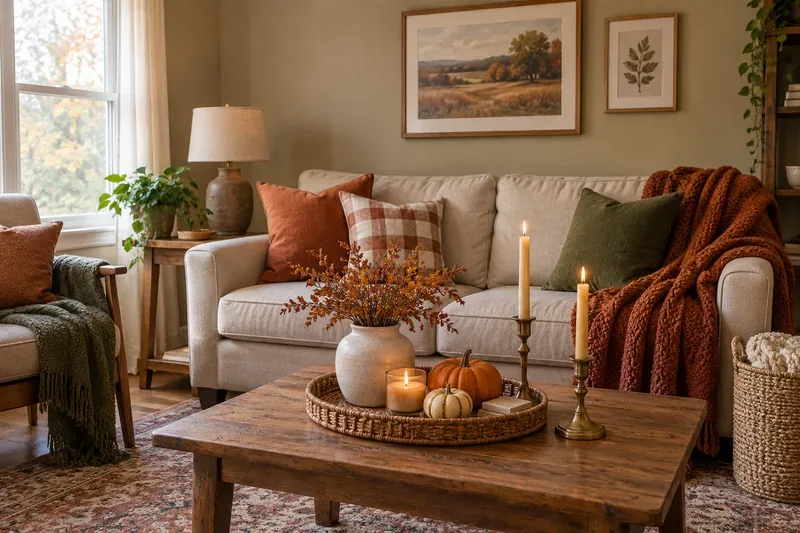
Fall decor does not have to mean covering a room in pumpkin orange. Warm khaki, mushroom, camel, tan, clay, olive, and softened brown create a seasonal feeling while staying useful after Thanksgiving. Sherwin-Williams describes Universal Khaki SW 6150 as a warm, earthy neutral intended to work with natural finishes, whites, and stronger accent colors, which makes this direction easier to stretch across seasons.
Use the neutral tone on a wall, lampshade, throw, pillow cover, or inexpensive secondhand frame. The tradeoff is subtlety: a warm-neutral room can look calm rather than obviously “fall.” If you want more seasonal energy, pair it with one stronger accent such as rust, oxblood, forest green, or mustard rather than buying a full matching set.
Texture is one of the easiest ways to make a room feel warmer without changing furniture. Think corduroy, bouclé-like texture, chunky knits, brushed cotton, plaid, and woven fabrics. Pillow covers are usually more storage-efficient than whole new pillows, and a throw can move from sofa to reading chair to guest room.
The tradeoff is maintenance. Heavily textured fabrics can trap lint, pet hair, and dust more easily than smooth cotton. If your home has pets or allergy concerns, prioritize washable covers and fewer layers rather than choosing texture for appearance alone.
Pinterest’s 2026 home reporting specifically highlights vintage finds and character-rich micro-makeovers. That makes secondhand shopping particularly compatible with this year’s broader direction, but the budget advantage only holds if you buy selectively.
Look for items that already suit your home outside fall: brass candlesticks, wood trays, stoneware bowls, framed art, baskets, small stools, or dark wood side tables. These can carry seasonal styling now and remain useful later. Avoid buying ten inexpensive objects just because they are cheap; one substantial tray or lamp often has more presence than a collection of tiny themed signs.
Reusing and repairing also has a practical waste benefit. The U.S. Environmental Protection Agency recommends reducing, reusing, repairing, borrowing, and sharing to avoid creating waste in the first place; its guidance also notes that these habits can save money. See the EPA’s waste-reduction guidance.
Organic materials give you seasonal color without committing to another box of plastic decorations. A tall branch in a ceramic vase, a shallow bowl of gourds, or a few dried stems can fill visual space better than many small objects.
The downside is durability. Fresh leaves fade, natural gourds eventually need to be discarded, and dried stems can shed. If you want the lowest-maintenance option, use a branch arrangement for height and pair it with nonseasonal ceramics or baskets you already own.
One of Pinterest’s 2026 home forecasts, FunHaus, points toward circus-inspired decor with bold stripes and sculptural forms. You do not need a striped ceiling or a full novelty room to borrow the idea. A checked pillow, striped throw, pleated lampshade, or graphic tray can add just enough energy to an otherwise quiet autumn palette.
If your room already contains several rugs, patterned curtains, and colorful artwork, adding another high-contrast motif may make the space feel busy rather than fresh. In that case, use texture or warm color instead. Pattern is most cost-effective when it replaces visual interest you are currently missing, not when it competes with what is already there.
Pinterest’s Afrohemian Decor forecast includes natural-fiber rugs, woven baskets, and other richly textured pieces. For a fall refresh, the broadly useful takeaway is material rather than theme: woven texture brings warmth to rooms dominated by smooth upholstery, painted drywall, glass, or metal.
A basket for blankets, a woven tray, or a natural-fiber shade can work in many styles. If you are drawn to culturally specific patterns or craft traditions, buy from makers who clearly identify the origin and technique rather than treating a distinct cultural design as a generic seasonal motif. The tradeoff is that authentic handmade work may cost more upfront, but it is also more likely to remain meaningful beyond one trend cycle.
Neo Deco is another 2026 Pinterest home direction, with geometric forms and brass or chrome details. For fall, brass is especially easy to combine with rust, brown, olive, and warm neutral colors. The budget-friendly move is to use one or two small accents instead of replacing major furniture.
Try a thrifted brass candlestick, a geometric mirror, a tray, or a lamp base. The tradeoff is finish consistency: too many unrelated metallic finishes can make a small room feel visually fragmented. If you already have black or chrome hardware, you do not need to replace it. Repeat the new metal once elsewhere in the room and stop there.
Before adding objects, look at the room at night. A harsh overhead light can flatten even a well-styled fall space. Moving an existing table lamp, using a lower-output bulb where appropriate for the fixture, or adding a second light source can make wood, textiles, and warm colors appear richer.
This is often a better use of a limited budget than another decorative object because lighting changes the appearance of everything already in the room. The tradeoff is functional: reading corners and work surfaces still need adequate task lighting, so do not make a room dim simply for atmosphere.
If you are not sure where to begin, divide your fall refresh into three decisions. First, choose a base you can live with beyond autumn, such as warm neutral walls, an existing rug, or your current sofa. Second, add one textile layer, such as a throw or two pillow covers. Third, add one seasonal accent, such as branches, gourds, a brass object, or a patterned piece.
This three-part approach also gives you a natural stopping point. If the room already feels warmer and more intentional after those changes, you do not need to keep shopping.
Spend more when the item solves a year-round need: a durable lamp, a washable rug, a well-made throw, a frame you will reuse, or a storage basket that actually holds something. Spend less on highly literal seasonal pieces that only work for a short period unless they are part of a tradition you genuinely enjoy.
For renters, reversible upgrades usually deserve priority. For homeowners planning to stay put, paint or a better light fixture may produce more value over time. For small homes, storage volume matters almost as much as price; flat textiles and multipurpose bowls or baskets beat bulky decorations that need eleven months of closet space.
Stand at the doorway and ask three practical questions: Does the room feel warmer without looking crowded? Can most new items stay useful after fall? Did you create one clear focal area instead of spreading small decorations everywhere?
If the answer is yes, you have probably reached the point of diminishing returns. Fall 2026’s most useful decorating lesson is not to chase every trend. Borrow the parts that suit your home: warm neutrals for longevity, textiles for easy seasonal change, vintage pieces for character, natural materials for low-cost impact, and bold 2026 motifs in small doses. A room that feels personal and comfortable will outlast a shopping list built around one season.
Fix bitter, sour, or weak coffee at home with a practical guide to beans, grind size, water, ratio, temperature, pour-over technique, and tasting.
Learn beginner-friendly winter houseplant care for light, watering, humidity, temperature, fertilizer, pests, and the mistakes that commonly damage plants.
Declutter your home without chasing perfection. Learn which spaces to tackle first, how clutter may affect stress and attention, and how to keep results manageable.
Discover which smart kitchen gadgets are genuinely useful, what to check before buying, how to set them up, and common beginner mistakes to avoid.
Functional beverages promise energy, hydration, gut support, protein, and more. Learn which benefits have evidence, what labels can hide, and how to choose wisely.
Learn practical zero-waste cooking habits that reduce food waste, stretch groceries, use leftovers safely, and turn edible scraps into useful meals.
Plan a cozy dinner party with the right guest count, make-ahead menu, warm atmosphere, food-safety basics, and a realistic hosting timeline.
Refresh your home for fall 2026 with budget-friendly decor trends, practical tradeoffs, and smart ways to add warmth, texture, and personality.
Compare practical meal-prep methods by time, flexibility, texture, cost, and food safety so you can build a weekday system that actually fits your life.
Make five reliable fall comfort-food recipes with clear doneness cues, troubleshooting tips, storage guidance, and realistic ways to adjust texture and flavor.