Coffee Culture: How to Brew the Perfect Cup at Home
Fix bitter, sour, or weak coffee at home with a practical guide to beans, grind size, water, ratio, temperature, pour-over technique, and tasting.
The best cozy dinner party is not the one with the most courses, the prettiest table, or the longest shopping list. It is the one where guests feel comfortable and the host is present enough to enjoy the evening too.
That usually means making a few decisions early: invite a number of people your space can actually hold, serve food that tolerates waiting, ask about dietary needs before you shop, and finish most of the work before the doorbell rings. There is no meaningful 2026 change that overturns those basics. The main current guidance worth checking is food safety: USDA and FoodSafety.gov continue to recommend keeping cold foods at 40°F or below, hot foods at 140°F or above, and not leaving perishable food at room temperature for more than two hours.
Invite the number you can seat comfortably without turning the evening into logistics. For many homes, four to eight guests is a practical range because conversation can stay communal and a single table can often hold everyone. That is not a rule. A tiny apartment may feel better with four; a large dining room may handle ten without losing intimacy.
Before sending invitations, physically count chairs, plates, glasses, and usable table space. Do not assume you can “make it work” later. Cozy means close enough to talk easily, not so crowded that people cannot put down a glass or move their chair.
A useful test is whether every guest can:
Ask about allergies, dietary restrictions, and any foods they cannot safely eat. Do this before shopping, not when people arrive.
A simple invitation line works: “I’m planning dinner now. Do you have any food allergies, dietary restrictions, or ingredients you need me to avoid?”
For a medically significant food allergy, do not guess that removing a visible ingredient makes the dish safe. Cross-contact can occur when an allergen is unintentionally transferred through shared utensils, cutting boards, pans, surfaces, or ingredients. The FDA’s current food-allergy guidance explains major allergens and the importance of preventing allergen cross-contact.
If a guest has a severe allergy and you are not confident you can prepare food safely, say so before the event and work out a safer plan together. Hospitality is not pretending certainty you do not have.
Choose food that gets better, or at least does not get worse, while you talk to guests. The ideal cozy dinner menu is forgiving.
A practical formula is:
Good mains include braises, baked pasta, roast chicken, casseroles, curries, stews, chili, baked fish prepared close to serving time, or a substantial vegetarian dish. The exact choice depends on your guests and cooking skill.
Be cautious with menus where every element needs a different pan and must be completed within the same five-minute window. Individual steaks, several fried items, multiple made-to-order sauces, and delicate last-minute garnishes can be wonderful, but they turn the host into the line cook.
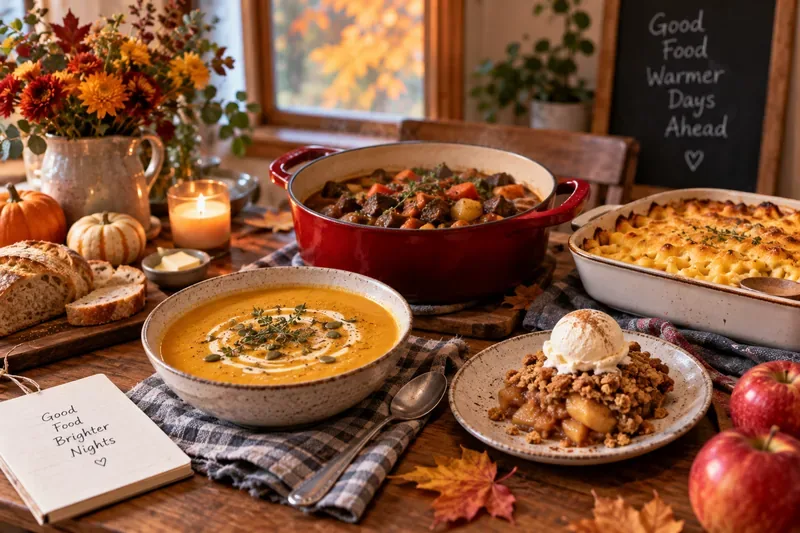
You might serve olives and toasted nuts as guests arrive, followed by a lemon-herb roast chicken or mushroom baked pasta, a large green salad, roasted carrots, good bread, and a make-ahead chocolate pot or apple crisp for dessert.
The point is not that these dishes are universally best. It is that most of the labor can happen before the social part of the evening begins.
Anything that does not suffer from being prepared early should be prepared early. A dinner party becomes stressful when the host saves avoidable decisions for the final hour.
The day before, you can usually:
On the day of the party, focus on cooking the main food, assembling anything that must stay fresh, and getting yourself ready before the final cooking push.
One useful habit is to put the serving spoon or tongs for each dish into its serving vessel before guests arrive. It sounds trivial, but it eliminates the last-minute search through drawers when the food is hot.
A cozy table should feel intentional without becoming precious. You need enough light to see the food, enough open surface to eat comfortably, and enough warmth to make the room feel different from an ordinary weekday meal.
Start with the practical items: plates, forks, knives, napkins, water glasses, and any wine or other beverage glasses you actually plan to use. Then add atmosphere.
Low flowers, greenery, or a small bowl of seasonal fruit usually works better than a tall centerpiece that blocks faces. Unscented candles can add warmth, but keep flames stable and away from sleeves, dried foliage, children, pets, and anything easily ignited. If open flames are not practical, warm lamps or battery-operated candles can create a similar mood.
You do not need matching dinnerware. Repetition is enough. Similar napkins, a consistent color family, or the same style of water glass can make a mixed table feel deliberate.
For a cozy dinner, family-style serving is often the easiest middle ground. Put the main dishes on the table or a nearby sideboard and let people serve themselves. It feels generous and informal, and it keeps the host from plating eight meals alone.
Plated service makes sense when portions need to be controlled, the dish depends on presentation, or the group is small. Buffet service works well when the table is too small to hold serving dishes or when guests have different dietary options.
Food safety matters whichever style you choose. USDA’s current buffet-safety guidance says hot foods should be held at 140°F or warmer and cold foods at 40°F or colder. Perishable food should not sit at room temperature for more than two hours. For long meals, smaller serving platters that you replace from the refrigerator or oven can be easier and safer than putting everything out at once.
You do not need to turn dinner into a laboratory, but a few rules are worth treating as nonnegotiable.
Color and texture alone are not reliable safety tests for every food. FoodSafety.gov’s current safe-temperature chart lists poultry at 165°F, ground meats at 160°F, and whole cuts of beef, pork, veal, and lamb at 145°F with a three-minute rest. Fish is listed at 145°F or until the flesh is opaque and separates easily with a fork. The chart also lists leftovers at 165°F.
Do not use the same unwashed cutting board or utensils for raw meat and the salad you are about to serve. USDA summarizes home food safety as clean, separate, cook, and chill; its food-safety basics emphasize washing hands and surfaces, avoiding cross-contamination, cooking to safe temperatures, and refrigerating promptly.
USDA describes 40°F to 140°F as the “danger zone” where bacteria can grow rapidly. Perishable food should not remain in that range for more than two hours, or one hour when the surrounding temperature is above 90°F. See the USDA danger-zone guidance.
If your dinner party stretches late into the evening, clear and refrigerate leftovers instead of leaving serving dishes on the table because people may want “one more bite.”
The final hour should be about finishing, not starting. If you are still chopping every vegetable and deciding which platter to use, your plan was too ambitious.
A realistic final-hour sequence might look like this:
| Time before arrival | What to do |
|---|---|
| 60 minutes | Put the main dish in its final cooking stage; clear the sink and dishwasher. |
| 45 minutes | Arrange appetizer items; put water on the table; check the bathroom. |
| 30 minutes | Finish salad components without dressing delicate greens; set out serving utensils. |
| 20 minutes | Lower harsh overhead lighting; turn on lamps; start quiet background music. |
| 15 minutes | Change clothes or freshen up if needed. |
| 10 minutes | Check food temperatures and timing; put your phone away from the main gathering area. |
| 5 minutes | Stop fussing. Pour yourself water and be ready to answer the door. |
That final five minutes matters. Guests notice the host’s mood more than a perfectly aligned napkin.
Design the menu so you do not need to. The best hosting technique is operational, not social: reduce the number of things only you can do after guests arrive.
When the doorbell rings, offer one or two drink choices rather than running a full bar. Put the appetizer where people naturally gather. If a guest offers to help, give them a contained task: fill water glasses, carry bread to the table, toss the salad, or light battery candles.
Avoid assigning guests jobs that require them to understand your kitchen system or food-safety plan. “Please carry this bowl to the table” is easier than “Can you finish the chicken?”
Do not panic and do not pretend it is not happening. If the main course needs another 20 minutes, say so casually and bring out something small to eat.
This is another reason to have a ready-to-serve appetizer. Bread, olives, nuts, cheese if appropriate for your guests, cut vegetables with dip, or another simple snack can absorb a timing mistake without making the evening feel like a failure.
A cozy dinner party is not a restaurant reservation. A little looseness often improves it.
Seat people so no one is physically isolated, then let the conversation do most of the work. You do not need a deck of questions unless your group enjoys that.
If guests do not all know each other, introduce them with a small point of connection rather than just a name. “Maya also just started gardening” gives two people somewhere to begin.
Useful conversation prompts are specific but not invasive:
Avoid making one guest perform for the table because of their job, identity, relationship status, health, or personal history.
Not immediately. Clear the main plates, let conversation breathe for a few minutes, then bring dessert out. A pause helps the evening feel like chapters instead of one long rush.
If dessert can sit at room temperature safely, have it ready on a sideboard. If it contains perishable ingredients that require refrigeration, keep it chilled until close to serving.
Coffee and tea are optional. Offer them if you enjoy doing so, but do not create a second kitchen project involving multiple brewing methods and custom orders unless that is part of the fun for you.
Clear perishable food before it has been sitting out too long. Portion leftovers into shallow containers so they cool efficiently and refrigerate them promptly. FoodSafety.gov advises using cooked leftovers within four days and reheating leftovers to 165°F; see its current storage guidance.
If sending food home with guests, use clean containers and only pack food that has been handled and held safely. Do not send someone home with a dish that sat at room temperature all evening just because wasting food feels impolite.
If you want one repeatable formula, use this:
Do not judge the evening by whether every dish looked restaurant-perfect. Use better signals.
The party worked if guests could relax, nobody was left wondering what they could safely eat, the food was handled properly, conversation did not depend on you constantly performing, and you spent meaningful time at the table instead of cooking alone in the kitchen.
Afterward, ask yourself three questions:
Change one thing next time. That is how a personal hosting style develops.
Cozy is not a decorating style. It is the absence of unnecessary friction. Guests know where to sit. The food fits their needs. The lighting is kind. The host is not visibly racing a timer. Nobody is worried about knocking over a towering centerpiece.
Plan for comfort first, food safety second, and decoration after that. Make the dishes you can execute with confidence, prepare more than you think you need to prepare in advance, and leave enough flexibility for dinner to run 20 minutes late without ruining the night.
When the host is calm enough to sit down, the room usually feels warmer too.
Fix bitter, sour, or weak coffee at home with a practical guide to beans, grind size, water, ratio, temperature, pour-over technique, and tasting.
Learn beginner-friendly winter houseplant care for light, watering, humidity, temperature, fertilizer, pests, and the mistakes that commonly damage plants.
Declutter your home without chasing perfection. Learn which spaces to tackle first, how clutter may affect stress and attention, and how to keep results manageable.
Discover which smart kitchen gadgets are genuinely useful, what to check before buying, how to set them up, and common beginner mistakes to avoid.
Functional beverages promise energy, hydration, gut support, protein, and more. Learn which benefits have evidence, what labels can hide, and how to choose wisely.
Learn practical zero-waste cooking habits that reduce food waste, stretch groceries, use leftovers safely, and turn edible scraps into useful meals.
Plan a cozy dinner party with the right guest count, make-ahead menu, warm atmosphere, food-safety basics, and a realistic hosting timeline.
Refresh your home for fall 2026 with budget-friendly decor trends, practical tradeoffs, and smart ways to add warmth, texture, and personality.
Compare practical meal-prep methods by time, flexibility, texture, cost, and food safety so you can build a weekday system that actually fits your life.
Make five reliable fall comfort-food recipes with clear doneness cues, troubleshooting tips, storage guidance, and realistic ways to adjust texture and flavor.