How to get the new Copilot app on Windows 11

Following the Surface event and MS Build 2024, Microsoft has recently released the first Preview of Windows 11 version 24H2. Introduced to Insiders in the Release Preview channel, Build 26100.712 brings the new Copilot app to Windows 11, among many other apps. Users have access to the new Copilot app on Windows 11, and it is actually a web app.

The app interface is similar to the new ChatGPT app on macOS. Microsoft says the new GPT-4o model, natural voice chat, and observation capabilities will be coming to Windows 11 soon. In a few weeks, you'll be able to share your screen, and the Copilot app can help with a number of tasks including gaming, coding, and more.

How to get the new Copilot app on Windows 11
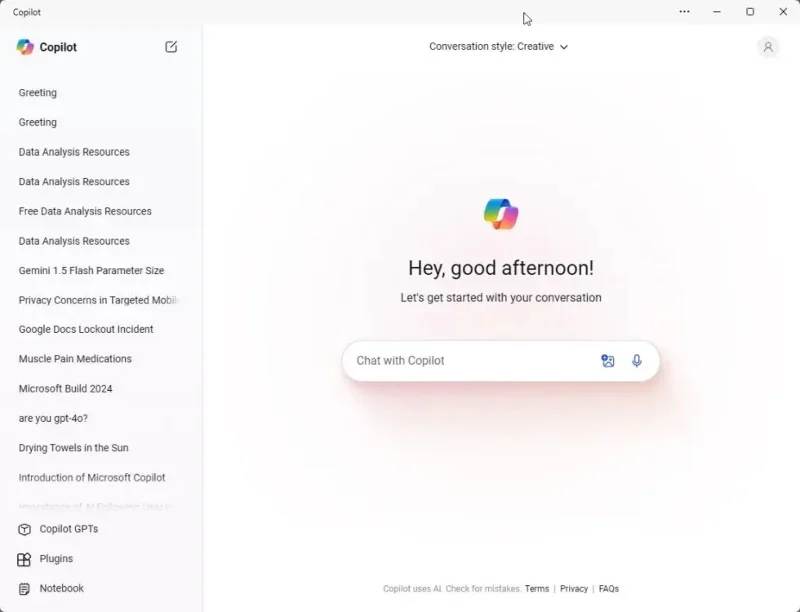
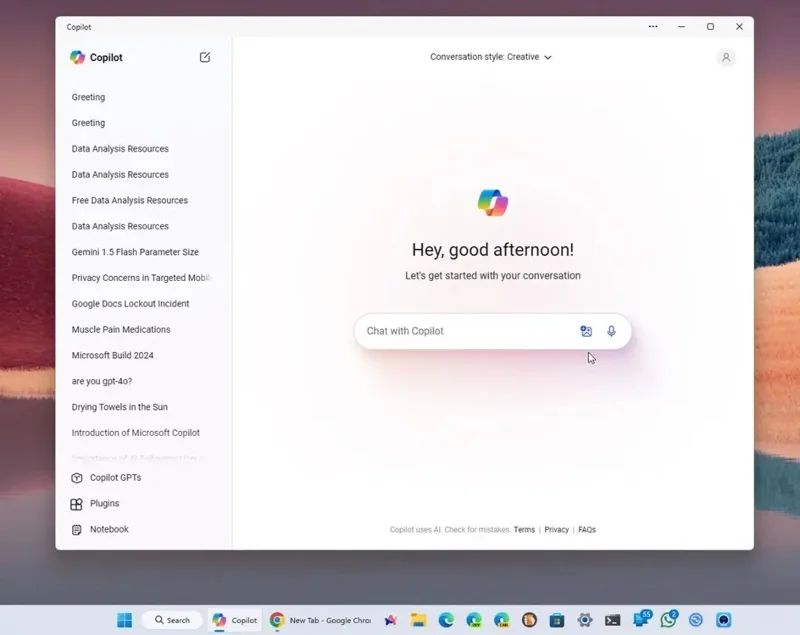
Copilot app running on Windows 11

The new Copilot app can be successfully extracted from Windows 11 version 24H2 and installed on PCs running version 23H2. You can even install the new Copilot app on Windows 10 (Build 19041 or later), according to the minimum OS version information inside the app manifest file. Make sure you have Microsoft Edge installed on your PC.

Basically, there is no need to join any Insider channel to experience the Copilot app on Windows 11 or 10. Here is how to download and install the Copilot app right away.

Download and install Copilot application on Windows 11/10

1. Go ahead and download the ZIP file for the Copilot app .

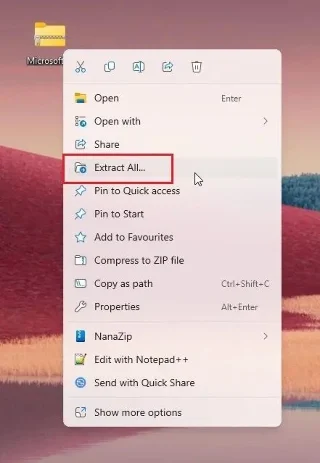
2. Next, right-click on the ZIP file and click Extract all . A folder will be created in the same location.

How to get the new Copilot app on Windows 11
Unzip the Zip file

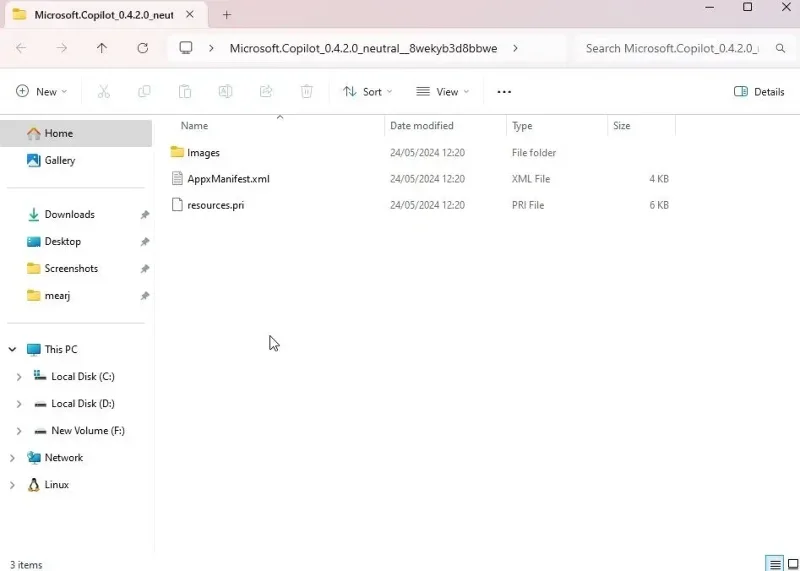
3. Open the extracted folder and delete the two files mentioned below.

  • AppxBlockMap.xml
  • AppxSignature.p7x
How to get the new Copilot app on Windows 11
Copilot App Package

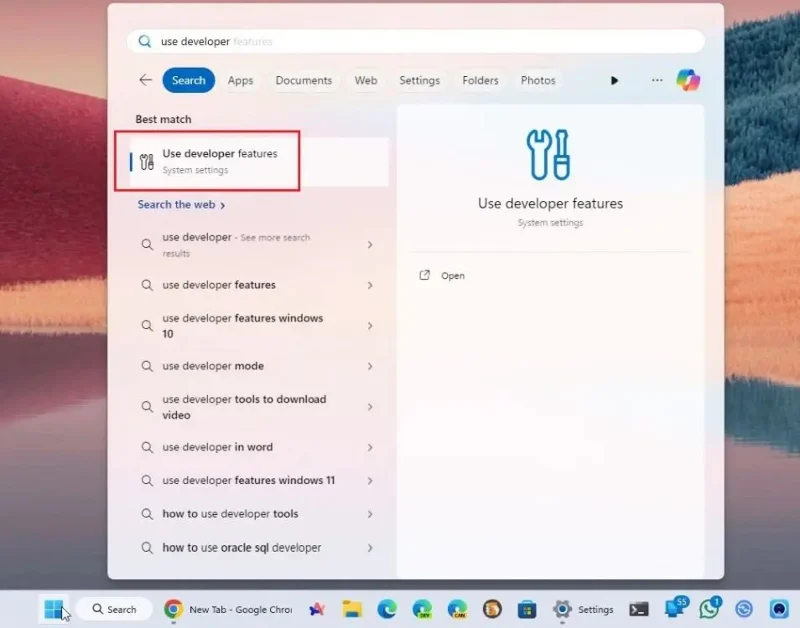
4. Then, hit the Start menu and search for “ Use developer features “. Now, open it.

How to get the new Copilot app on Windows 11
Open Use developer features

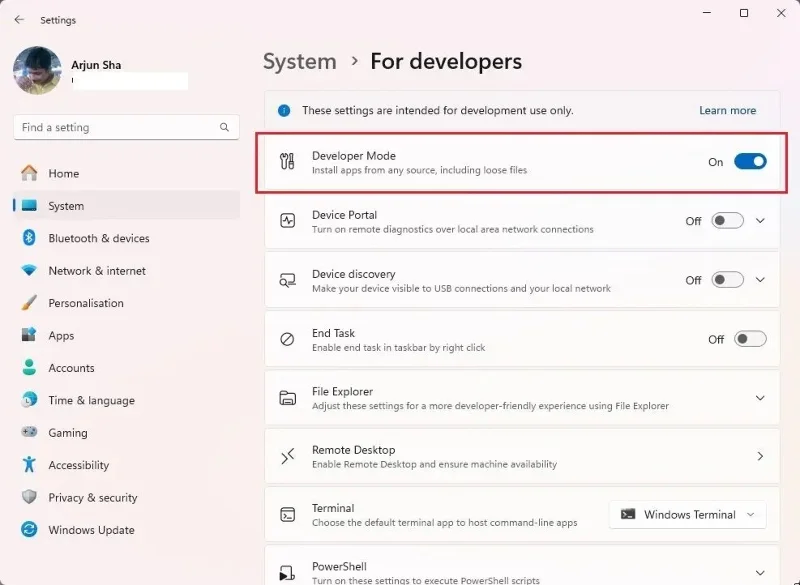
5. Here, turn on the “Developer Mode” toggle . This will allow sideloading of the Copilot app.

How to get the new Copilot app on Windows 11
Enable Developer Mode

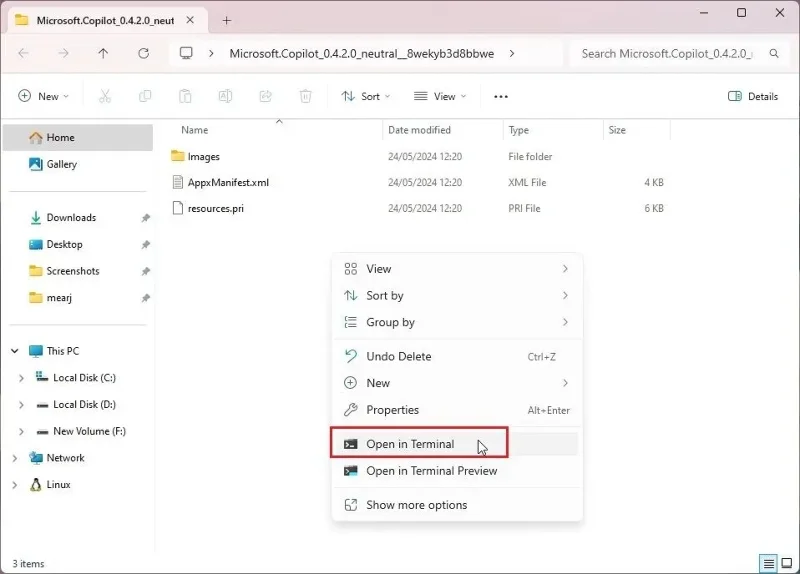
6. Then, reopen the extracted folder and right-click anywhere in the folder to open the context menu.

7. Now, press “Ctrl” and “Shift” together on your keyboard and click on “Open in Terminal” . This will open Terminal with admin rights in the same folder. Further, click on Yes .

How to get the new Copilot app on Windows 11
Open Terminal with admin rights in Windows 11

8. Finally, run the command below and the Copilot app will be installed on your PC. Do not delete the folder if you want to continue using the app.

powershell.exe Add-AppxPackage -Register AppxManifest.xml
How to get the new Copilot app on Windows 11
Run the command to install the Copilot application on Windows 11

9. Open the Start menu and the new Copilot app will appear. You can also pin it to the taskbar. It is fully functional and you can start chatting with Copilot without any problems.

How to get the new Copilot app on Windows 11
New Copilot app running on Windows 11

Here is how you can download the Copilot app and install it on your Windows 11/10 PC. One of the notable changes is that Copilot is no longer in preview mode. Let’s see what the GPT-4o model and natural voice conversation mode with screen sharing look like!
Leave a Comment

Enable FIPS Mode on SLES 15 and Verify the Boot State

Enable FIPS Mode on SLES 15 and Verify the Boot State

Follow SUSE’s SP7 procedure to enable FIPS mode, reboot safely, verify the active policy, and check whether your compliance requirement calls for validated modules.

Set Up a LUKS-Encrypted Data Volume on SLES

Set Up a LUKS-Encrypted Data Volume on SLES

Compare YaST and cryptsetup for a new encrypted SLES data volume, choose LUKS1 or LUKS2, and verify unlock and mount behavior safely.

Build a Custom AppArmor Profile on SUSE Linux

Build a Custom AppArmor Profile on SUSE Linux

Create, refine, and verify a least-privilege AppArmor profile on SLES 15 SP7, with a clear note on SLES 16’s SELinux default.

Build a Local SUSE Update Server with RMT on SLES 15

Build a Local SUSE Update Server with RMT on SLES 15

Set up RMT on SLES 15, mirror entitled repositories, and verify HTTPS registration and package access from a test client.

Join SLES 15 to Active Directory with SSSD in YaST

Join SLES 15 to Active Directory with SSSD in YaST

Connect SLES 15 to AD with YaST’s SSSD-based logon management, then verify directory lookup, domain login, and Kerberos tickets.

Enable SLES Live Patching and Verify a Kernel Fix

Enable SLES Live Patching and Verify a Kernel Fix

Set up the right Live Patching path for SLES 16.0 or 15 SP7, apply eligible kernel fixes, and confirm what is active without confusing it with a reboot-required kernel update.

Install and Sign Custom Kernel Modules on SLES 15 Secure Boot

Install and Sign Custom Kernel Modules on SLES 15 Secure Boot

Load a custom SLES 15 kernel module without disabling Secure Boot. Match the running kernel, sign the .ko file, enroll a MOK key, and verify loading.

Keep Services Available During a SLES 15 SP5 to SP6 Upgrade

Keep Services Available During a SLES 15 SP5 to SP6 Upgrade

SLES 15 SP5 can migrate online to SP6, but each node must reboot. Use a tested rolling upgrade or blue-green cutover to keep workloads reachable.

Apply the SLES 15 STIG Safely with OpenSCAP

Apply the SLES 15 STIG Safely with OpenSCAP

Use SUSE’s supported STIG profile to scan SLES 15, test remediation, review remaining findings, and retain assessment evidence.

Restore Cockpit Access to SUSE Linux Enterprise Server

Restore Cockpit Access to SUSE Linux Enterprise Server

Trace a failed Cockpit connection through DNS, port 9090, the systemd socket, firewalld, TLS, and login settings using current SUSE guidance.