Would Europe Be Drawn into a Hypothetical U.S.-Israel-Iran Nuclear War? NATO Rules Explained

A guide to NATO Articles 4 and 5, UN self-defense rules, and why consultation does not mean automatic European entry into war.
Just like when using other technology products, sometimes you want to check what processor your Chromebook is running on, and how fast it is. Of course, such information can be easily found on the internet, but checking directly on the system will give you a more accurate view, especially for CPU speed.
This article will guide you how to view CPU information, check CPU speed directly on your Chromebook.
Method 1: Go to the About System page.
This first method doesn’t require you to install any additional apps or extensions. On Chromebook, simply open the Chrome web browser and type “ chrome://system ” in the address bar and press enter.
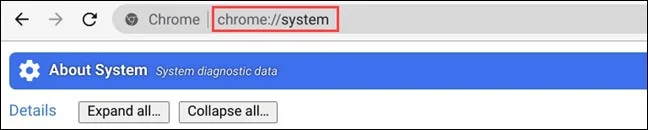
This will take you to the “ About System ” page built into the Chrome OS platform. There is a lot of information here, if you need to see any hardware information, just click the corresponding Expand button.
To find out detailed information about the CPU, find the “ cpuinfo ” item and click the “ Expand ” button on the right.
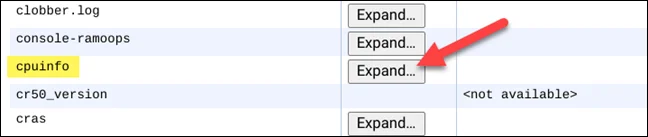
In the expanded information panel that appears, look for “ Model Name .” This will show you the full name of the processor your Chromebook is using. In my example, my CPU is an Intel Core m3-6Y30. Along with the name, the processor speed will also be listed in some detail.

Method 2: Using a Third-Party App
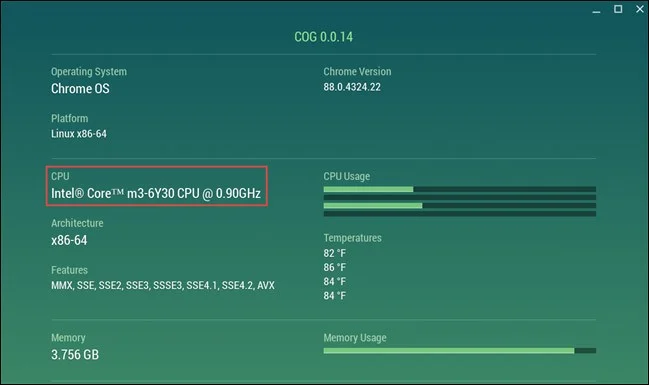
If you find the information from the About System page too sketchy, you can use a third-party application, such as “ Cog – System Info Viewer ”, to get a cleaner interface with more visual information.
First, open the Chrome browser and go to the Chrome Web Store. Then, search for the “ Cog – System Info Viewer ” app and click “ Add to Chrome ”.
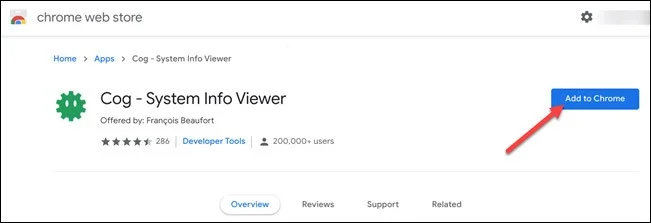
Wait a moment for the app to install. Once the installation is complete, open the app by clicking on the launcher icon in the bottom left corner of the screen, then select “ Cog ”.
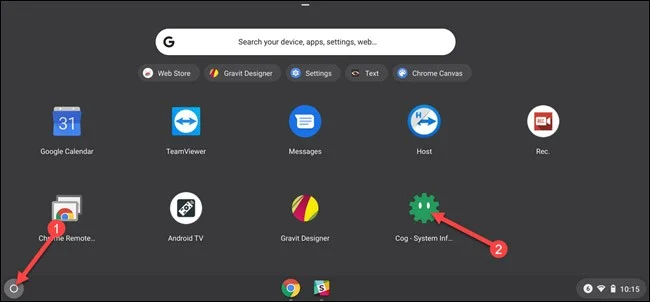
The app will open and display detailed information about your Chromebook. You will see detailed information about the processor under the “ CPU ” section.
A guide to NATO Articles 4 and 5, UN self-defense rules, and why consultation does not mean automatic European entry into war.
Assess claims about Iran in six steps, distinguishing uranium enrichment, weapons development and verified possession.
Understand nuclear decision authority in six steps, including US civilian control and the limits of public information about Israel.
A guide to official 2026 evidence on Hormuz shipping disruption, Iran-related claims, confirmed incidents, and what remains uncertain.
A source-based guide to nuclear escalation risks, UN Charter rules and NATO Article 5 in a strictly hypothetical Iran scenario.
Use five steps to prepare for an outage; nuclear and EMP scenarios are hypothetical, and official shelter instructions come first.
Use 5 defensive steps to verify a cyber disruption, protect household accounts, and avoid mistaking an outage for war.
Use these 5 steps to assess climate effects from a hypothetical Iran strike, compare model assumptions, and avoid unsupported predictions.
Explore six steps for reading research on climate, food and ecosystem recovery after a hypothetical nuclear conflict.
Build a practical fallout preparedness kit in six steps, with sealed food and water, a radio, medical supplies and shelter guidance.