Home
» How to
»
Instructing fake voice by Clownfish Voice Changer software
Instructing fake voice by Clownfish Voice Changer software
Video Instructing fake voice by Clownfish Voice Changer software
Clownfish Voice Changer is a fake voice software used by many people around the world. Users can use Clownfish to hide their real voice in a very simple way with just a few taps. Download.vn will guide you to use Clownfish in the following article.
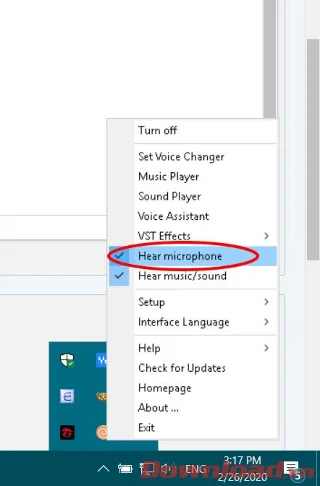
First, open the software, right-click on the Clownfish icon on the right of the Taskbar to open the control menu. The first thing is that you check the Hear microphone line so the software will switch your voice when speaking through the microphone.
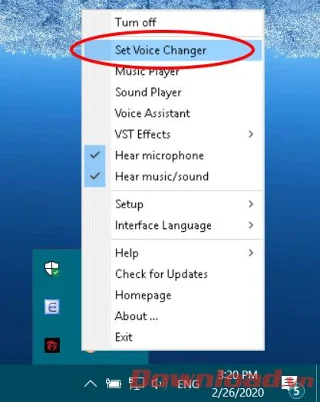
Next we need to select the transition effect by clicking Set Voice Changer.
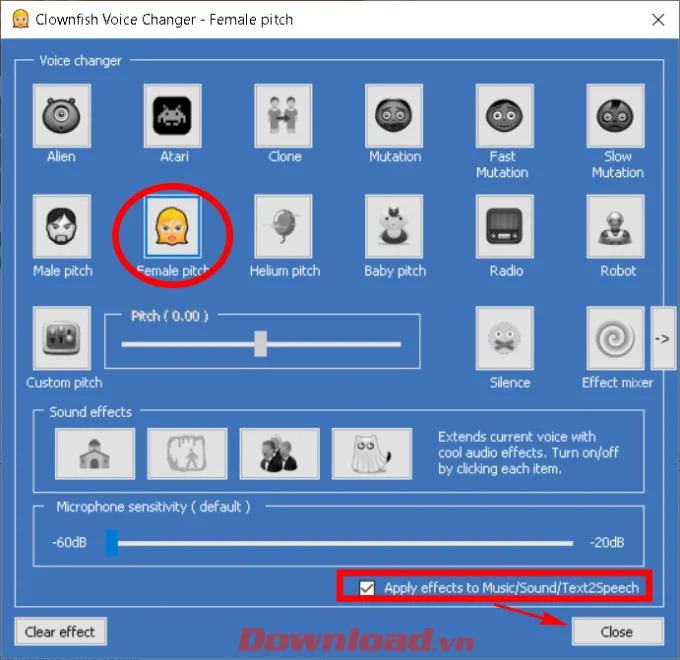
In the table that appears, click on an effect you want to use. As shown in the picture below, I changed the voice to a female tone, we chose the Female pitch . Check the Apply effects to Music / Sound / Text2Speech lines . Click Close to save. If you want to delete all effects click on the Clear Effect button in the lower left corner.
After adjusting the effect for the voice, you can test the change of voice by familiar voice chat software such as Messenger, Discord, Skype, Viber ...
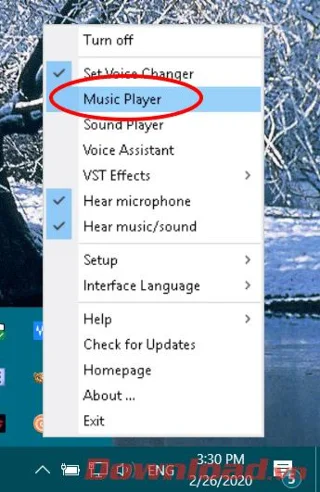
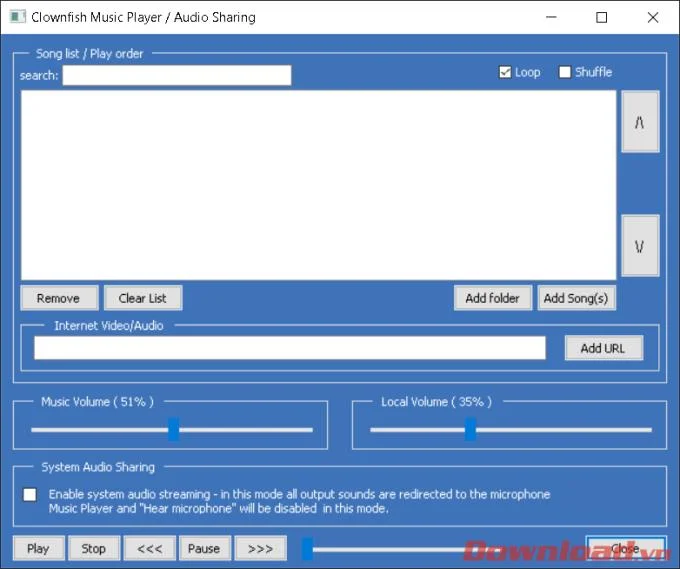
If you want to listen to a song with your chosen sound effect, click Music Player in the right-clicking menu.
In the Music Player section you will be able to play a song with some buttons like Play, Stop, Pause ... Add music with the Add Songs button . This is also a way for you to listen to sound effects without using voice chat software.
Note: If you want to turn on / off Clownfish's fake voice function just double click on the software icon in the Taskbar.