Food delivery service - online food ordering is not new in Vietnam. At the forefront of this movement is the Delivery Now application now called Now , which is definitely an extremely popular market when the society is growing and the demand for delivery services is very high. Therefore, instead of the traditional way of ordering a shiper to buy traditional food, you can use many of the store's delivery services or various food ordering applications.
Download Grab for iOS Download Grab for Android
The number 1 ride-hailing app in Vietnam - Grab has quickly caught up with that trend based on its large driving resources. All Grab motorbike drivers will have more jobs and Grab has also expanded its business. Grab's place-to-order food delivery appeared for a short time but quickly dominated the market with many promotions and a VND 15,000 ship fee for transactions of less than 5 km. How to order food on Grab is quite simple, you just need to follow the simple steps below to get your favorite food to the office or home very quickly.
Instructions for ordering Grabfood home delivery
Step 1:
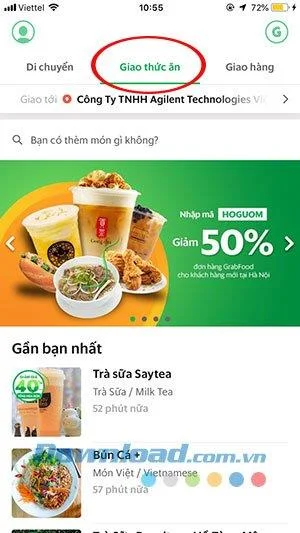
At the familiar main interface of Grab app, you will see 3 tabs including: Move, Food Delivery and Delivery .
Select Food Delivery to start selecting food items.

Step 2:
At the main interface of Food Delivery we can search for the name of the dish or select the menu of dishes with different topics through images.
The most recent dishes will display, scroll down to see more different dishes. Many dishes, drinks such as milk tea, rice milk, etc. appear here for you to choose. Once you've found a food item or store that has the desired food, lightly touch that store's avatar.
A discounted store or dish will also appear with an image next to it, so you can take a closer look to order the cheapest food.


Step 3:
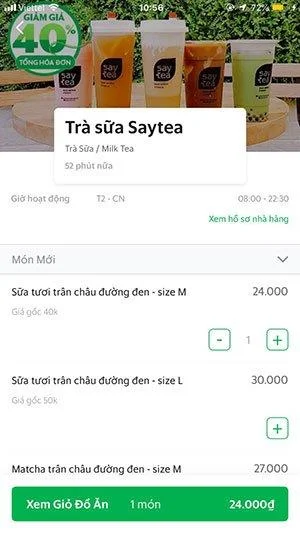
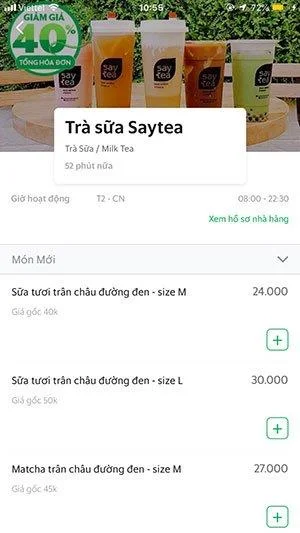
The dishes in that store appear, want to choose which dish and how many meals, click the plus sign next to it.
After selecting a dish, tap on View food basket.
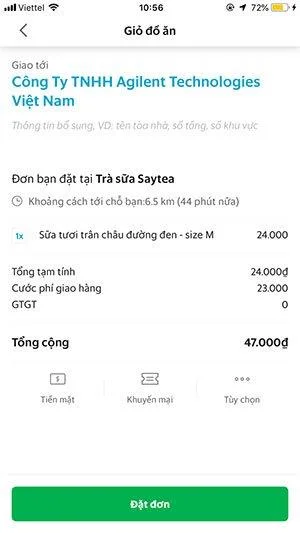
The interface of the food basket appears, here we will have complete information about the place of receipt and order summary: the name of the food, the quantity, the total value of the dish, delivery fees, the total amount to be paid .
Step 4:
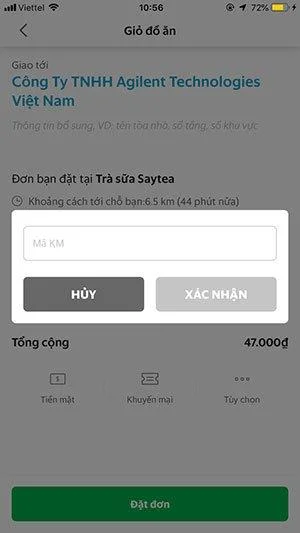
Here if there is a promotional code, click Promotional to enter the code -> Confirm to know the final payment amount. And click Place Order to ship the order.


You will wait a short period of time to find the driver to accept the order and confirm the order.
We will have to wait for a certain period of time for the driver to come to the store to order and deliver the food.
When the driver will actively contact you to deliver food.
Note: During the ordering process, please regularly pay attention to the phone that has registered to order food because there will be incurred when the driver orders at the restaurant such as: out of food, change dishes, etc.
Instructional video for food delivery on Grab app
Above we have shown you how to order food on the Grab app, hope the Grabfood delivery service we just introduced will be helpful for you.