Coffee Culture: How to Brew the Perfect Cup at Home
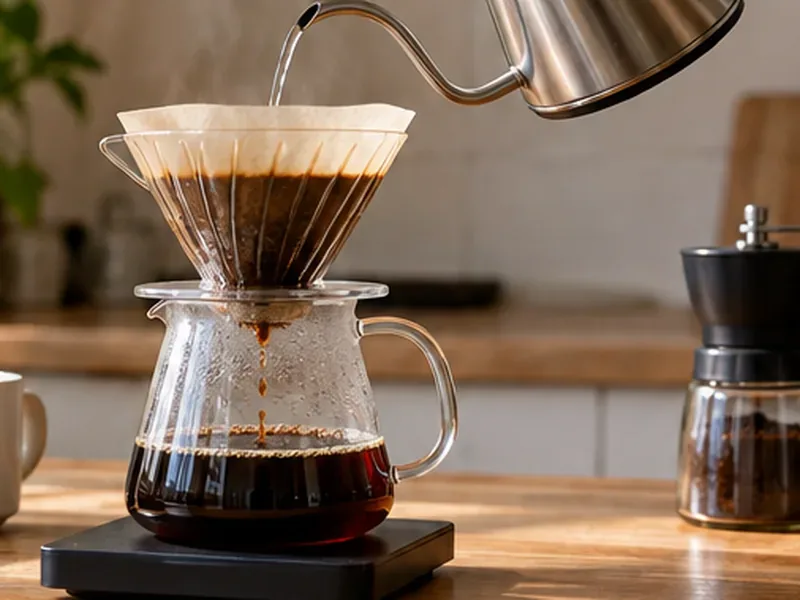
Fix bitter, sour, or weak coffee at home with a practical guide to beans, grind size, water, ratio, temperature, pour-over technique, and tasting.
Meal prep is supposed to make weekdays easier, yet many people end up with the opposite problem: a crowded refrigerator, repetitive lunches, soggy vegetables, and Sunday afternoon consumed by cooking. The issue is usually not effort. It is choosing a prep style that does not match your schedule, appetite, or tolerance for leftovers.
There is no single best way to meal prep. Fully assembled meals maximize weekday speed, component prep offers more variety, freezer meals protect against schedule changes, and strategic convenience foods can reduce labor at a higher per-serving cost. The most useful approach is to choose the tradeoffs you can live with and then build food-safety rules around them.
“Save time” can mean different things. One person wants zero cooking after work. Another wants to avoid takeout but still prefers freshly assembled dinners. Someone else wants lower grocery waste more than faster meals.
Before buying containers or making a five-day menu, decide which constraint matters most:
Once the constraint is clear, the right meal-prep strategy becomes easier to identify.
| Strategy | Best for | Main advantage | Main tradeoff |
|---|---|---|---|
| Fully assembled meals | Very busy weekdays | Fastest grab-and-go option | Less variety; some foods lose texture |
| Component prep | People who dislike repetition | Mix-and-match flexibility | Requires a few minutes of assembly |
| Ingredient prep | People who still like cooking | Fresher final meals | Less time saved on busy nights |
| Freezer-first prep | Unpredictable schedules | Longer holding time and less waste | Not every food freezes equally well |
| Convenience-assisted prep | Low-energy or overloaded weeks | Minimal chopping and cooking | Usually higher unit cost |
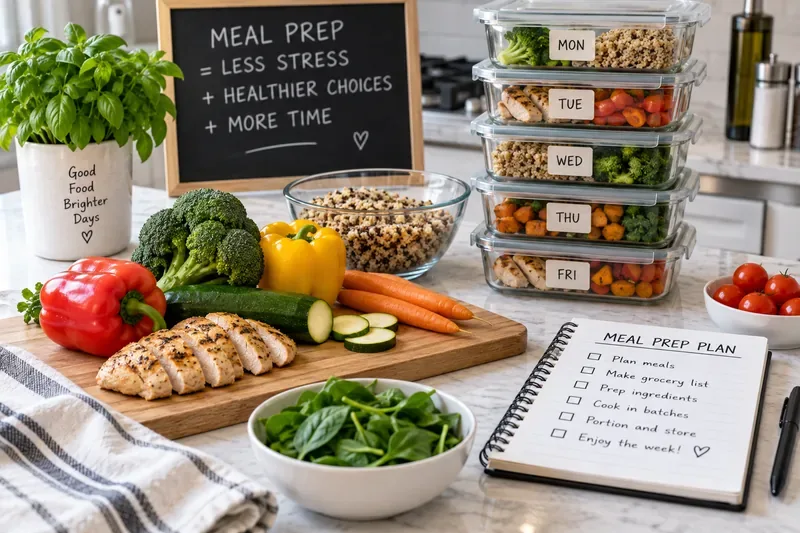
This is the classic row-of-containers approach: cook a protein, starch or grain, and vegetables, divide them into portions, refrigerate some, and freeze others when appropriate.
The advantage is obvious. On a busy morning, lunch is already packed. After work, dinner may need only reheating. It also makes portions and grocery quantities easier to predict.
The tradeoff is that texture and variety can decline before your motivation does. Crispy foods soften. Dressings wilt greens. The same seasoning can become boring by day three.
Best fit: Choose assembled meals when weekday decision-making is the real problem. To improve quality, keep sauces, crunchy toppings, fresh herbs, and delicate greens separate until serving.
Instead of making five identical lunches, prepare versatile parts: one or two proteins, a grain or starch, two vegetables, a sauce, and a fresh finishing element. Those pieces can become bowls, wraps, salads, or plated dinners.
The tradeoff is a little more weekday assembly. The benefit is that the same ingredients can taste different across several meals. For example, roasted chicken, rice, roasted vegetables, and two sauces can support multiple combinations without requiring several full recipes.
Best fit: Use component prep when variety matters enough that identical containers tend to go uneaten.
Ingredient prep stops before full cooking. Wash and cut vegetables, portion proteins, mix a marinade, cook one staple, or prepare a sauce so that dinner starts halfway finished.
This reduces the “what do I do first?” friction of weeknight cooking while preserving the experience of a freshly cooked meal. It is also easier to adapt if plans change.
The cost is that you still need active cooking time during the week. A 15-minute head start is helpful, but it is not the same as opening a finished meal.
Best fit: Choose this approach if you enjoy cooking but struggle with chopping, planning, or getting started after a long workday.
If your calendar changes often, preparing five refrigerated meals can create unnecessary waste. A freezer-first strategy solves a different problem: it stores future options rather than committing every meal to this week.
Cook dishes that freeze and reheat well, portion them, cool and store them safely, then move servings to the refrigerator when you know you will use them. Soups, stews, cooked beans, many casseroles, and some cooked grain-and-protein combinations are often practical candidates, while delicate greens and crisp toppings are better added later.
Freezing is not a sterilization step. FoodSafety.gov notes that freezing keeps food safe while frozen but does not destroy all harmful germs. For specific storage guidance, check the official FoodKeeper resource.
Best fit: Use freezer prep when late meetings, travel, or changing dinner plans regularly leave refrigerated meals unused.
Prewashed greens, frozen vegetables, rotisserie-style cooked ingredients, canned beans, microwaveable grains, and pre-cut produce can reduce prep work dramatically. They are not automatically better or worse than cooking everything from scratch; they simply shift the tradeoff from labor toward cost.
Convenience foods can also be strategically mixed with homemade items. You might cook the protein yourself but use frozen vegetables and a prepared sauce, or make a large batch of grains while buying washed salad greens.
Best fit: Choose convenience selectively when the alternative is frequently skipping meals, ordering expensive takeout, or letting whole ingredients spoil before you have time to use them.
A Sunday-to-Friday refrigerator plan needs more thought than simply filling five containers. USDA guidance says most cooked leftovers should be used within 3 to 4 days when kept refrigerated at 40°F (4°C) or below. The agency also recommends refrigerating or freezing leftovers promptly, using shallow containers for faster cooling, and keeping perishable food out at room temperature no longer than two hours—one hour when temperatures are above 90°F (32°C). See the USDA’s current leftovers guidance.
That means a practical five-day plan often works better as a fridge-plus-freezer system. Keep early-week portions refrigerated and freeze later portions when the dish is freezer-friendly. Move frozen servings to the refrigerator in time to thaw safely rather than leaving them on the counter.
For item-specific storage limits, FoodSafety.gov’s Cold Food Storage Chart and FoodKeeper are better references than a universal “meal prep lasts a week” rule.
The fastest meal-prep sessions usually involve parallel cooking rather than complicated recipes. While a grain cooks, vegetables can roast and a protein can cook on another surface. The point is not to produce as many dishes as possible; it is to reuse equipment and time.
If you handle raw meat, poultry, seafood, or eggs during a batch session, organization also reduces cross-contamination. USDA’s four core food-safety steps are Clean, Separate, Cook, and Chill. Its guidance specifically calls for keeping raw animal foods and their juices away from ready-to-eat foods. The USDA updated its public explanation of these four steps in April 2025; see the official four-step food-safety guidance.
Batch size can make visual doneness even less reliable. Use a food thermometer rather than color alone. USDA’s current safe minimum chart lists 165°F (73.9°C) for poultry, 160°F (71.1°C) for ground meats, and 145°F (62.8°C) plus a three-minute rest for whole cuts of beef, pork, veal, and lamb. Fish and shellfish are listed at 145°F (62.8°C). Leftovers should be reheated to 165°F (73.9°C). See the USDA safe minimum internal temperature chart.
When cooling a large batch, divide it into shallow containers instead of placing one deep, steaming pot in the refrigerator. FDA guidance also recommends keeping the refrigerator at or below 40°F (4°C) and the freezer at 0°F (-18°C). The agency’s food-storage guidance explains why prompt chilling and refrigerator temperature matter.
Food quality is often what makes a system sustainable. Small packaging choices can make a large difference:
The goal is not restaurant-perfect texture. It is to preserve enough quality that prepared food remains more appealing than abandoning the plan.
If mornings are chaotic and lunch breaks are short, prepare fully assembled meals and keep condiments separate. If you work from home or have ten minutes to assemble lunch, component prep usually gives more variety for only a little extra effort.
If evenings are unpredictable, prioritize the freezer. If you enjoy cooking and simply hate prep work, chop, portion, and marinate ingredients rather than finishing every dish in advance. If your biggest obstacle is low energy, deliberately buy a few convenience items and spend your limited effort on the parts where homemade quality matters most to you.
Efficient meal prep is not about maximizing the number of containers in your refrigerator. It is about removing the specific friction that causes weekday meals to fail. For some people, that means cooking everything on Sunday. For others, it means prepping only components, freezing two backup dinners, and accepting that a bag of washed greens is worth the extra cost.
Start with a smaller system than you think you need. Prepare two or three reliable meals, note what held up well, track what you actually ate, and expand only when the routine earns its place. A meal-prep system is successful when it makes weekdays easier without creating a new weekend obligation you resent.
Fix bitter, sour, or weak coffee at home with a practical guide to beans, grind size, water, ratio, temperature, pour-over technique, and tasting.
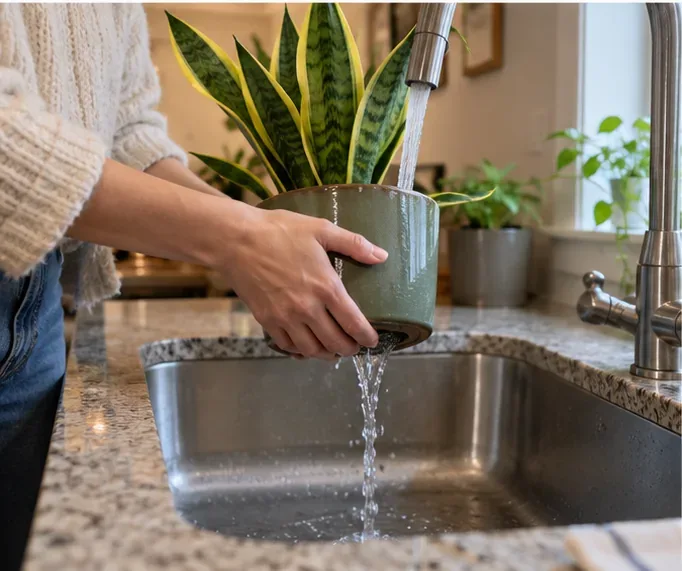
Learn beginner-friendly winter houseplant care for light, watering, humidity, temperature, fertilizer, pests, and the mistakes that commonly damage plants.
Declutter your home without chasing perfection. Learn which spaces to tackle first, how clutter may affect stress and attention, and how to keep results manageable.
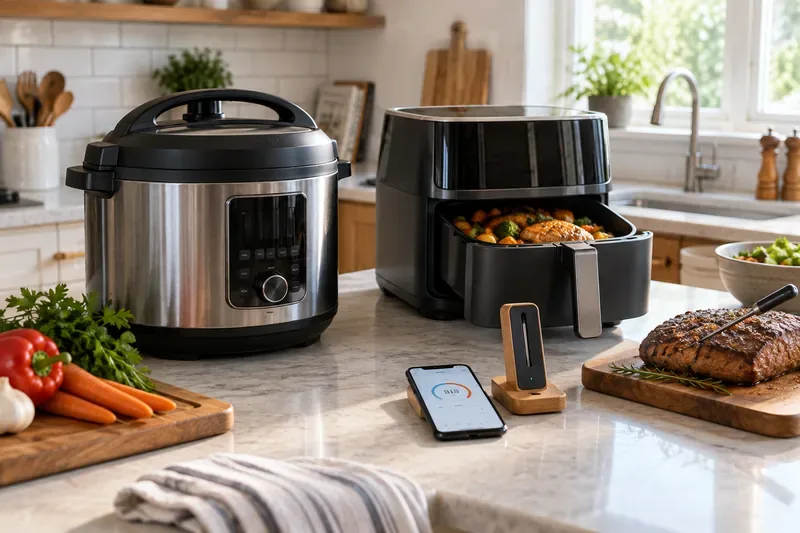
Discover which smart kitchen gadgets are genuinely useful, what to check before buying, how to set them up, and common beginner mistakes to avoid.
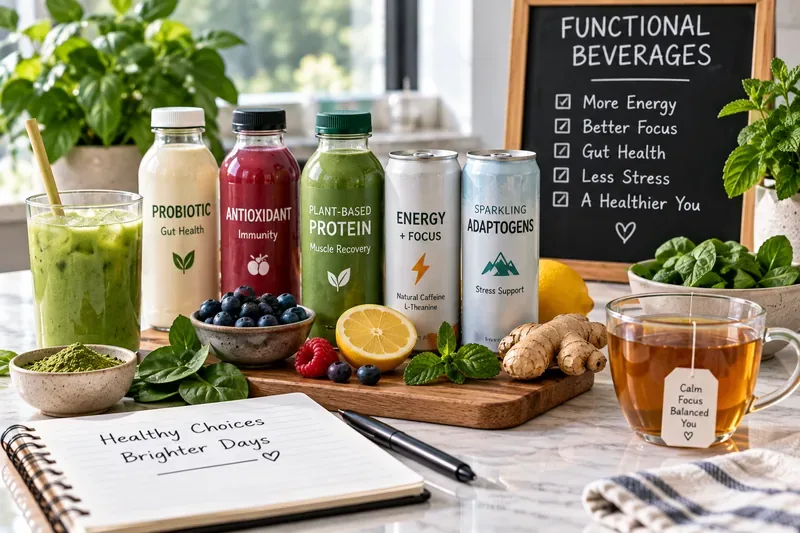
Functional beverages promise energy, hydration, gut support, protein, and more. Learn which benefits have evidence, what labels can hide, and how to choose wisely.
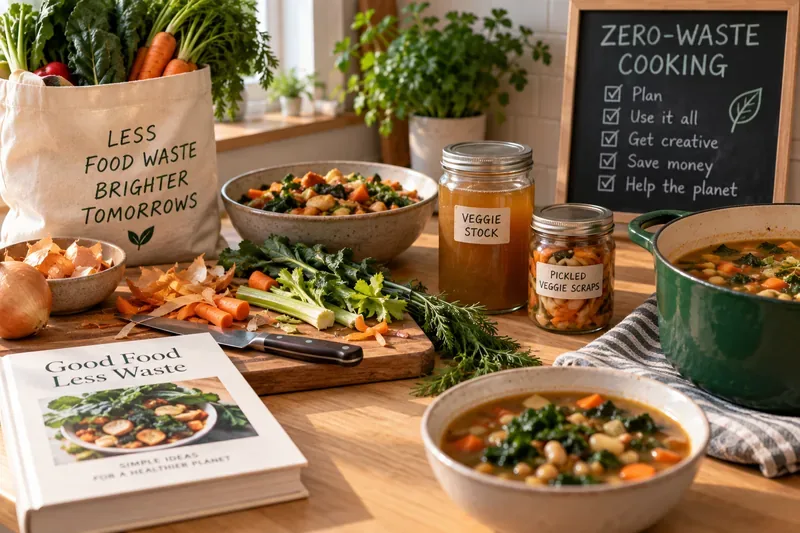
Learn practical zero-waste cooking habits that reduce food waste, stretch groceries, use leftovers safely, and turn edible scraps into useful meals.
Plan a cozy dinner party with the right guest count, make-ahead menu, warm atmosphere, food-safety basics, and a realistic hosting timeline.
Refresh your home for fall 2026 with budget-friendly decor trends, practical tradeoffs, and smart ways to add warmth, texture, and personality.
Compare practical meal-prep methods by time, flexibility, texture, cost, and food safety so you can build a weekday system that actually fits your life.
Make five reliable fall comfort-food recipes with clear doneness cues, troubleshooting tips, storage guidance, and realistic ways to adjust texture and flavor.