Coffee Culture: How to Brew the Perfect Cup at Home
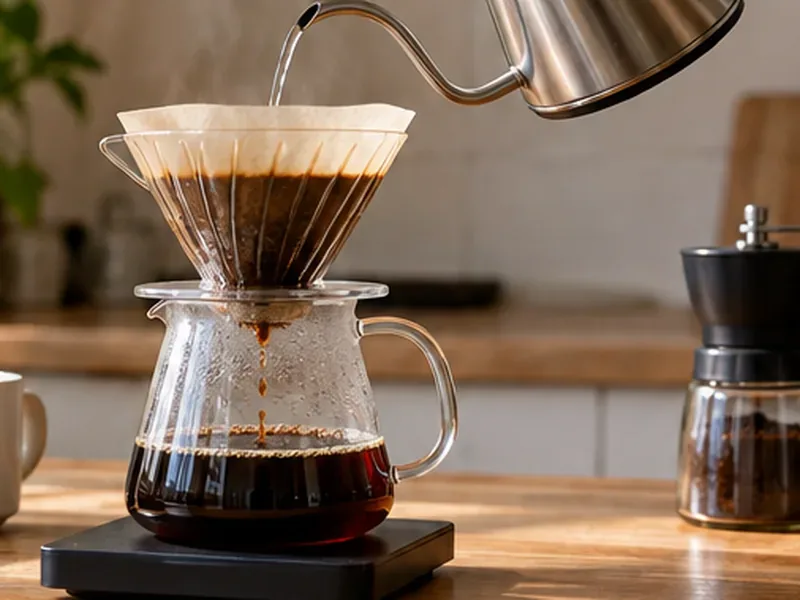
Fix bitter, sour, or weak coffee at home with a practical guide to beans, grind size, water, ratio, temperature, pour-over technique, and tasting.
Inflation does not usually show up as one dramatic bill. It shows up as a grocery cart that costs a little more, an electric bill that never quite comes back down, a tank of gas that feels harder to absorb, and a handful of subscriptions that quietly became more expensive while you were focused on everything else.
The latest U.S. consumer-price data I could verify reliably for this guide are for July 2026. The Bureau of Labor Statistics reported that the Consumer Price Index was up 3.4% over the previous 12 months. Food prices were up 3.0%, food at home was up 2.7%, electricity was up 4.2%, and gasoline was up 24.6% from a year earlier. BLS scheduled the August 2026 CPI release for September 11, 2026, but I could not retrieve that release reliably through the available source, so this article does not substitute an unverified August figure.
USDA’s August 25, 2026 Food Price Outlook adds useful context: it forecast food-at-home prices to rise about 2.5% in 2026, with a forecast range of 1.7% to 3.3%. That is a reminder that inflation is uneven. Your personal inflation rate depends on what you buy, where you live, how much you drive, your housing costs, and which categories dominate your budget.
The practical response is not to optimize every purchase. It is to focus first on repeatable savings in high-frequency categories. Saving $3 once matters less than removing a $15 monthly fee, reducing food waste every week, or cutting a utility cost that repeats all year.
| Category | First action | Why it matters |
|---|---|---|
| Groceries | Plan meals around food you already have and compare unit prices | Food is purchased frequently, so small improvements repeat every week |
| Utilities | Adjust heating/cooling schedules and eliminate obvious energy waste | Heating and cooling are major recurring household energy costs |
| Transportation | Combine trips, drive smoothly, keep tires properly inflated | Fuel and maintenance respond to driving behavior |
| Subscriptions | Audit every recurring charge | Automatic renewals hide inside monthly cash flow |
| Banking fees | Set low-balance alerts and review overdraft coverage | One avoidable fee can erase several smaller savings |
| Debt | Protect on-time minimum payments, then direct extra cash deliberately | Late fees and interest can compound faster than many household savings |
The strongest grocery hack is not a coupon. It is arriving with a plan. USDA’s MyPlate guidance recommends checking the refrigerator, freezer, and pantry first; planning meals for the week; building a grocery list; and deliberately using leftovers. This reduces the risk of buying food you already own or throwing away perishables you forgot about.
Before making a grocery list, write down three categories: use now, use this week, and stock items. “Use now” is food close to spoiling. Build at least two meals around those ingredients. Then buy only what completes those meals.
This matters because food waste is not just an environmental issue—it is a budget leak. A discount is not a saving if the food is eventually discarded.
USDA recommends using the unit price on the shelf label to compare brands and package sizes. A larger package can be cheaper per ounce, pound, or item, but only if you will actually use it. Bulk buying is most useful for products that store well: whole grains, dried or canned beans, frozen vegetables, paper goods, and household staples with predictable use.
Avoid the common trap of buying perishable food in bulk simply because the unit price is lower. Spoilage turns the “cheaper” option into the more expensive one.
Instead of asking, “What is on sale?” ask, “Which item already on my list is on sale?” That small distinction limits impulse buying. USDA also suggests mixing fresh, frozen, canned, and shelf-stable foods. Frozen produce can be especially useful when fresh items are expensive or likely to spoil before you use them.
Official references: USDA MyPlate meal-planning guidance and USDA Eat Healthy on a Budget.
Do not begin by obsessing over tiny loads while ignoring heating and cooling. ENERGY STAR says almost half of the average American household’s annual energy bill goes to heating and cooling. That makes temperature control, air sealing, HVAC maintenance, and insulation much more important than many small “unplug everything” rituals.
The U.S. Department of Energy says households can save as much as 10% a year on heating and cooling by turning the thermostat back 7°F to 10°F for eight hours a day from its normal setting. Actual savings depend on climate, building efficiency, HVAC equipment, and how consistently the setback is used.
If your home is empty for predictable periods, a programmable or smart thermostat can automate the change. ENERGY STAR says certified smart thermostats have demonstrated energy savings using field data, and some homes—especially those unoccupied for much of the day—may save more than households with less flexible schedules.
Do not buy a smart thermostat only because it is “smart.” Check compatibility with your HVAC system first. Some systems, including certain heat pumps, require specific control strategies.
ENERGY STAR notes that certified LEDs use far less energy than traditional bulbs and last much longer. The value is greatest in frequently used fixtures.
Official references: U.S. Department of Energy home upgrades, ENERGY STAR low- and no-cost tips, and ENERGY STAR smart thermostats.
Price-shopping at the pump can help, but the larger repeatable lever is often the amount of fuel you burn. The Department of Energy says aggressive driving—speeding, rapid acceleration, and hard braking—can substantially reduce fuel economy. Gas mileage also usually falls rapidly at higher highway speeds.
DOE says properly inflated tires can improve gas mileage by about 0.6% on average and potentially up to 3%, while sensible driving can make a much larger difference for an aggressive driver. Those figures are not guaranteed savings for every vehicle; they show why maintenance and driving behavior are worth addressing before focusing on small price differences between stations.
Official reference: U.S. Department of Energy efficient-driving guidance.
Recurring charges are easy to ignore because they do not require a fresh buying decision each month. Review the last two to three months of bank and credit-card statements and mark every recurring payment.
Put each charge into one of four buckets: keep, downgrade, rotate, or cancel. “Rotate” is useful for streaming and seasonal services: keep one or two active instead of paying for five all year.
Then review internet, mobile, insurance, and other recurring contracts at renewal. The goal is not to threaten to cancel everything. Ask whether there is a lower-cost plan that still meets your actual use. Before switching, compare the full price after promotional periods, taxes, equipment charges, and cancellation terms.
The Consumer Financial Protection Bureau recommends reviewing recurring services when household finances tighten rather than assuming every existing subscription is still necessary.
Reference: CFPB guidance on reviewing spending and recurring services.
A cash-back card earning 2% cannot compensate for repeated overdraft charges. CFPB says many banks and credit unions charge $30 or more per overdraft transaction, although policies vary widely. That means fee avoidance can be a higher priority than fine-tuning points and rewards.
CFPB notes that consumers can opt out of debit-card and ATM overdraft coverage; in that case, transactions are generally declined when funds are insufficient rather than approved with an overdraft fee. Checks and recurring electronic payments may be treated differently, so read your institution’s terms.
Automatic bill payments can reduce late-payment risk, but CFPB also warns that they can trigger overdraft or nonsufficient-funds fees if the account balance is too low. Use automation only with alerts and a cash-flow calendar.
Official references: CFPB overdraft options and CFPB automatic-payment guidance.
A household can have enough income for the month and still run short on the wrong week. Inflation makes that timing problem worse because variable categories—food, fuel, utilities—can absorb more cash before a paycheck arrives.
Build a simple cash-flow calendar. Put paydays on the calendar, then every fixed bill and known automatic withdrawal. Add a weekly allowance for variable essentials. If one week is overloaded, ask providers whether due dates can be changed rather than relying on overdraft or credit every month.
CFPB emphasizes that a realistic picture of income and spending is the starting point for managing debt and savings. Tracking does not need to be complicated: a spreadsheet, notebook, or banking app is enough if you consistently categorize the large recurring items.
Reference: CFPB spending-tracking guidance.
Inflation pressure often creates a dangerous pattern: a household cuts small expenses but then carries a larger credit-card balance because essentials cost more. If cash is tight, first protect minimum payments and due dates so that late fees and credit damage do not add another problem.
After the essentials are covered, direct extra debt payments deliberately. Two common approaches are paying the highest interest rate first or paying the smallest balance first for momentum. The mathematically cheaper route is usually to prioritize the highest interest rate, but a plan you can sustain matters more than a theoretically perfect plan you abandon.
If you cannot make required payments, contact the lender early. Do not wait until several missed payments have accumulated before asking about hardship options.
| Tempting move | Why it can backfire |
|---|---|
| Buy everything in bulk | Perishables, storage limits, and tied-up cash can eliminate the unit-price savings |
| Drive across town for a small discount | Fuel, time, and unplanned purchases may exceed the savings |
| Cancel every enjoyable expense | A budget with no room for anything valued is harder to sustain |
| Finance routine groceries with revolving debt | Interest can make already-expensive essentials cost even more |
| Buy an efficiency upgrade without checking payback | An expensive device is not automatically cheaper than changing behavior |
| Use an automatic payment without monitoring cash flow | A poorly timed withdrawal can trigger overdraft or returned-payment fees |
Compare four weeks against the previous four weeks, but adjust your interpretation for unusual events such as travel, holidays, medical expenses, or seasonal utility changes. Track dollars, not just behaviors.
Look for three outcomes: fewer wasted purchases, lower recurring charges, and fewer financial penalties such as overdraft or late fees. If you are spending more time chasing deals than the savings are worth, simplify. If grocery spending falls but food waste or takeout rises, the plan is not working. If the utility bill stays high because the weather changed sharply, compare energy use where your bill provides it rather than judging only the dollar total.
Inflation is not something a household can personally “beat” with a few tricks. What you can do is make the budget less sensitive to price increases by reducing waste, lowering repeated costs, avoiding fees and interest, and directing attention to the categories that move the most money. Those changes are less dramatic than a viral savings hack, but they are much more likely to survive the next grocery trip, utility bill, and renewal notice.
Fix bitter, sour, or weak coffee at home with a practical guide to beans, grind size, water, ratio, temperature, pour-over technique, and tasting.
Learn beginner-friendly winter houseplant care for light, watering, humidity, temperature, fertilizer, pests, and the mistakes that commonly damage plants.
Declutter your home without chasing perfection. Learn which spaces to tackle first, how clutter may affect stress and attention, and how to keep results manageable.
Discover which smart kitchen gadgets are genuinely useful, what to check before buying, how to set them up, and common beginner mistakes to avoid.
Functional beverages promise energy, hydration, gut support, protein, and more. Learn which benefits have evidence, what labels can hide, and how to choose wisely.
Learn practical zero-waste cooking habits that reduce food waste, stretch groceries, use leftovers safely, and turn edible scraps into useful meals.
Plan a cozy dinner party with the right guest count, make-ahead menu, warm atmosphere, food-safety basics, and a realistic hosting timeline.
Refresh your home for fall 2026 with budget-friendly decor trends, practical tradeoffs, and smart ways to add warmth, texture, and personality.
Compare practical meal-prep methods by time, flexibility, texture, cost, and food safety so you can build a weekday system that actually fits your life.
Make five reliable fall comfort-food recipes with clear doneness cues, troubleshooting tips, storage guidance, and realistic ways to adjust texture and flavor.