Zalo on PC allows to change settings, options to suit your purposes and needs. The aim is to help Zalo users maximize the personalization of the application. How to change online status on Zalo PC
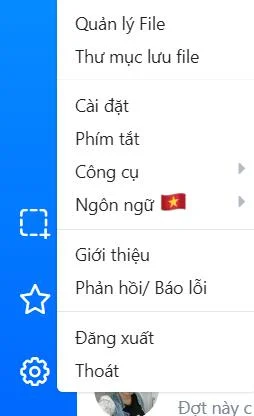
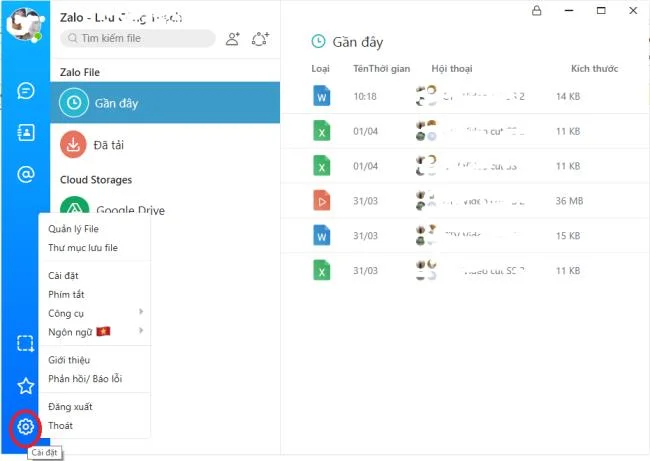
In the Settings section there are options as follows:
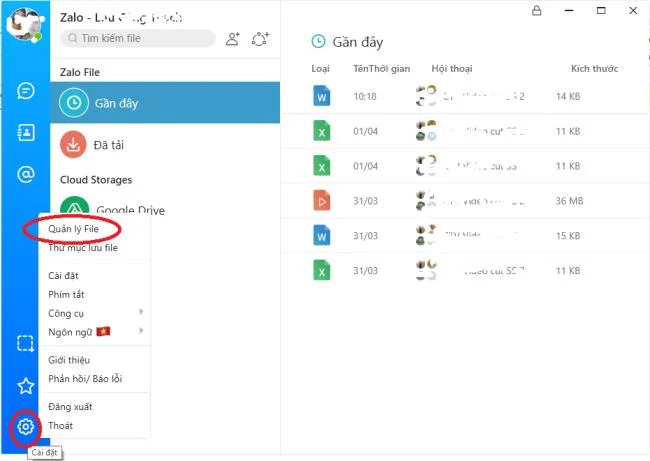
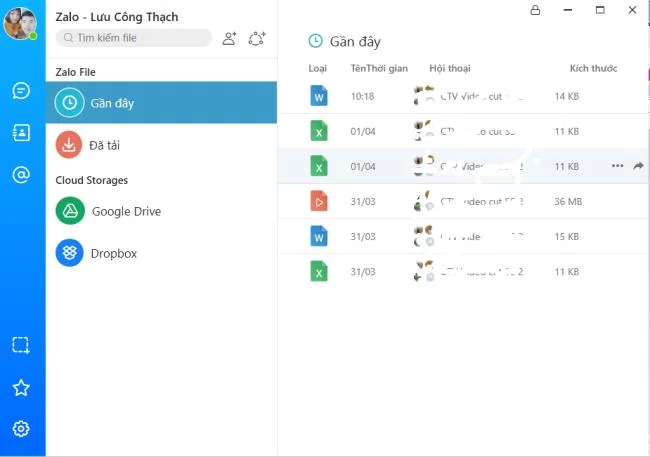
File management
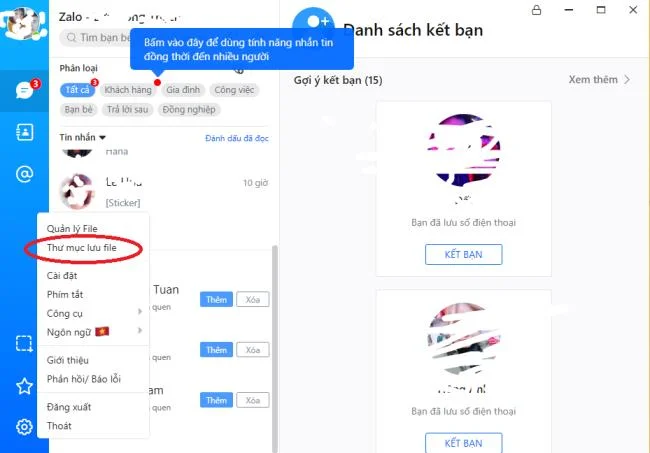
File storage folder
Setting
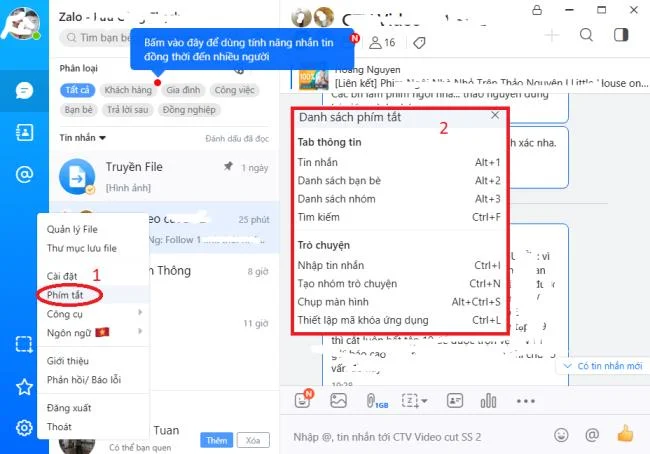
Shortcut key
Tools
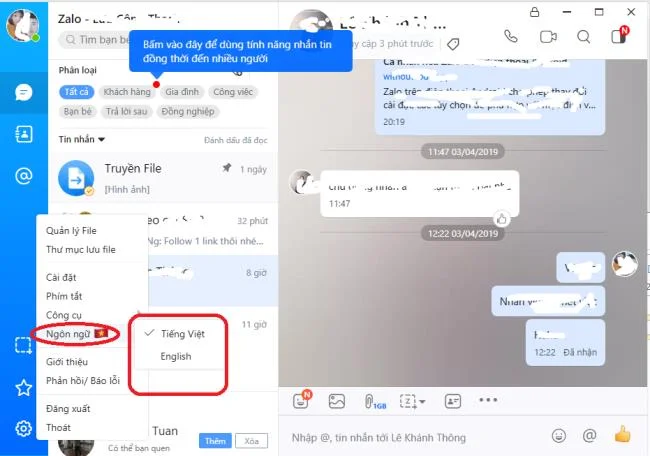
Language
Introduce
Feedback / Error Reporting
Log out
Exit
________________________________________
Access your Settings by:
- Click the icon Setting - Settings at the bottom left of the screen Zalo.
________________________________________
1. File management options
![]()
![]()
________________________________________
2. File storage folder
You choose a storage location in your computer when downloading files from Zalo.
![]()
________________________________________
3.Installation
a. General settings
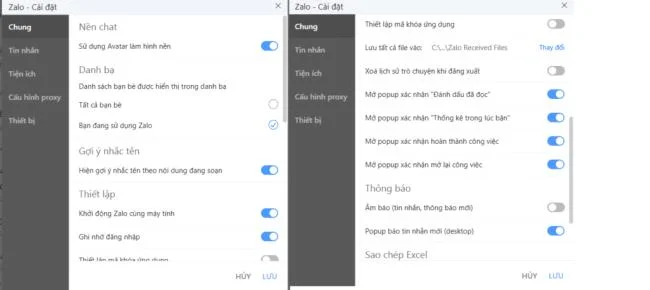
The general settings section includes options that allow you to:
- Use Avatar as wallpaper or not.
- Select the list of friends displayed in contacts : Friends in the contact list or you are using Zalo.
- Show / Do not prompt for the name according to the content being composing.
- Set Zalo to start up with the computer or not.
- Option to remember to login or not.
- Set app lock or not.
- Choose where to store all the files on your computer.
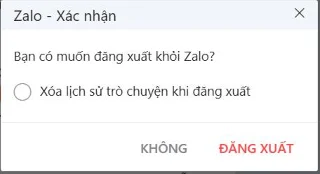
- You can set the option to delete chat history when logging out of Zalo.
- Set to turn on / off popup confirmation "Mark as read".
- The setting to turn on / off popup confirms "Statistics while busy".
- Install on / off popup to confirm the completion of the job.
- Popup on / off setting confirms job reopening.
- Setting to enable / disable the notification sound (new message / notification).
- Set to enable / disable popup notifications on new messages on PC screen.
- Options when copying Excel files : Send as image / Send as text / Always ask .
![]()
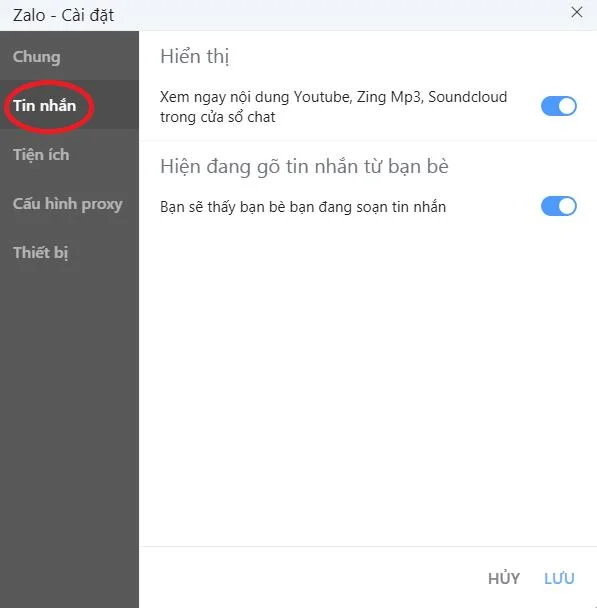
b. Message settings
Here are options that allow you to:
- Instantly watch Youtube, Zing Mp3, Soundcloud content in chat window or not.
- Set to see friends posting messages on or off.
![]()
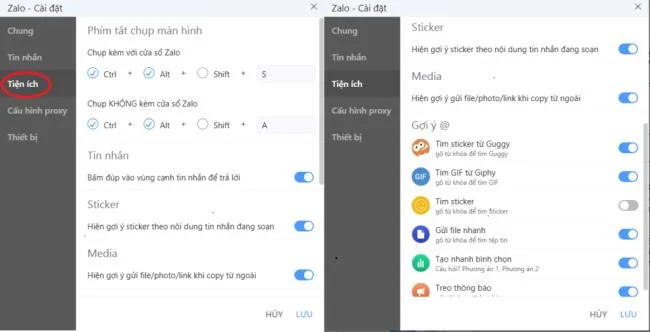
c. Install Add-ons
- Choose how to take screenshots with Zalo window or not .
-
Quickly reply to messages by double-clicking the area next to the message.
-
Turn on / off sticker suggestions according to the content of the message you are composing.
-
Show / hide the suggestion to send file / photo / link when copying documents from outside.
-
Show / hide stickers from Guggy by typing keywords.
-
Show / hide GIF from Giphy by typing keywords.
-
Show / hide sticker search by typing keywords.
-
Allows sending files quickly by typing keywords to find files or not.
-
Allows you to quickly create poll by question? Option 1, Option 2… or not.
-
Allow notifications to hang or not.
![]()
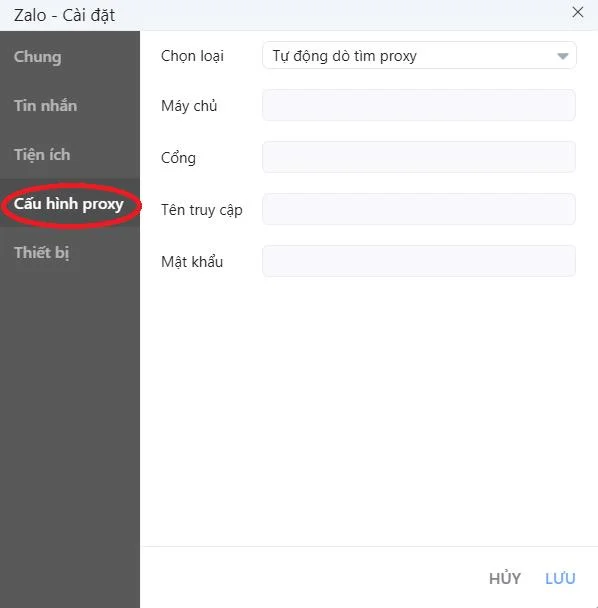
d. Configure proxy settings
Options allow you to configure the proxy .
![]()
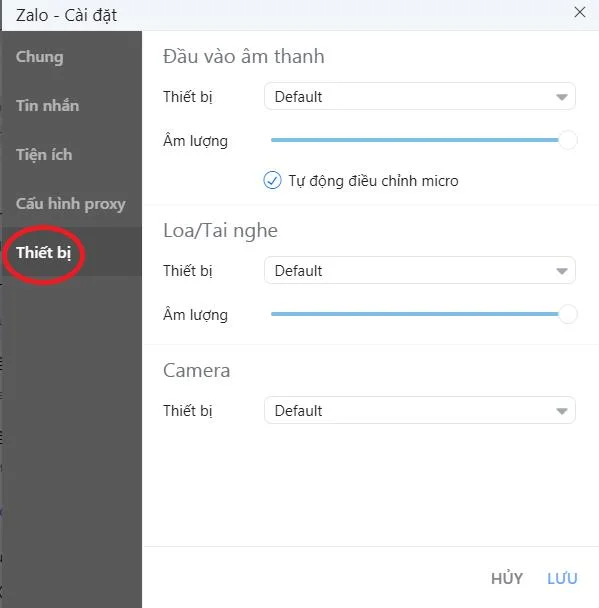
e. Install the device
Options allow you to install:
- Device's audio input
- Speaker / Headset settings.
- Camera settings.
![]()
________________________________________
4. Install shortcut keys
Display a list of shortcuts used in Zalo PC.
![]()
________________________________________
5. Install the tool
Options allow you to:
- Transfer old data files.
- Send log file.
- Delete all data.
________________________________________
6. Install Zalo language
You can set Vietnamese or English language.
![]()
________________________________________
7. Introduction to Zalo
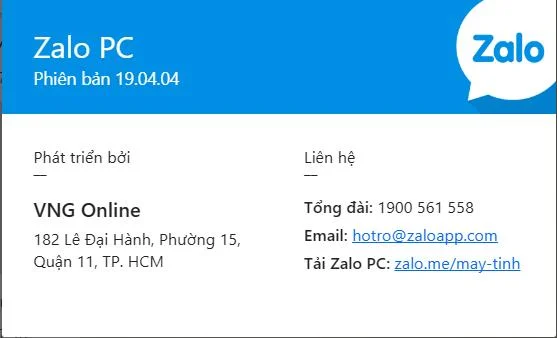
Go to Settings / Introduction / Show demo to see Zalo version.
![]()
![]()
________________________________________
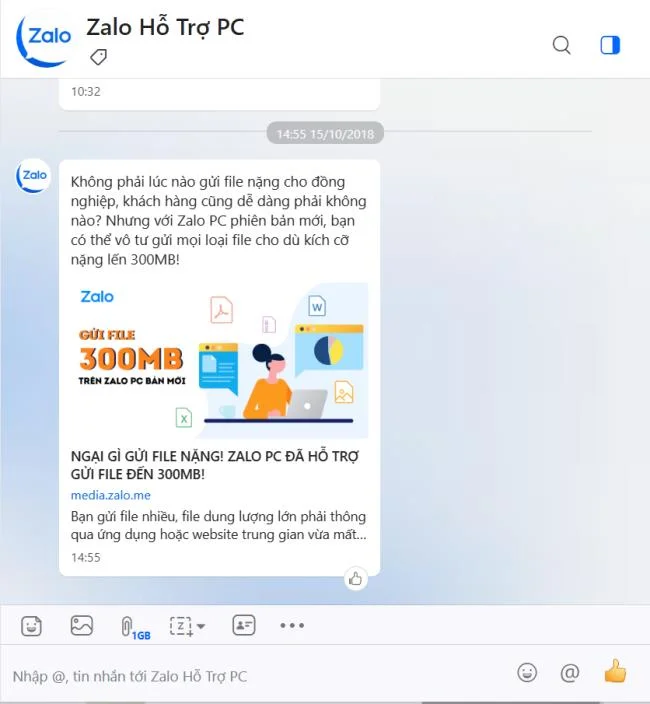
8. You can send feedback or report errors if encountered Zalo
- Go to Settings
- Select Feedback / Error
- The Zalo PC Support frame appears , you can chat about errors for support.
![]()
![]()
________________________________________
9. Log out
Log out of your Zalo account as needed.
Go to Settings / Sign Out
![]()
![]()
________________________________________
10. Exit
Temporarily exit your Zalo , the application is still running in the background.