Currently, PDF-format documents are becoming quite popular and are used a lot more often. Therefore, there are quite a lot of software to support reading and converting this format (such as Foxit PDF Editor, Adobe Reader , Convert Word to Pdf ...). Even on Firefox and Chrome, there is a built-in automatic reading of this text.
Download the latest Firefox here
Download Firefox for iOS for free
Download Firefox for Android for free
However, it is not always good and helpful, depending on the purpose of each user, whether this is necessary or not. Therefore, in this article, Download.com.vn will guide you how to disable the automatic reading of PDF documents on popular browsers today.
Download Chrome free
Download Chrome for iOS for free
Download Chrome for Android for free
For Chrome:
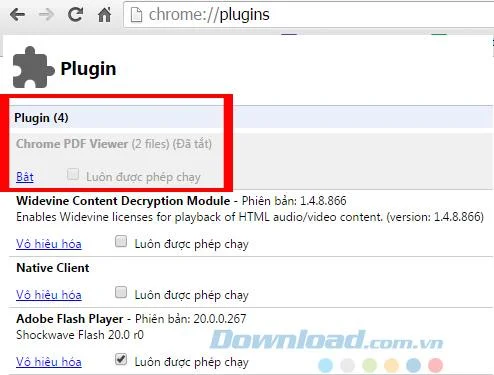
From the main interface of Chrome, you enter Chrome: // plugins / in the address bar and then Enter . In the list that appears below, find the Chrome PDF Viewer section and Disable it.
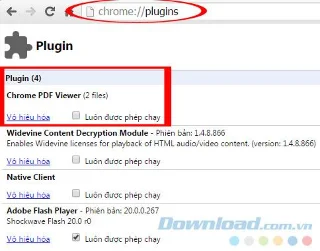
After disabling this plugin, Chrome's auto-reading of PDF files will be removed until we restart it.

On Firefox
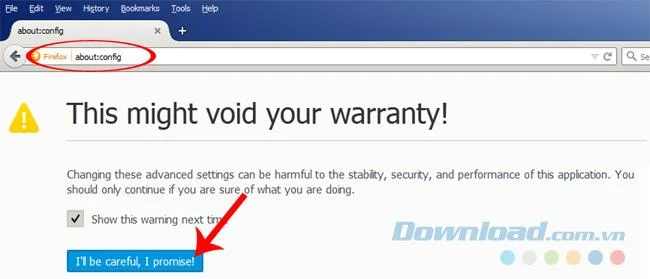
Step 1: Also from the main interface of the browser, enter about: config in the address bar and then Enter . A warning appears, but there is no need to be too concerned about it, click I'll be careful, i promise - I'll be careful, I promise!

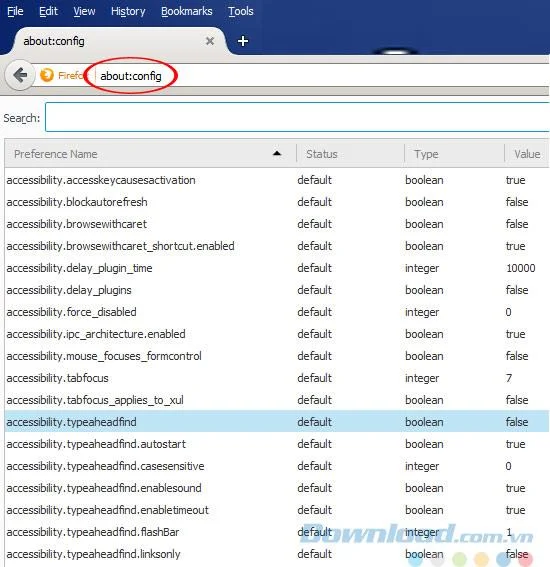
Step 2: A list of results appears as follows:

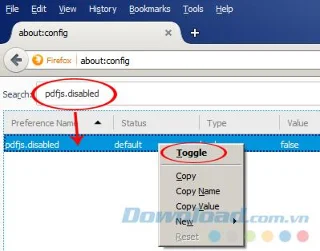
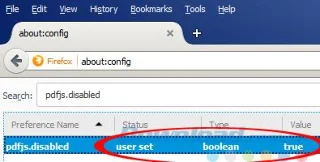
You continue to enter the keyword " pdfjs.disabled" in the Search box and Enter . There is only one result left, you can right- click on the row containing this value and then select Toggle to change the Value column from Fal to True.

Or you can double-click on the line to do so.

Do the opposite to enable this mode on Firefox. It is done!
From now on you can optionally adjust this automatic reading mode for your browser to get the best results when working.
I wish you successful implementation!