Reset a Lost Nextcloud Admin Password with OCC
Use Nextcloud’s OCC command to reset an administrator password from the server shell, with guidance for usernames, permissions, and external login providers.
For those who use the washing machine for a long time, there will be times when the washing machine has an unpleasant odor and is harmful to the health of the user. This article will provide you with some of the causes and ways to fix your washing machine's odor.
Usually, washing machines have a bad odor for two main reasons.
- Wastewater in the pipeline of the washing machine is not drained. When using the washing machine for a long time, the pipeline of the washing machine can be blocked, the wastewater in the pipeline is not discharged, the residue clinging to the pipeline causes an unpleasant odor. Not only that, the residue sticking to the pipe will easily produce bacteria, mold, and harmful to the washing machine and the user's clothes.
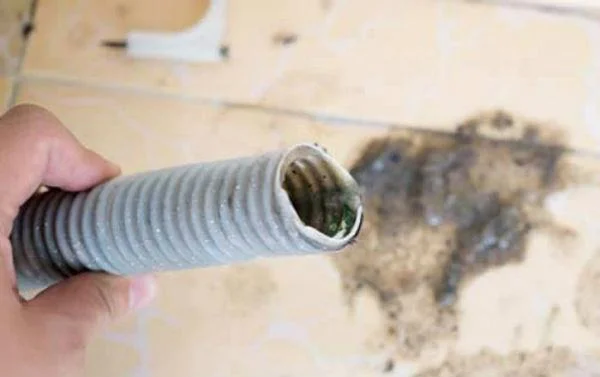
Wastewater pipes are not draining all water, resulting in association odor.
- The washing machine cage is not cleaned periodically. Many people often fail to clean the washing machine after a period of use, even keeping the washer door closed. Therefore, the washing machine cage is often in a wet state, easily forming molds, bacteria that cause unpleasant odors, affecting the quality of clothes when washing.
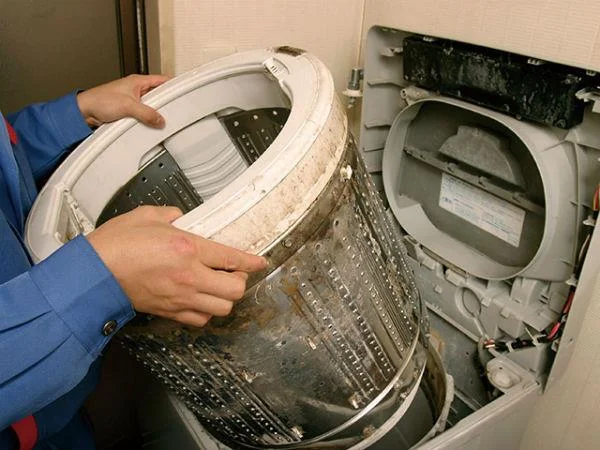
The washing machine tub is not cleaned periodically.
The best remedy when the washing machine smells bad is to regularly clean the washing machine tub and check the washing machine's wastewater pipes.
- How to handle the odor of the washing machine:
You can follow the following 4 steps to remove odors from your washing machine.
+ Step 1: First, you clean the washing machine cover by using a soft cotton cloth soaked with vinegar and gently wipe the washing machine cover.
+ Step 2: You put in the washing bucket 2 glasses of vinegar or lemon juice. Then, you turn on the hot water washing program to remove all odors and detergent residue left.
+ Step 3: Use a soft cotton cloth soaked in vinegar and wipe off the residue on the lid and door of the washing machine.
+ Step 4: Remove and clean the detergent box, the softener box by rubbing them with soap and rinse with clean water. When they dry, re-position them.
- How to clean the mold in the washing bucket:
To get rid of mold and bacteria in the drum, follow these 5 steps with vinegar and baking soda.
+ Step 1: Turn off the power of the washing machine before cleaning.
+ Step 2: For the top-loading washing machine, use a soft dishwasher to clean the detergent and softener tray. For front load washer, use a paper towel to clean the rubber edge around the door frame.
+ Step 3: You start the washing machine with the longest washing cycle at a hot temperature.
+ Step 4: You put 2 cups of vinegar in the washing machine and start the washing machine to run, take note not to put your clothes in.
+ Step 5: You continue to run another hot water washing program with 2 cups of detergent solution.
To avoid bad smell and prevent the formation and growth of bacteria and mold, you should clean the washing machine periodically once a month. At the same time, you should open the washing machine door about 10-15 minutes after washing to allow the washing bucket to dry. In addition, you should use liquid detergent to limit detergent residue in the drain pipe.
Use Nextcloud’s OCC command to reset an administrator password from the server shell, with guidance for usernames, permissions, and external login providers.
Clear Nextcloud’s HSTS warning by setting the header at Apache, NGINX, or your TLS proxy, then verify the public HTTPS response safely.
Trace App Store installation failures to DNS, HTTPS, proxy, TLS, or configuration issues from the Nextcloud server itself.
Move thumbnail work to a controlled background schedule, trim unused preview sizes, and verify the queue without overwhelming your Nextcloud server.
Find the file, exclusion rule, connection issue, or client database state holding up Nextcloud sync, then verify uploads and downloads safely.
Find the PHP OPcache limit triggering Nextcloud’s warning, update the correct web PHP configuration, restart safely, and verify the result.
Compare built-in and Docker-based CODE, then connect Collabora Online to Nextcloud through a secure HTTPS reverse proxy.
Plan a reliable Nextcloud HA deployment with shared storage, Redis locking, quorum-aware MariaDB routing, and practical failover checks.
Configure and verify a reachable TURN relay for Nextcloud Talk when firewalls or restrictive NAT block direct call media.
Use the invalid-file report to identify changed, missing, or extra Nextcloud code, restore trusted files safely, and verify the result.