Home
» Technology
»
Where to Study Autonomous Systems Engineering: 8 Strong University Programs to Compare
Where to Study Autonomous Systems Engineering: 8 Strong University Programs to Compare
“Autonomous systems engineering” is a useful career label, but it is not a standardized university degree title. A strong route into the field may be called robotics, autonomy, systems and control, aerospace engineering, electrical engineering, or intelligent machines. That naming difference matters: choosing by title alone can lead you toward a program that is excellent in one part of autonomy but light in another.
This guide compares eight university pathways using information published on official program pages and checked in September 2026. It does not claim that one institution is objectively “best” for every student. Instead, it focuses on what each program actually teaches, what type of student it may fit, and what you should verify before applying.
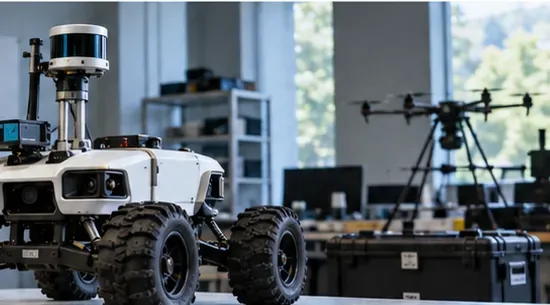
A sensor-equipped ground robot and multirotor drone in a robotics lab illustrate the mix of perception, control, software, and physical testing involved in autonomous systems engineering.
What should an autonomous systems program actually teach?
A credible curriculum usually combines several technical layers rather than treating autonomy as a synonym for artificial intelligence. The exact balance depends on whether you want to work on self-driving vehicles, drones, mobile robots, industrial systems, spacecraft, medical robots, or another application.
Perception and sensing: computer vision, lidar or radar processing, sensor fusion, and scene understanding.
State estimation: probabilistic estimation, localization, mapping, filtering, and uncertainty.
Planning and decision-making: path planning, motion planning, optimization, decision theory, and sometimes reinforcement learning.
Control: feedback control, dynamics, trajectory tracking, stability, and model-based or learning-based control.
Software and computation: programming, real-time systems, embedded computing, simulation, and distributed systems.
Physical integration: robotics hardware, actuators, mechanics, electronics, testing, and systems engineering.
Safety and human interaction: verification, reliability, human-robot interaction, ethics, and deployment constraints.
Action: Before shortlisting a university, open its current course list and mark which of these seven areas are compulsory, optional, or missing. A program does not need equal depth in all seven, but the pattern should match the kind of autonomous system you want to build.
Quick comparison of strong university pathways
University
Verified program or pathway
Strong fit for
Main trade-off to check
MIT
AeroAstro graduate study with an Autonomy field
Aerospace autonomy, planning, estimation, control, safety-critical systems
Autonomy is a field within a broader degree, not a standalone “Autonomous Systems Engineering” degree
Carnegie Mellon
MS in Robotics (Research)
Research-intensive robotics and preparation for R&D or PhD work
Thesis/research commitment is substantial; funding is not guaranteed
University of Michigan
MS in Robotics
Balanced sensing, reasoning, acting, and real robotic systems
Broad robotics scope means you must deliberately build an autonomy-focused course plan
University of Pennsylvania
Robotics MSE
Interdisciplinary AI, vision, control, kinematics, dynamics, and prototyping
A professional MSE structure may differ from a thesis-heavy research master's
University of Oxford
MSc in Autonomous Robotics
A compact, explicitly autonomy-focused master's with project and dissertation work
It is an intensive 11-month program and is new for 2026-27 entry
ETH Zurich
MSc in Robotics, Systems and Control
Control, modeling, navigation, path planning, AI, and multidisciplinary engineering
Highly flexible study can require careful tutor/course selection
KTH Royal Institute of Technology
MSc Systems, Control and Robotics; Robotics and Autonomous Systems track
Autonomous mobile systems, sensing, AI, decision-making, and control
Track structure matters; compare RASM with the Learning, Decision and Control track
Aalto University
MSc Automation and Electrical Engineering; Control, Robotics and Autonomous Systems major
Control, automation, embedded systems, robotics, and intelligent systems
The degree is broader than robotics alone, so elective choices shape your specialization
Common misconception: you need a degree literally called “Autonomous Systems Engineering”
What depends on context: the degree title matters less than whether your transcript, projects, and research show competence in perception, estimation, planning, control, software, and system integration. Employers and PhD committees can evaluate those signals differently, so there is no universal title that guarantees a better outcome.
Action: Search for program content using terms such as robotics, autonomy, control, estimation, perception, embedded systems, motion planning, intelligent systems, and cyber-physical systems instead of searching only for the exact phrase “autonomous systems engineering.”
Common misconception: a robotics degree automatically gives deep autonomy training
Verified: robotics is broader than autonomy. The University of Michigan describes its robotics curriculum around three core areas: sensing, reasoning, and acting. Its MS Robotics requirements require breadth across those categories. That is valuable, but another robotics program could emphasize manipulation, mechanical design, manufacturing, or human-robot interaction more heavily than autonomous navigation.
What depends on context: a manipulation-focused student may not need the same localization and path-planning depth as someone targeting autonomous vehicles. Conversely, a computer-vision-heavy plan may leave gaps in dynamics and feedback control.
Action: Look beyond the program name. Check whether you can assemble a sequence that includes at least one serious course in perception or sensing, estimation, planning or decision-making, and control, plus a project where those components interact.
Common misconception: strong AI coursework is enough for physical autonomy
Verified: MIT's official description of its Autonomy field explicitly combines planning and decision-making with control and estimation, sensor fusion and perception, and human-robot interaction. The MIT AeroAstro Autonomy field is a useful example of why embodied autonomy is broader than machine learning alone.
What depends on context: software-only autonomous agents may rely more heavily on AI and decision systems, while drones, mobile robots, and vehicles must also obey dynamics, latency, sensing limits, actuator constraints, and safety requirements.
Action: If your target is a physical system, do not shortlist a program solely because it has fashionable AI electives. Confirm that it also teaches control, estimation, real-time computation, and system-level testing.
Eight university programs worth comparing
1. MIT — AeroAstro graduate study with the Autonomy field
MIT AeroAstro offers master's and doctoral graduate study across multiple fields, including Autonomy. The department describes autonomy as embodied intelligent systems such as autonomous drones, self-driving cars, and robots, with foundations in planning, decision-making, control, estimation, sensor fusion, perception, and human-robot interaction. Graduate work includes coursework and research culminating in a thesis.
Best fit: students interested in aerospace autonomy, safety-critical systems, advanced decision-making, controls, or research that bridges algorithms and real physical vehicles.
Limit: this is not a standalone master's called “Autonomous Systems Engineering.” Your actual study plan depends on degree requirements, advisor guidance, and research interests.
Action: Review the Autonomy field description and then inspect faculty and laboratory work that matches your preferred vehicle or autonomy problem before applying.
2. Carnegie Mellon University — Master of Science in Robotics (Research)
Carnegie Mellon's Robotics Institute offers a research-focused MS in Robotics designed around coursework plus supervised research. The current curriculum includes foundational robotics areas and substantial research culminating in a thesis and public presentation. CMU states that the program is normally completed in 24 months and is intended to prepare students for research careers, doctoral study, and advanced R&D work.
Best fit: students who want a research-intensive experience and are comfortable spending a large share of the degree on supervised research rather than only classroom coursework.
Limit: CMU states that the MSR does not provide or guarantee funding, so financial planning is part of the decision.
Action: Compare the official MS Robotics overview with the MSR curriculum. If you want product development rather than thesis research, also compare CMU's other robotics master's options instead of assuming MSR is automatically the best match.
3. University of Michigan — MS in Robotics
Michigan Robotics describes its graduate program as technical training in autonomous systems across hardware and software, with hands-on experience using real robotic systems. The MS requires 30 graduate credits and organizes robotics study around sensing, reasoning, and acting. That structure can support autonomy because it forces students to consider how perception, decision-making, and physical action fit together.
Best fit: students who want a broad robotics foundation and the option to develop into a “full-stack” roboticist rather than specializing immediately in only software or only mechanics.
Limit: breadth is an advantage only if you still build enough depth in your target domain.
Penn Engineering's Robotics MSE is explicitly interdisciplinary, bringing together computer science, electrical engineering, and mechanical engineering. Penn's official description lists artificial intelligence, machine learning, computer vision, control systems, kinematics, dynamics, and the design, programming, and prototyping of robotic systems as core competencies for modern robotics and intelligent systems.
Best fit: students who want a professional robotics master's with broad access to software, controls, vision, and physical prototyping, including work connected to the GRASP Laboratory.
Limit: students whose main goal is a research thesis should compare the exact research opportunities and degree structure with thesis-based programs rather than assuming every robotics master's operates the same way.
Action: Read the official Penn Engineering master's program directory and find the Robotics MSE section, then compare required and elective courses with your intended specialization.
5. University of Oxford — MSc in Autonomous Robotics
Oxford's MSc in Autonomous Robotics is unusually direct in its naming and curriculum. For 2026-27, Oxford describes an 11-month full-time program focused on autonomous robotic systems, with six core modules, a hands-on robotics group project, and a dissertation. Topics include programming, perception, systems engineering, machine learning, path planning, mapping, state estimation, simulation, control, and hardware implementation.
Best fit: students who want a concentrated, explicitly autonomy-focused master's and are comfortable with an intensive one-year structure.
Limit: the program is new for 2026-27, so it does not yet have a long graduate-outcomes history. As of September 13, 2026, entry for 2026-27 is closed, and Oxford states that most 2027-28 courses are expected to open for applications on September 16, 2026.
Action: Check the live Oxford MSc in Autonomous Robotics page immediately before planning an application because deadlines, fees, and application status are time-sensitive.
6. ETH Zurich — MSc in Robotics, Systems and Control
ETH Zurich's Robotics, Systems and Control master's crosses mechanical engineering, electrical engineering, and computer science. The official program overview lists robot design, modeling and control, systems engineering, physical modeling and simulation, optimization and control, perception, navigation and path planning, embedded and distributed computing, and artificial intelligence.
Best fit: students who want strong mathematical and systems foundations while retaining flexibility across robotics, autonomous vehicles, control, and intelligent machines.
Limit: flexibility means you should not judge the program only by its broad subject list; the quality of your outcome depends heavily on the courses, tutor, projects, and thesis you select.
Action: Start with the official ETH Robotics, Systems and Control page, then check current course offerings and potential tutors in the specific area you want to pursue.
7. KTH Royal Institute of Technology — MSc Systems, Control and Robotics
KTH's two-year, 120-ECTS master's in Systems, Control and Robotics has a Robotics and Autonomous Systems track. KTH describes that track as focusing on autonomous mobile systems such as robots, drones, and autonomous vehicles, using complex sensors and methods for perception, planning, decision-making, AI, machine learning, and control. The program also offers a Learning, Decision and Control Systems track.
Best fit: students who want a clearly defined autonomy track inside a strong control and systems framework.
Limit: the two tracks overlap but emphasize different problems. Choosing the wrong one for your goals can matter more than the university label itself.
Action: Compare the KTH MSc Systems, Control and Robotics overview and the current course list. For August 2027 entry, KTH lists an application opening date of October 16, 2026, so recheck deadlines before submitting.
8. Aalto University — Control, Robotics and Autonomous Systems major
Aalto University's Master's Programme in Automation and Electrical Engineering includes a Control, Robotics and Autonomous Systems major. The 2026-2028 curriculum describes a multidisciplinary field built on control engineering and automation, with possible specialization in robotics, intelligent systems, factory automation, industrial software, and related areas. The overall master's degree is 120 ECTS; the major accounts for 65 ECTS and the thesis for 30 ECTS.
Best fit: students who want autonomy grounded in control, automation, embedded systems, and engineering software rather than a robotics-only identity.
Limit: because the degree covers several automation pathways, electives and the thesis determine how robotics-heavy or autonomy-heavy your final profile becomes.
How to decide which program is “best” for your goal
A university can be outstanding overall and still be the wrong fit for your specific branch of autonomy. A practical way to compare programs is to score them against the output you want to achieve by graduation.
Your goal
Evidence to look for
Warning sign
Autonomous vehicles or drones
State estimation, controls, motion planning, perception, vehicle dynamics, field testing
Mostly AI coursework with little dynamics or control
Mobile robotics
SLAM/localization, navigation, planning, perception, embedded or real-time systems
No substantial integrated robot project
Research or PhD preparation
Thesis, sustained faculty-supervised research, publications or research seminars
Only short course projects with no route to deeper research
Industry product development
Team projects, hardware/software integration, systems engineering, internships, deployment
Strong theory but little implementation practice
AI for embodied systems
Machine learning plus sensing, estimation, planning, control, and real-time constraints
Action: Give each shortlisted program a 0-to-2 score for curriculum fit, research fit, hands-on access, thesis/project format, cost/funding, and location/visa practicality. A famous name with a low fit score is usually a signal to investigate alternatives.
When should you change your shortlist?
Change direction if you discover that the courses you assumed were available are not offered in your entry year, the faculty you hoped to work with are not accepting students, the degree format does not support your research or industry goal, or the total cost is not realistic. These are not minor details; they can determine what you actually learn and what portfolio or thesis you leave with.
Also reconsider a program if you cannot identify at least one concrete path from coursework to an integrated project or research experience. Autonomous systems are systems problems. A collection of unrelated AI, mechanics, and control classes can be useful, but the strongest evidence of readiness usually comes from making those components work together under real constraints.
Action: Before paying an application fee, write a one-page “planned degree” for each university: five to eight courses, one project or lab, a likely thesis/research area if applicable, and the technical skills you expect to demonstrate at graduation. If you cannot build a convincing plan from current official information, keep researching or choose another program.
What cannot be known from a program webpage
Official pages can verify degree structure, published courses, stated learning outcomes, and current application rules. They cannot guarantee that you will obtain a particular supervisor, research topic, internship, lab placement, scholarship, or job after graduation. Course schedules and faculty availability can also change between application and enrollment.
That uncertainty is especially important for research-oriented programs. A university may have excellent autonomous-systems research, but your own access depends on capacity, admissions decisions, funding, advisor matching, and project timing.
Action: Treat the university website as the first verification layer, not the final one. For your top two or three choices, confirm current course availability, research-group participation rules, thesis expectations, and funding directly through the program's official admissions or academic contacts.
Bottom line
If you want an explicit autonomy label, Oxford's MSc in Autonomous Robotics, KTH's Robotics and Autonomous Systems track, and Aalto's Control, Robotics and Autonomous Systems major are especially easy to identify from the program structure. If you want research depth, CMU's research MS in Robotics and MIT AeroAstro's Autonomy field deserve close comparison. Michigan and Penn provide broad interdisciplinary robotics pathways, while ETH Zurich offers a particularly wide systems-and-control framework.
The better question is not “Which university is number one?” but “Which program lets me graduate with the exact autonomy skills, projects, and research evidence I need?” Use current official curricula to answer that question, and recheck time-sensitive admissions information before applying.