Your system may get bogged down over time, often with unnecessary data. Although you can delete them manually, the following article will show you how to automate this task every time you turn off your computer.
From your browser's cache to your temporary file, you'll undoubtedly discover a new trick in this article, perhaps even for something that you didn't know existed. clear all.
1. The document was recently opened
For some programs, Windows keeps track of the files you recently viewed. For example, open something like Microsoft Word and right-click on it in the Taskbar . The jump list will show you all the documents you have recently opened. You can remove this list automatically when the computer is turned off using Registry Editor .
Press Windows key + R to open a Run dialog box , enter regedit and click OK . In the left panel, navigate to the following path:
HKEY_CURRENT_USER \ SOFTWARE \ Microsoft \ Windows \ CurrentVersion
Check if you have a Policies folder here, with an Explorer folder in it. If there are none or only one then you will need to create them. First, right-click CurrentVersion and press New> Key . Name the Policies folder and press Enter .
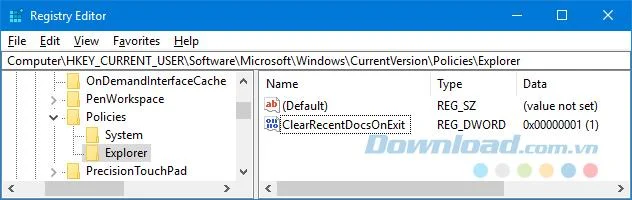
Second, right-click Policies folder and click New> Key . Name the folder Explorer and press Enter . Once done, click on that folder.
In the menu above, go to Edit> New> DWORD (32-bit) Value . Name the value ClearRecentDocsOnExit and press Enter . Next, double click on the value and change the Value data to 1 . Finally, click on Ok . If you want to disable this, simply navigate back and set the value to 0.
2. File page
Windows uses RAM to store temporary files, but it moves them to a page file when it slows down on space. While your RAM is automatically deleted on shutdown, the page file does not. But, you can delete it automatically when you shutdown with Registry Editor .
Once activated, your computer will take a long time to turn off. The additional time will depend on the speed and size of the page file. The risk is minimal because you can revert the changes if needed.
Press Windows key + R to open a Run dialog box, enter regedit and click OK . In the left panel, navigate to the following path:
HKEY_LOCAL_MACHINE \ SYSTEM \ CurrentControlSet \ Control \ Session Manager \ Memory Management
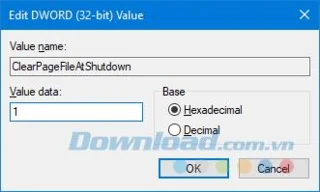
On the right panel, you will see a row for ClearPageFileAtShutdown . If you don't see this, right-click on Memory Management on the left and click New> DWORD (32-bit) Value . Type ClearPageFileAtShutdown and press Enter .

Next, double-click on the value ClearPageFileAtShutdown and change the Value data to 1 . Click OK to finish. If you want to disable this, just go back and set the Value data is 0 .
3. Browsing data
Depending on the settings, your browser will save data as you browse the web, such as history, downloads, and input form. You can delete these manually at any time, but you can set them to automatically delete when your browser is closed. Each browser has a different method.
3.1. Firefox
Open Firefox and click on the menu icon (3 lines), then select Preferences> Privacy . Under History , you'll see a drop-down menu next to Firefox will and select Use custom settings for history.

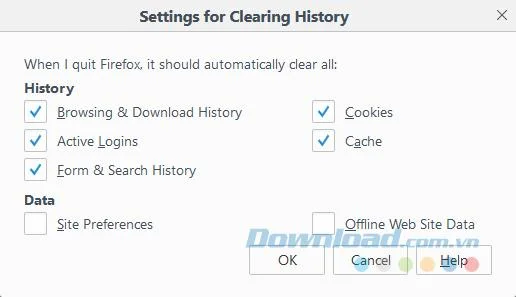
Then, put a checkmark in Clear history when Firefox closes . Next, click on Settings ... to select what Firefox automatically deletes when closed and click on OK when done.
3.2. Chrome
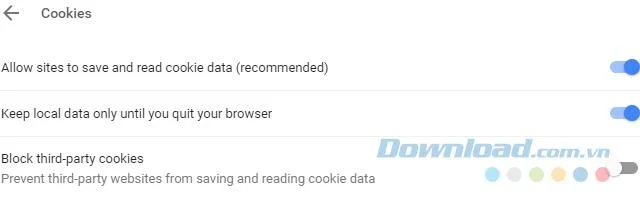
Open Chrome and click the three-dot icon in the upper right corner of the browser and select Settings . Scroll down and click Advanced> Content Settings ...> Cookies . Then, turn on Keep local data only until you quit your browser .

However, this will only delete your cookie. You clear the Chrome cache manually and cannot automate this process.
To automate things other than cookies, you'll need an extension, Click & Clean . You install it and click on the Click & Clean icon near the address bar and select Options . In the Extra category , tick Delete private data when Chrome closes.
3.3. Microsoft Edge
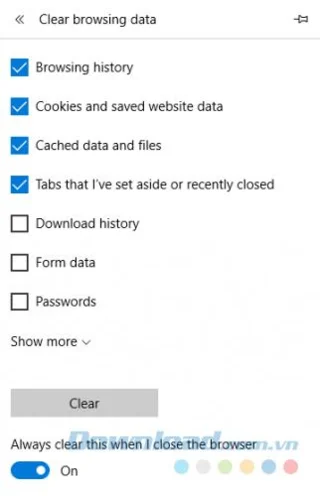
You open the Edge and click on the 3 dots , select Settings . Under the heading Clear browsing data , click Choose what to clear.

Check everything you want to remove and then turn Always clwar this when I close the browser to On .
4. Notice Tile directly
If you display tiles directly on the Start Menu , you'll notice that some of them display notifications and live information. This is useful for a quick look, but if you don't open these apps, the notifications piling up become cumbersome. To fix this, you can clear the cache directly on shutdown.
Press Windows key + R to open Run , type regedit , and click OK . On the left pane, navigate to the following path:
HKEY_CURRENT_USER \ Software \ Policies \ Microsoft \ Windows
With the Windows folder selected, go to Edit> New> Key . Enter Explorer and press Enter.
With the Explorer folder selected, go to Edit> New> DWORD (32bit) Value . Type ClearTilesOnExit and press Enter . Next, double click on the DWORD you just created and set the Value data to 1 . Then click OK . You can change the value to 0 if you want to turn it off in the future.
5. Temporary files
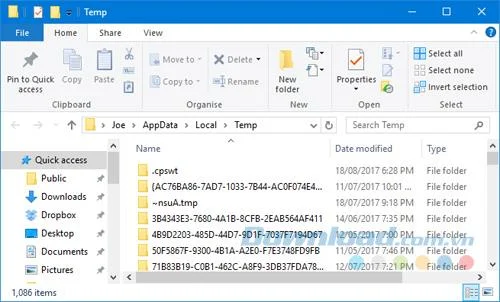
When you use the computer, it automatically creates temporary files that it may need to call for that specific session, such as error logs or images. They are stored in a folder called Temp .
To view the Temp folder , press Windows key + R to open Run , type % temp% , and click OK .

You can create an executable file that will automatically delete the Temp folder whenever you log into Windows. To get started, open Notepad and enter the following command:
rd% temp% / s / q
md% temp%
Then, click File> Save As ... And enter the File name as follows:
% appdata% \ microsoft \ windows \ start menu \ programs \ startup \ temp.bat
Finally, click on Save to save this executable file in the Startup folder . If you want to stop the process, just navigate to the directory path above and delete temp.bat .
Thus, with the settings as the guide article above, you can make Windows automatically delete some unnecessary data when the computer is shutdown. This will both save you time and help the system work more efficiently.