Brand ownCloud Classic 10 with a Theme App and CSS
Replace ownCloud Classic 10 logos and tune web UI colors with a theme app, while avoiding upgrade and integrity-check pitfalls.
During the installation of Internet Download Manager (IDM), the computer will default to its download location in the C: \ drive (operating system drive). If you regularly download games, software or applications from the network, over time, this user's drive will be occupied and make the computer run slower, operate less power, not to mention problems. secure with data of this type.
For anyone who uses a computer knows the "unwritten" rule, that is, never install software or leave data in the operating system drive, Internet Download Manager is no exception, though this is really Download software is extremely good support for download acceleration.
However, if you do not interfere and only install by default, the software will automatically place its storage folder in the C: \ drive itself and the downloaded data will make the computer slower and more sluggish.
The following article will guide you how to change the location to save files on IDM to be able to reduce the load on the system drive and is also a useful IDM trick.
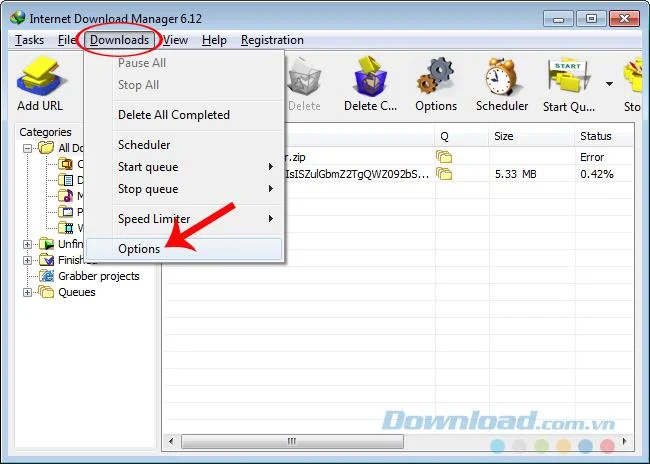
Step1: From the main interface of Internet Download Manager, left click on the Downloads tab , select Options .
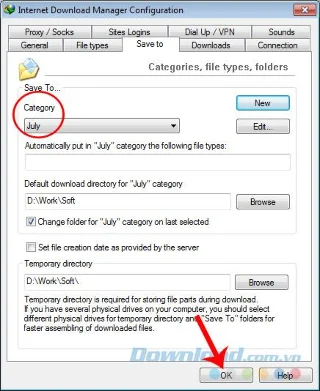
Step 2: The Internet Download Manager Configuration window appears, click Save to . Here you can see that the Default download directory for "General" category is the default file download location of Internet Download Manager.
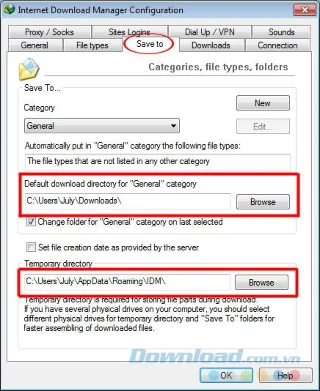
Step 3: Click Browse to select a new location for this software to store the downloaded data.
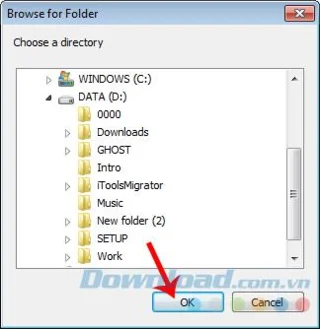
Find a new save location for IDM
It is best to select both the Default download directory for "General" category and the Temporary directory with the same path and directory. The reason is that to avoid having to download the data to the Temporary folder, the computer will have to copy the data file to the Default Download folder again, causing the hard drive to become fragmented, reducing the efficiency and performance. Use. Set up click OK to confirm.
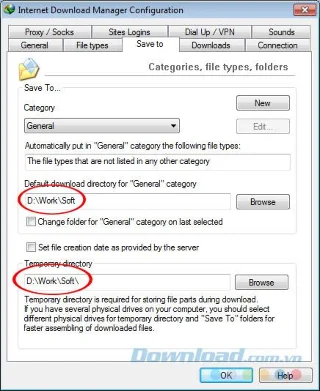
In addition to customizing the file location of Internet Download Manager (IDM), users can also change or add more categories as they wish.
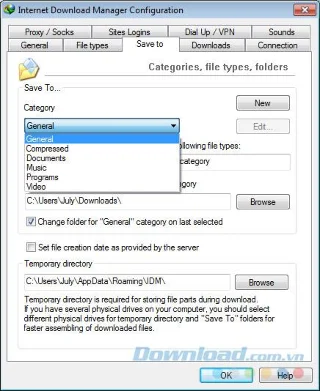
Left-click on Category and select another category or click on New to add and name an arbitrary category.
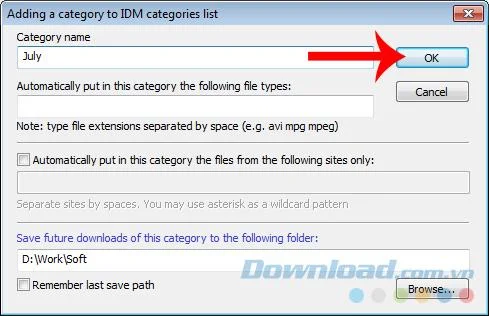
Add new Category to the list
The new item will automatically appear in the Category .
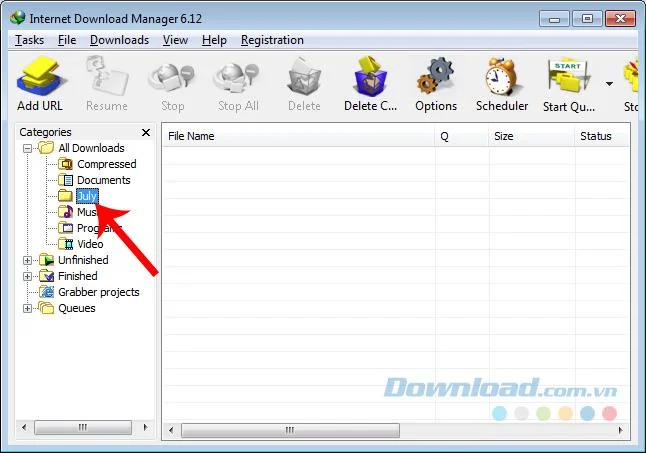
If you return to the main interface of the download manager Internet Download Manager (IDM), you will see this newly added item as shown below.
If you do not need to, can right-click on the item and select Delete .
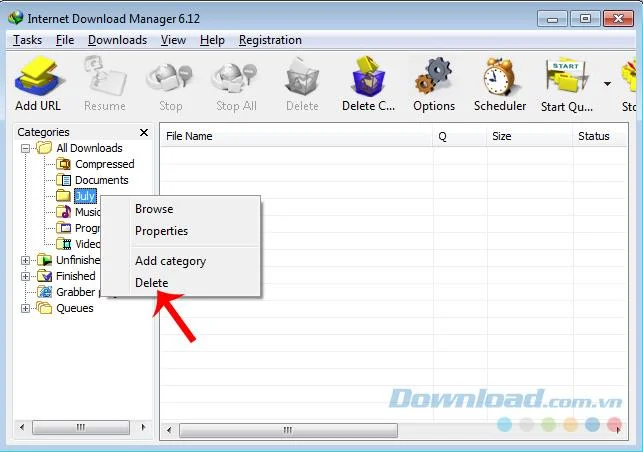
Delete Category has been added
Select Yes in the following message to confirm deletion or No to cancel.
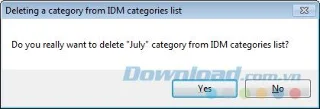
The above is a quick guide for users to change the download location themselves on Internet Download Manager (IDM). Not required and can be changed at will, we can choose any folder, where, to store our data.
I wish you successful implementation!
Replace ownCloud Classic 10 logos and tune web UI colors with a theme app, while avoiding upgrade and integrity-check pitfalls.
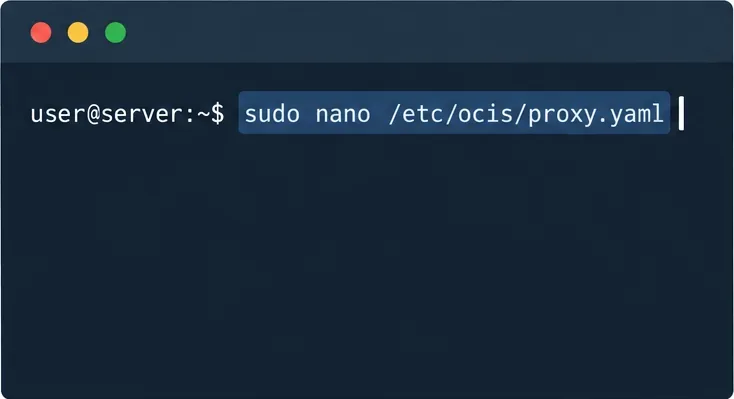
Assign byte-based storage limits to new ownCloud Infinite Scale users by role, with a proxy.yaml example and a safe verification checklist.
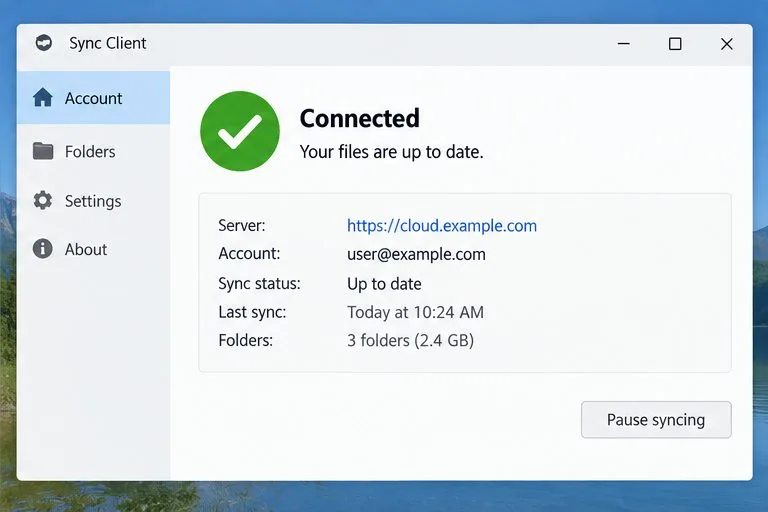
Restore ownCloud desktop syncing by checking the server hostname, certificate chain, private CA trust, and captive portal issues without disabling TLS verification.
Use the invalid-file report to identify mismatched core files or app signatures, restore the correct release files, and verify the integrity check safely.
Deploy ownCloud Infinite Scale from its official Compose example, configure domains and persistent storage, then verify TLS, containers, and first login.
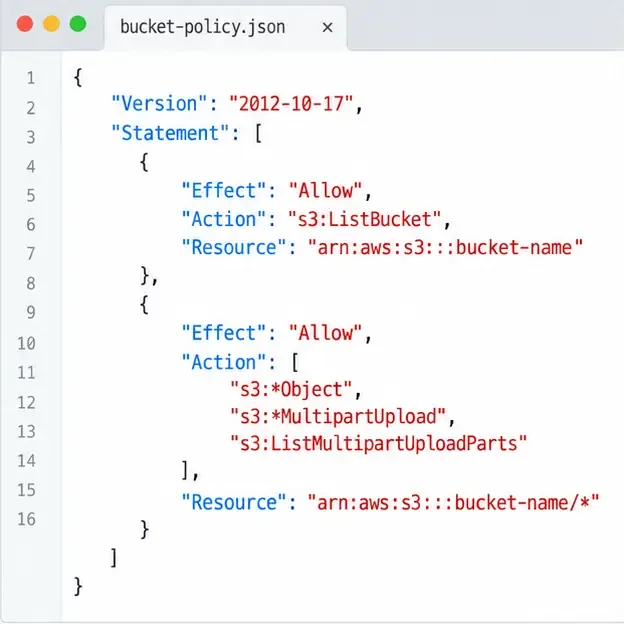
Set up the S3NG driver, bucket permissions, persistent metadata storage, and upload sizing so ownCloud Infinite Scale can store file contents reliably.
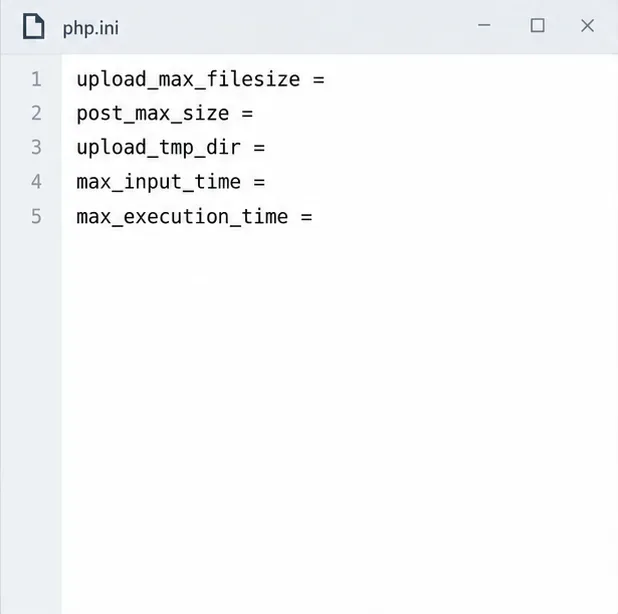
Find why an ownCloud Server upload stops near completion by checking file status, quota, temporary disk space, PHP limits, and proxy timeouts.
Set AllowOverride All only for ownCloud’s web root, validate the active Apache vhost, and reload safely to restore .htaccess rules.
Enable ownCloud’s Enterprise Auditing app, route admin_audit events to a protected log file, and confirm that real user actions are being recorded.
Align Keycloak’s realm issuer, web client, and user claims to let ownCloud Infinite Scale sign users in reliably across the web and mobile clients.