In addition to the price and the brand, the capacity of the air conditioner is an important criterion that users should consider when choosing to buy an air conditioner during the prolonged hot season.
Calculating air conditioning capacity makes sense in saving power consumption, providing the best product experience. Many people think that choosing to buy a large capacity air conditioner, the machine does not need to run long and makes the room cool faster is a way to limit power consumption. However, it is certain that they will have to spend a large amount of money when buying high capacity air conditioners. Moreover, for small or few rooms, if using large capacity air-conditioner, it will be extremely wasteful.
>> See also: Top selling energy saving inverter products in 2017

Calculate the appropriate air conditioning capacity to save energy
1. How to calculate capacity of air conditioner
Experience has shown that, when choosing an air conditioner for the bedroom and living room of the family, users can apply the calculation of the capacity of the air-conditioner with the formula 600 BTU per square meter of room area.
Example: For a room with an area of 15m2, you should use an air-conditioner with a capacity of 600 x 15 = 9,000 BTU, which corresponds to an air-conditioner with a capacity of 1HP.

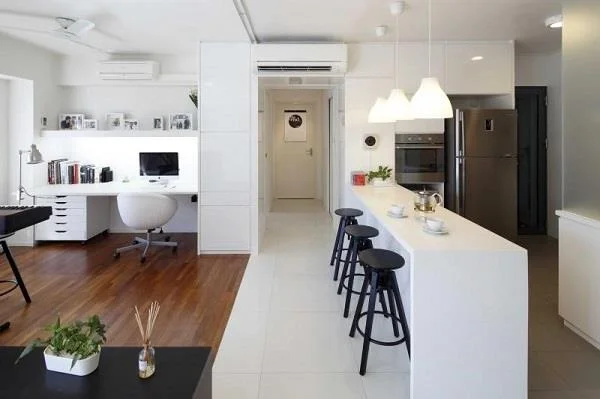
Choosing the capacity of the air-conditioner depends on the area of the room used
Suggestions to choose the capacity of the air conditioner according to the room area are as follows:
- Room less than 15 m2: choose air-conditioner with capacity of 1 HP (horse)
- Room area from 15 m2 - 20 m2: choose air-conditioner with capacity of 1.5 HP (horse)
- Room area from 20 m2 - 30 m2: choose air-conditioner with capacity of 2 HP (horse)
- Room area from 30 m2 - 40 m2: choose air-conditioner with capacity of 2.5 HP (horse).
Note: In addition to the area of the room, the capacity of the air-conditioner is also affected by some other factors such as direct environmental temperature, building materials, number of users, windows in the room ... In fact, not all rooms can apply the same formula to calculate the capacity of air-conditioner the same, depending on other conditions, users can decide to buy air-conditioner with larger capacity.
For example, if the air conditioner used in a room has the outside exposed to direct sunlight, the room is connected to another room or has an exhaust fan, the user should add 0.3 ~ 0.5 HP depending on the level of the effect. cold capacity.
2. A few notes when choosing an air conditioner with a suitable capacity
Should choose air-conditioners with a capacity slightly larger than the area or room volume, absolutely avoid using air-conditioners with a capacity smaller than the room area to avoid over-operating and continuous operation. Rest will quickly damage the air conditioner.
On the other hand, users also avoid buying a machine with a capacity too large compared to the room area, high cost, causing waste and not using the full capacity of the machine.
>> See also: Suggestions for suitable air-conditioning products with a volume of less than 90 m3
3. How to calculate the power consumption of the air conditioner
The power consumption of the air conditioner is based on the capacity of the air conditioner, through this parameter, users will know how much power is consumed in the month of the air conditioner. Power consumption of air conditioners coming from different brands is also different.

The way to calculate the power consumption of the air conditioner is based on the capacity of the machine
Users can calculate the power consumption of air conditioners and other appliances in the family by the following formula:
A = Pt
Where A is the amount of energy consumed in time t
P is the capacity (in KW)
t is usage time (hour unit)
For example:
A 9000 BTU air conditioner will have a capacity ranging from 800 to 850 W, if it runs for an hour, it will consume about 0.85KWh (nearly 1 electricity). And 12,000 BTU air-conditioners with a capacity of 1500W, will consume about 1.5 electricity after 1 hour of use.
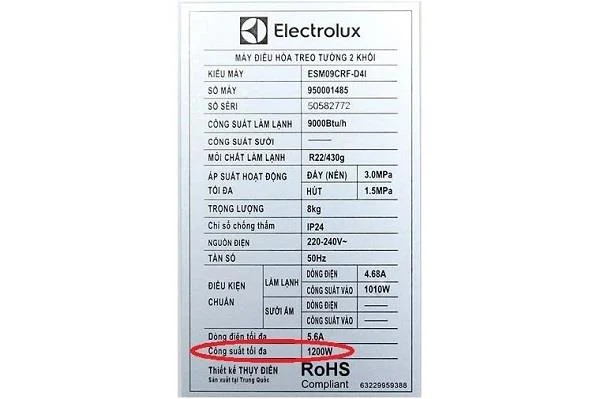
In general, the new air conditioning products today are specified by the manufacturer in terms of power consumption, through which users can also calculate a relative amount of electricity that the air conditioner consumes in a period of time. time to plan how to use it effectively without being too expensive.
>> See also: Air-conditioning products with 0% interest rate installment at WebTech360
Hopefully, with information about the capacity of air-conditioner and how to calculate the power consumption of the above air-conditioner will help users choose the best air-conditioner. WebTech360 Supermarket currently distributes many genuine air-conditioners with attractive incentive programs. Come and choose the right product for your family!